Sri Lanka Introduces Instant Driving Licenses for Tourists at BIA: Simplifying Travel with Thirty-Day Validity
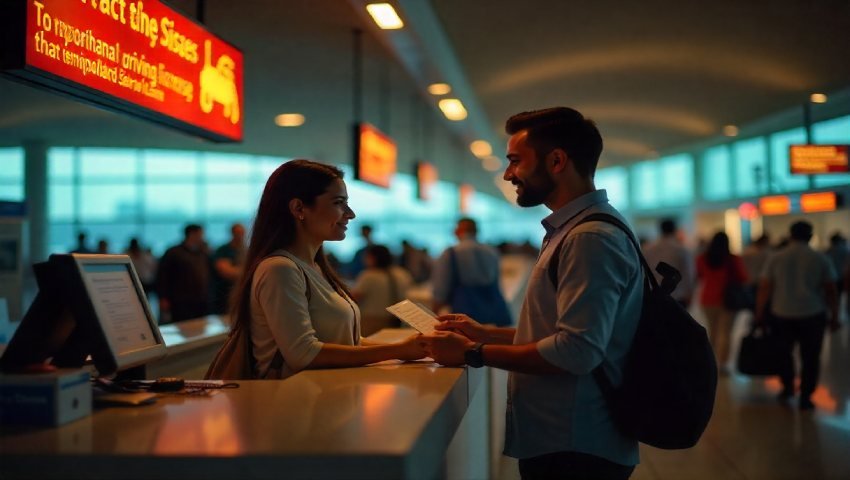

Sri Lanka has rolled out a game-changing policy designed to smooth the travel pathway for international guests landing at Bandaranaike International Airport in Katunayake. Beginning August 3, 2025, the government began replacing the old procedure with the instant on-arrival issuance of temporary driving licenses, a step that lifts a major hurdle for tourists eager to rent a car. Visitors can now collect a valid permit at check-in counters, skipping the lengthy trip to Colombo’s Motor Traffic Department. With the targeted goal of energising tourism and boosting footfall, the pilot has, however, provoked friction on the ground: local taxi drivers, along with a section of charter and transport-service operators, have organised demonstrations, claiming the concession threatens hard-won haulage incomes.
Streamlining the Process for Foreign Tourists
The introduction of the temporary driver’s license issuance counter at BIA marks a significant shift in how Sri Lanka is handling foreign tourists. Prior to this change, tourists had to travel to the Motor Traffic Department in Werahera, Colombo, to obtain a temporary driving license. This process often resulted in wasted time and added expenses for travelers, detracting from the overall travel experience. The new initiative seeks to eliminate these barriers by allowing tourists to get their driving license immediately upon arrival at the airport, making it easier than ever to explore the island.
To apply for the temporary driving license, tourists must present the following documents:
- A valid foreign driver’s license with at least one year of validity.
- A valid passport.
- A return ticket or proof of onward travel.
This streamlined process ensures that tourists can start their journey without unnecessary delays. The temporary license is issued on the spot, allowing visitors to plan their travel routes and explore the island with greater freedom and convenience.
Charges and Validity of the Temporary Driving License
The fee for obtaining a temporary driving license at BIA is approximately LKR 2,000, which is about USD 10. The license is valid for one month from the date of issue, providing sufficient time for tourists to drive during their stay. This initiative is designed to make the experience more affordable for travelers, addressing concerns about high transportation costs, especially those incurred by tuk-tuk drivers who often charge tourists exorbitant rates.
Protests and Concerns from Local Taxi Drivers
The temporary driving license announced for incoming tourists has stirred significant unrest among local taxi drivers and other self-employed tourism workers, activists point out that the measure, although framed around convenience, eventually threatens their livelihoods. A significant segment of the drivers works independently, and their immediate worry is straightforward: tourists tempted to use the new local license option once off their flights, will be less likely to hire an island taxi, squeezing an already thin margin that many drivers operate on.
Protests spearheaded by those calling themselves “tourism taxi service personnel” have grown sharper, threatening to completely halt transfers and pickups from Bandaranaike International Airport. Their warning is plain: unless the government suspends the new regime, the entire sector may be brought to a standstill, substantially hitting tourist arrivals. Meanwhile, the same drivers caution that the change risks re-energising a long-criticised informal system that has, in the past, allowed rogue operators to charge visitors unregulated fees.
From the government’s angle, the initiative is justified on the grounds that facilitating easier movement for visitors further enhances the island’s appeal by promoting flexibility and controlling transport costs. Yet the rapid backlash from those arguably on the tourism sector’s front line has exposed the tension that arises when the needs of an increasingly mobile visitor base are pitted against independent service providers. Balancing flexibility for guests with safeguarding a sustainable income for workers, employed formally and informally, presents a conundrum that policy Writists are now tasked with resolving.
International Comparisons: Similar Policies in Other Countries
Sri Lanka is not the only country to implement measures aimed at easing the process for foreign visitors wishing to drive. Several other countries have similar initiatives to cater to the growing demand for accessible travel options:
- Japan: Issues International Driving Permits (IDPs) that allow foreign visitors to drive in the country for up to one year.
- Australia: Permits tourists to drive with their valid foreign driver’s license for up to three months, after which they must apply for a local license.
- New Zealand: Allows tourists to drive with their valid overseas license for up to 12 months before requiring them to obtain a local license.
These countries have recognized the importance of facilitating ease of travel for foreign tourists, and Sri Lanka’s recent reform aligns with this broader trend, aiming to attract more visitors and make their stay more convenient.
Impact on Local Businesses and Future Prospects
The introduction of the temporary driver’s permit certainly enhances the experience for foreign visitors, but it is also creating friction for local micro-businesses, particularly freelance drivers who cater to the same customer base. The ongoing demonstrations underscore an urgent need for thoughtful, inclusive dialogue that weighs the dual priorities of visitor convenience and the economic survival of Sri Lankans who earn their livelihood from the tourism trade. A constructive partnership between the authorities and representatives of the taxi trade, hotel transport desks, and app-based drivers appears essential to crafting a framework that is equitable and effective.
Sri Lanka’s tourism outlook remains robust, with successive innovations—of which the new permit is but the latest—designed to streamline and elevate the traveller’s experience. The track record shows that tourism will expand, but expansion that is robust and lasting cannot disregard the interests of individuals who keep the system running from the ground up. Potential regulatory pathways to achieve this include harmonising taxi licensing thresholds and fare structures so that safety, quality, and income will remain balanced for the traveller of tomorrow and their Sri Lankan host alike.
Conclusion: A New Chapter in Sri Lanka’s Tourism Sector
Sri Lanka’s introduction to temporary driving-permit desks for foreign visitors at Bandaranaike International Airport, signals an effort to refresh the island’s tourist offering and draw more visitors. The move simplifies the process for tourists and enables them to explore Sri Lanka with greater ease. However, the continuing demonstrations from some local rental companies serve as an unmistakable reminder that good ideas still need the glue of shared conversation. An inclusive round of scheduling, revenue sharing, and training can help calm anxieties, transforming what could feel like a unilateral gesture into a shared lift. While the country presses further away from the 2019 shocks and pandemic struggles, every incremental innovation must be road-tested against the day-to-day livelihood of guesthouse operators, drivers, and guides; only then can ambition and authenticity go the same distance.
[Source:Asia News]
The post Sri Lanka Introduces Instant Driving Licenses for Tourists at BIA: Simplifying Travel with Thirty-Day Validity appeared first on Travel And Tour World.