Spain’s Belchite Emerges as a Powerful Symbol of War’s Devastation and Cultural Endurance Offering a Stark Reminder of History’s Deep Impact and the Resilience of the Human Spirit
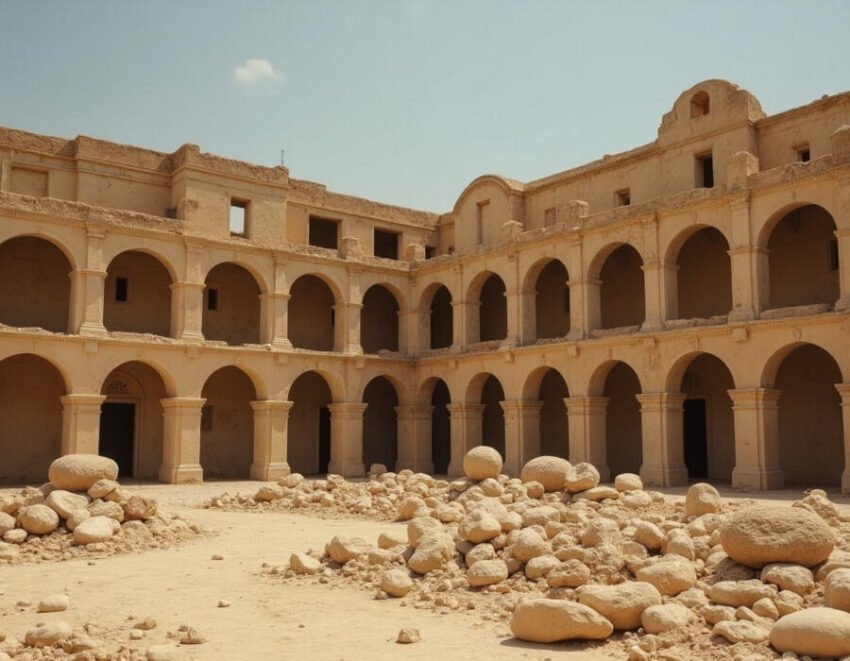

Spain’s Belchite stands as a profound monument to the harsh legacy of the Spanish Civil War, embodying both the devastation and the remarkable resilience that defined the country’s tumultuous past. This once-thriving village, left in ruins after a brutal 15-day battle between Nationalist and Republican forces, has transformed into a powerful symbol of war’s destructive force and the unyielding spirit of survival. The decision by General Franco to leave Belchite in its destroyed state was a stark reminder of his victory, but it also inadvertently preserved the village’s rich historical significance. Over 2,000 years of history, from Roman origins to a vibrant, multicultural medieval center, echoes through its bullet-scarred churches, homes, and public spaces, making Belchite not just a war memorial, but a living testament to the resilience of both the land and its people. Today, it stands as a poignant reflection of Spain’s journey through conflict, survival, and cultural rebirth, drawing attention to the enduring power of history’s lessons.
Located just 25 miles south of Zaragoza, one of Spain’s largest cities, the village of Belchite has become an unlikely attraction for those drawn to dark tourism. This eerie, desolate village stands as a powerful symbol of the devastation caused by the Spanish Civil War, a conflict that deeply scarred Spain in the 20th century. Known for its haunting appearance, Belchite has earned a reputation as a “ghost town,” a place where the wreckage of the past lingers in plain sight.
The village’s most significant period of destruction occurred during the war, particularly in August 1937, when it was the site of a pivotal battle between the Nationalists and the Republicans. The battle raged on for 15 brutal days, resulting in extensive damage to the town’s infrastructure. The destruction was so severe that the buildings, many of which had stood for centuries, were left in ruins. This battle marked a critical moment in the civil war, with both sides suffering heavy casualties, and the surrounding countryside bearing the scars of combat.
Following the victory of General Francisco Franco’s Nationalist forces in 1939, the Spanish dictator ordered that the town be left in its ruined state. Franco believed that Belchite’s ghostly remains would serve as a chilling reminder of his triumph and act as a warning to any potential opposition. The site’s purpose as a memorial to his victory became a striking symbol of his autocratic rule.
However, the historical significance of Belchite stretches far beyond its role in the Spanish Civil War. The village’s origins date back more than 2,000 years, with evidence of its establishment during the Roman period. As centuries passed, Belchite’s importance continued to grow. In the Middle Ages, it developed into a key agricultural and administrative hub within the region, serving as a focal point for surrounding towns and villages.
Over time, the town became a melting pot of different cultures and faiths. For centuries, Christian, Muslim, and Jewish communities coexisted, contributing to a vibrant and diverse society. This unique cultural blend is reflected in the town’s architecture, with buildings showcasing elements from various historical periods. Among these are churches, synagogues, and residential homes, all designed in Renaissance, Baroque, and Vernacular styles, each telling its own story of Belchite’s long and varied past.
One of the most striking features of the village is the way its architecture tells the story of its religious and cultural diversity. Experts point to the town’s buildings as evidence of its once-thriving multiculturalism, which endured until the late 1400s, when the forced conversion of the Jewish population marked the beginning of a period of religious homogeneity in the region. The combination of different religious and cultural influences created a unique architectural identity that still captures the imagination of visitors.
Today, Belchite stands as an important site within the Aragon region, offering a glimpse into Spain’s rich history and the complex legacies of war, culture, and coexistence. Despite its destruction, the town has become a symbol of resilience and reflection, attracting tourists not only for its somber associations with the Spanish Civil War but also for its broader historical and cultural significance.
Visitors to Belchite today find themselves walking through streets where time seems to stand still. The town’s ruined churches, homes, and public spaces remain frozen in time, offering a striking visual narrative of the devastation of war. The crumbling walls and shattered windows serve as poignant reminders of the lives once lived in this now-silent settlement.
The World Monuments Fund has recognized Belchite’s cultural importance, noting that it remains an essential part of Spain’s historical fabric. Though much of the town lies in ruin, the surviving elements continue to draw attention from historians, architects, and tourists alike, all seeking to understand the story of a place shaped by centuries of conflict, cultural exchange, and transformation.
For those visiting Spain, Belchite provides a hauntingly beautiful opportunity to explore a corner of the country that remains largely untouched by modern development. The site offers a powerful reflection on the impact of war, the resilience of the human spirit, and the enduring influence of history on the present. Whether viewed through the lens of dark tourism or as a site of cultural reflection, Belchite serves as an enduring testament to the complexities of Spain’s past.
Despite the passage of time, the village’s legacy endures, and it continues to fascinate those who venture into its desolate streets. As both a reminder of the horrors of war and a monument to a bygone era, Belchite is a place where history comes alive, albeit in a tragic and unforgettable form. Its story is one of destruction, survival, and the quiet power of memory, ensuring that the lessons of the past are not forgotten.
The post Spain’s Belchite Emerges as a Powerful Symbol of War’s Devastation and Cultural Endurance Offering a Stark Reminder of History’s Deep Impact and the Resilience of the Human Spirit appeared first on Travel And Tour World.