United Airlines Launches Bold New Flight Tech Promising Smoother Skies And Happier Passengers
United Airlines Launches Bold New Flight Tech Promising Smoother Skies And Happier Passengers

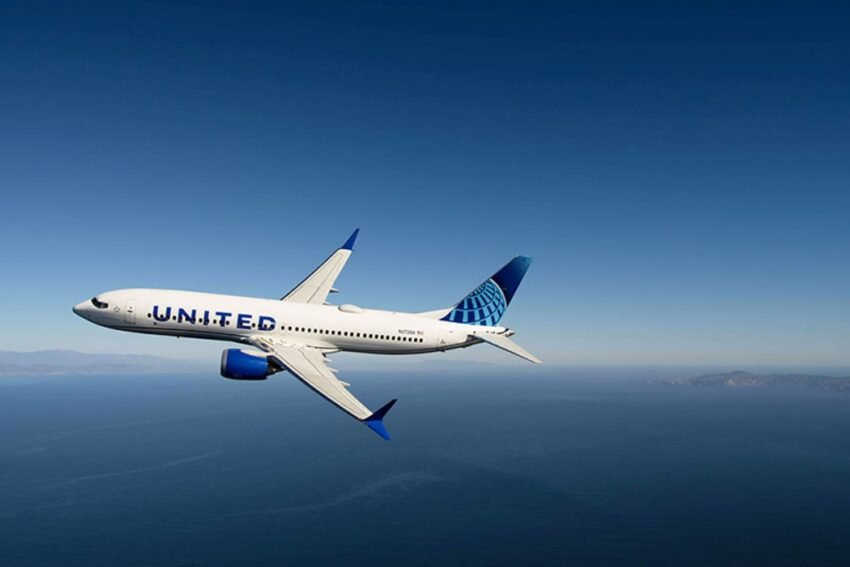
People who use air routes through major airports like Houston or who transfer in Europe may soon have less time spent getting in line for landing due to a successful trial made by Boeing together with United Airlines. At the end of October 2025, a United 737-8 aircraft (which is one of the planes that belong to Boeing’s 2025 ecoDemonstrator Explorer fleet) was brought into operation to experiment with a complete cutting-edge, web-based communication system that employed the Internet Protocol Suite (IPS).
This development is aimed at dramatically improving how information flows between the flight deck, air-traffic control and airline operations, a shift that aviation executives believe could make flights more efficient, reliable, and passenger-friendly.
What Is Being Tested and Why It Matters
At its core, this is about replacing decades-old, piecemeal communication protocols with a modern, secure, high-bandwidth, satellite-linked IP-based system. The trial encompassed nine test flights, some over the U.S., others across Europe conducted from both Houston and Edinburgh.
If widely adopted, the IPS link promises:
- Faster, more reliable data exchange between cockpit, controllers and airline operations.
- Reduced air-traffic congestion, lower fuel burn and fewer emissions since flights could take more direct, optimised paths.
- A foundation for next-generation air-traffic management techniques. The data-rich linkage supports what is known as Trajectory-Based Operations (TBO), a system where full four-dimensional flight trajectories (latitude, longitude, altitude, time) are shared and followed from departure to arrival.
What TBO Means for Travellers: Less Waiting, Smoother Connections
For holiday-makers, business travellers and explorers alike, particularly those connecting across busy airports, TBO + IPS could make travel significantly smoother:
- Fewer holding patterns: Rather than circling for clearance before landing, aircraft could follow a shared 4D flight plan, reducing delays and uncertainty.
- More direct routing: With accurate, shared flight-path data, planes can avoid unnecessary detours, potentially cutting flight time and lowering the likelihood of missed connections.
- Improved predictability: Airlines and passengers alike benefit from better scheduling. Fewer surprises in arrival times means smoother onward connections or ground-transport plans.
- Environmental and cost benefits: Less fuel burnt means not just lower emissions but also in a competitive market possibly better fares or more stable pricing over time.
From the Flight Deck to Your Journey: Industry-Wide Potential
This experiment is part of Boeing’s long-running ecoDemonstrator programme, which since 2012 has tested more than 250 technologies aimed at improving safety, efficiency and environmental footprint of air travel.
The list of collaborators on this trial is broad: avionics suppliers, satellite-communications firms, regulatory agencies and academia joined forces to prove the concept, which increases the odds of real-world adoption in the near future.
If adopted across global carriers and air-space managers worldwide, what began as a technical test could reshape commercial aviation making flights less stressful for passengers, and helping airlines operate more efficiently and sustainably.
What This Means for You, the Traveller
Imagine boarding a flight to a destination you’ve long awaited not worrying about circling above an airport due to congestion, or fretting over missing a connecting flight because of delays. With IPS-enabled aircraft and TBO-based traffic management:
- Airlines may be able to promise smoother arrival times more reliable schedules.
- Delays and holding-pattern drags could be reduced, leading to shorter overall travel time.
- Environmental benefits might translate over time into more affordable flight pricing (or at least stable fares), especially for frequent flyers or long-haul travellers.
In other words, what started as a technical trial high above the skies could soon translate into real travel comforts and predictability for passengers on the ground.
Final Thoughts
With aviation taking this step forward, global travelers who are either hopping for holidays or traveling as a journalist chasing a story would hopefully be the first ones to experience a new type of flying that is almost like a direct door-to-door journey.
Image Credit: United Airlines
The post United Airlines Launches Bold New Flight Tech Promising Smoother Skies And Happier Passengers appeared first on Travel And Tour World.