AirBaltic Marks Thirty Years with Steady Growth, Smoother Journeys, and a Stronger Focus on Passenger Experience in 2025
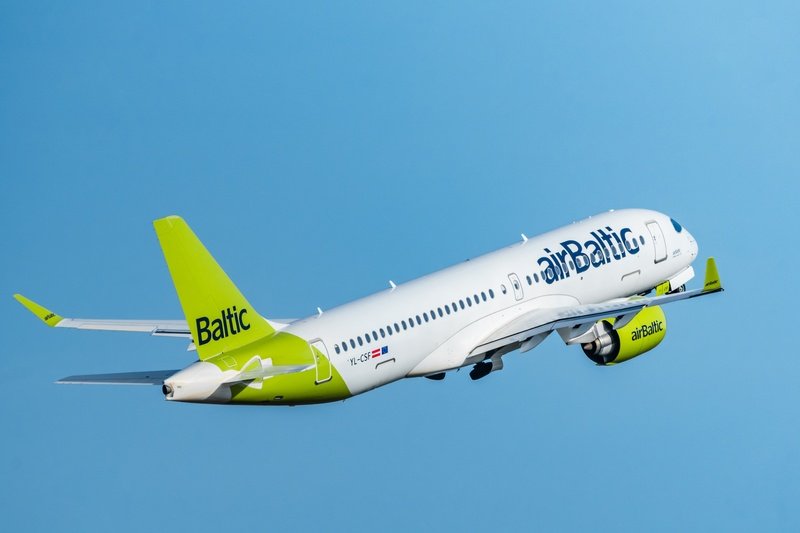

airBaltic’s thirtieth year was not about loud milestones or flashy promises. It was about consistency. In 2025, the Latvian carrier marked three decades in the sky by quietly delivering what matters most to travelers: steady growth, more reliable operations, and a noticeably smoother flying experience. From improved punctuality and network stability to a sharper focus on how passengers actually feel during their journey, airBaltic used its anniversary year to strengthen its foundations and prove that long-term success comes from getting the basics right, flight after flight.
Looking back at 2025, Latvia’s flag carrier airBaltic paints the picture of a year shaped by steady growth, smoother journeys, and a sharp focus on how passengers actually experience flying. Marking its thirtieth anniversary, the airline kept a wide mix of operations running, from regular scheduled flights to ACMI and charter services, while pushing ahead with upgrades across its network.
The year was also about strengthening the foundations of the business. airBaltic continued to refine its customer offering, advance its fleet plans, deepen partnerships, and improve day-to-day operational strength. The annual review brings together the main figures and performance highlights that defined airBaltic’s operations throughout 2025, offering a clear snapshot of how the airline performed during a milestone year.
Erno Hildén, Chief Executive Officer of airBaltic: “I joined airBaltic at the end of 2025, following a year of continued traffic growth and strong passenger demand. Looking ahead to 2026, our priority is to be the airline of choice for travellers from the Baltic region – trusted for reliability, convenience, and a consistently high-quality experience. By maintaining a modern, efficient Airbus A220-300 fleet, strengthening our operational excellence, and continuing to invest in service quality, we aim to deliver seamless journeys that passengers can rely on every day and choose with confidence.”
Network Reach and Operational Strength
Throughout 2025, airBaltic continued to strengthen its role as a key connector for the Baltic region, operating a network of 133 routes linking 82 destinations across 38 countries. The airline recorded steady operational growth, flying more than forty-seven thousand services during the year, an increase of over two percent compared with the previous year. Passenger numbers climbed beyond five point two million, setting a new annual high and confirming sustained demand for airBaltic’s network. On-time performance also improved, with punctuality reaching seventy-seven percent, marking a noticeable rise from 2024.
The year was also marked by notable milestones, including two decades of service on the Riga–Barcelona route and three decades of continuous operations between Riga and both Stockholm and Helsinki, underscoring the airline’s long-standing presence in key European markets.
Passenger Trends and Core Destinations
Passenger traffic in 2025 reflected a balanced mix of leisure travel and hub-based connectivity. From Riga, strong demand was seen on routes to cities such as Copenhagen, Amsterdam, Dubai, Paris, London Gatwick, Vienna, Rome, Oslo, Zurich, and Berlin. Vilnius-based operations connected travellers to Amsterdam, Tallinn, Paris, Munich, Lisbon, Tenerife, Dubai, Berlin, Hamburg, and Prague, while Tallinn served popular links including Amsterdam, Paris, Vilnius, London Gatwick, Munich, Malaga, Barcelona, Copenhagen, Brussels, and Tenerife. Together, these routes highlighted airBaltic’s growing role as a regional gateway to Europe and beyond.
Onboard Experience and Digital Innovation
Improving the passenger journey remained a central priority in 2025. airBaltic began rolling out SpaceX Starlink high-speed internet across its fleet, becoming the first airline in Europe to introduce this technology. By year’s end, twenty-one aircraft were equipped with Starlink, offering fast and reliable connectivity from gate to gate. The rollout is set to continue through 2026, with the goal of making high-speed internet available on most scheduled flights.
Fleet Growth and Modernisation
Fleet expansion continued steadily during the year with the delivery of three additional Airbus A220-300 aircraft, reinforcing airBaltic’s focus on efficiency and sustainability. A major highlight was the arrival of the airline’s fiftieth A220-300, unveiled with a special livery inspired by nature and the national symbols of Latvia, Estonia, and Lithuania. The aircraft was officially presented in Mirabel, Canada, and later showcased in Riga.
Strategic Partnerships and Network Expansion
Partnership development remained an important growth driver. The Lufthansa Group completed its minority investment in airBaltic alongside the Latvian state, strengthening long-term cooperation. Codeshare agreements were expanded with Lufthansa Group airlines and Turkish Airlines, while a new partnership with Air India was announced, opening additional travel options beyond Europe and improving long-haul connectivity.
ACMI and Charter Operations
Beyond scheduled services, ACMI and charter flying continued to play a vital role in airBaltic’s business model. In 2025, ACMI operations accounted for around thirty thousand flights, representing growth of more than fourteen percent year on year. These services supported several established European carriers and helped optimise fleet utilisation. Charter activity also remained strong, with six hundred fifty-four flights operated during the year.
Cargo and Mail Performance
airBaltic maintained its position as the leading cargo and mail carrier at Riga Airport in 2025. Alongside passenger flights, the airline handled a broad range of cargo shipments across its network. On August twenty-three, a record-breaking three thousand one hundred thirty-five kilograms of cargo was loaded on a single Riga–Chisinau flight, the heaviest payload ever carried on a scheduled airBaltic Airbus A220 service since 2020. The airline also transported more than eight hundred thousand mail bags, supporting postal services across the region and beyond.
People, Training, and Infrastructure Investment
Workforce development remained a cornerstone of airBaltic’s strategy. During the year, four hundred fourteen new employees joined the airline, bringing total staff numbers close to three thousand. Recruitment focused largely on cabin crew, pilots, passenger service agents, and aircraft mechanics.
To support growth, airBaltic expanded its training and maintenance capabilities by adding a new Airbus A220 full-flight simulator, effectively doubling simulator capacity. Operational infrastructure was further enhanced with the opening of two new aircraft hangars and the launch of the Baltic Cargo Hub, now one of the largest air cargo facilities in the region.
Pilot Academy Progress
The airBaltic Pilot Academy continued to build future flight crew capacity. Sixty-two new cadets enrolled in 2025, while forty students completed their training and moved into operational roles. Five academy graduates were promoted to Captain, and by the end of the year, the programme had one hundred fifty-seven active students.
Awards and Industry Recognition
airBaltic received wide international recognition in 2025 for safety, sustainability, fleet quality, and workplace practices. Airline Ratings listed the carrier among the World’s Safest Airlines and Top Airlines for 2025. Additional honours included the Flyers’ Choice Awards and recognition as a leader in sustainability initiatives. ch-aviation named airBaltic the recipient of Europe’s Third Youngest Aircraft Fleet Award, while APEX awarded the airline its Five Star Major Airline status.
Public Engagement and National Celebrations
The airline marked its thirtieth anniversary with a series of events involving passengers, staff, and partners. The celebrations peaked on October first, exactly three decades after airBaltic’s first commercial flight on the Riga–Stockholm route. To mark the occasion, a commemorative flight operated on the same route, featuring a live choir performance onboard. airBaltic also took part for the sixth time in Latvia’s national ceremonial parade, marking the country’s one hundred seventh anniversary with a flyover along the Daugava River using a specially painted Airbus A220-300 in Latvia’s national colours.
airBaltic’s thirtieth anniversary in 2025 was defined by progress rather than spectacle. The airline delivered steady growth, more reliable operations, and smoother journeys across its network. By putting real focus on punctuality, comfort, and everyday passenger experience, airBaltic showed how three decades of learning can translate into better flying today.
Looking Ahead to 2026
As airBaltic moves into 2026, the focus remains on steady fleet growth, fine-tuning the route network, and maintaining reliable operations. The airline aims to strengthen connectivity from the Baltic region while continuing to improve the end-to-end passenger experience through service upgrades, onboard innovation, and targeted enhancements across the travel journey.
The post AirBaltic Marks Thirty Years with Steady Growth, Smoother Journeys, and a Stronger Focus on Passenger Experience in 2025 appeared first on Travel And Tour World.