Cape Town’s Overtourism Crisis 2026: Residents Speak Out Against Skyrocketing Rents and Urban Crowding
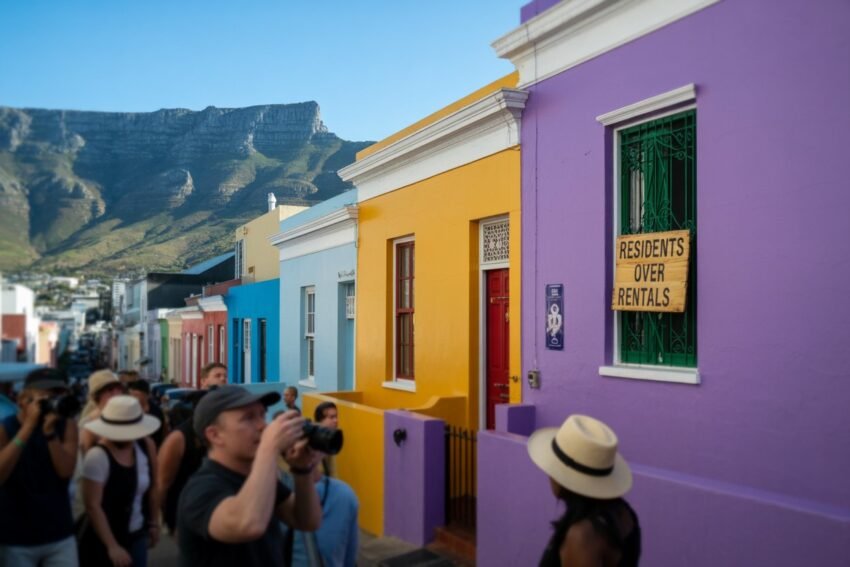

Cape Town has always been a city of contrasts, but in January 2026, those contrasts are sharper than ever. On one hand, the tourism sector is the city’s golden goose, supporting over 106,000 jobs and contributing billions to the GDP. On the other, the very people who make Cape Town “Cape Town” are finding themselves squeezed out of their own neighborhoods.
The surge in visitor numbers—marked by an 11% increase in international arrivals this festive season—has brought the issue of overtourism to a fever pitch. From the narrow, colorful streets of Bo-Kaap to the coastal strips of Sea Point, the message from locals is clear: Growth is good, but at what cost?
The “Airbnb Effect” and the Rental Crisis
For many Capetonians, the biggest grievance is the housing market. As of early 2026, the average nightly rate for a short-term rental in the city has climbed to R2,600, with luxury villas in Camps Bay commanding upwards of R12,000 per night.
While this is great news for property owners, it has created a nightmare for long-term tenants.
- Gentrification: Historic areas like the Bo-Kaap are seeing “tourism gentrification,” where traditional homes are converted into Airbnbs, displacing families who have lived there for generations.
- Digital Nomads: The rise of remote workers, often paid in stronger foreign currencies like the Dollar or Euro, has further inflated rents, making the city center unaffordable for the average South African middle class.
The “Disneyfication” of Culture
Beyond the financial strain, there is a deep sense of cultural loss. In the Bo-Kaap, residents have recently held protests against new developments, including a controversial six-story hotel they say will overshadow the area’s heritage.
“It feels like we are living in a theme park,” one resident told local media. “People come for three hours, take their Instagram photos against our colorful walls, and leave. But for us, this is our home, our history, and our place of worship.”
The concern is that “normal” shops—the local grocer, the tailor, the corner café—are being replaced by bubble tea kiosks and souvenir stalls catering exclusively to transient visitors.
Infrastructure Under Pressure
Cape Town’s geography is as beautiful as it is limiting. With the mountain on one side and the sea on the other, the city’s roads and public spaces have a finite capacity.
- Traffic Gridlock: During the 2025/26 peak season, travel times to popular spots like Cape Point and Boulders Beach doubled.
- Natural Degradation: Long-term residents argue that the city’s “crown jewels”—its forests, beaches, and hiking trails—are being degraded by sheer volume, while the “inflow of money” rarely seems to find its way into improving these natural assets.
The Official Stance: “Growth by Design”
The City of Cape Town and organizations like Cape Town Tourism (CTT) are well aware of the rising friction. Alderman James Vos, Mayco Member for Economic Growth, maintains that the growth is “by design” and essential for job creation. He argues that for every ten tourists, one job is created or sustained.
To counter the urban concentration, officials are pushing a strategy of “Geographic Spread.” The goal is to move the “tourist receipt” out of the CBD and into the wider Western Cape—encouraging visitors to stay in the Winelands (Stellenbosch, Paarl, Elgin) or explore local neighborhoods like Khayelitsha and Langa.
Finding the Middle Ground
The frustration of Cape Town residents doesn’t stem from a hatred of tourists, but from a desire for balance. As South Africa looks to double its international arrivals in the coming years, the 2026 season serves as a warning.
If the city is to remain a “world-class destination,” it must first remain a livable city for its citizens. This may require:
Stricter Rental Regulations: Aligning with European models where short-term rentals are capped to protect the long-term housing stock.
Infrastructure Reinvestment: Ensuring that the billions generated by tourism are visibly reinvested into the roads, water systems, and natural parks that both locals and visitors rely on.
Community-Led Tourism: Giving residents in historic precincts a direct say (and a direct share) in how their culture is marketed and managed.
Conclusion: A City at a Crossroads
Cape Town in 2026 is a victim of its own success. The warmth and pride of the “people” are what travelers cite as the highlight of their trip. If those people are displaced or alienated, the very soul of the destination will vanish.
The challenge for the remainder of the 2026 season is to prove that tourism can be a partnership between the visitor and the host, rather than an extraction of resources.
The post Cape Town’s Overtourism Crisis 2026: Residents Speak Out Against Skyrocketing Rents and Urban Crowding appeared first on Travel And Tour World.