What It’s Like to Be Stranded on Australia’s Longest Road
What It’s Like to Be Stranded on Australia’s Longest Road

Nullarbor Plain, Australia, has become an unexpected stopping point for hundreds of travelers after a bushfire forced the closure of the Eyre Highway, severing the main road link between Western Australia and South Australia. The closure has left tourists and freight drivers waiting at remote roadhouses across one of the country’s most isolated stretches of road, turning long-planned journeys into open-ended pauses.
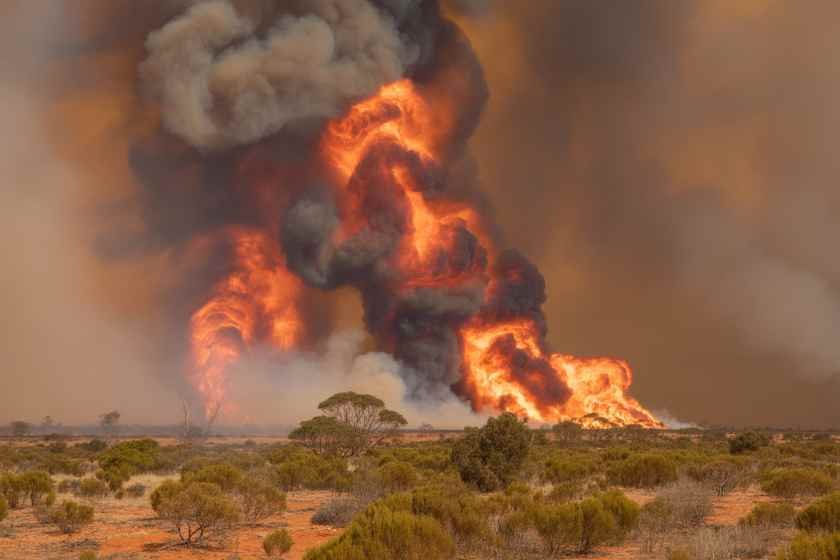
The 700-kilometre section of highway between the South Australian border and Norseman has been closed since Monday morning after a fire near Caiguna, roughly 1,000 kilometres east of Perth, jumped the highway. The fire was sparked by dry lightning over the weekend and continues to affect conditions across the region.
A Sudden Stop on a Classic Australian Journey
The Eyre Highway is more than a road. For many travelers, it is a defining Australian road trip, stretching across the vast limestone landscape of the Nullarbor Plain. Campervans, caravans, motorcycles, and four-wheel drives regularly traverse the route, connecting coastal towns, desert lookouts, and roadhouses spaced hours apart.
With the highway closed, travelers have been forced to stop at these roadhouses, some of the only services available across the plain. For tourists, what was meant to be a night’s rest has turned into an extended stay, with uncertainty about when the journey can resume.
Roadhouses Become Temporary Hubs
Roadhouses along the Nullarbor are designed to support travelers passing through, not to host large numbers of stranded visitors. Yet they have become temporary hubs, providing fuel, food, and accommodation to those unable to move in either direction.
For many tourists, the experience has highlighted the realities of remote travel in Australia. Limited mobile coverage, vast distances between towns, and dependence on a single highway mean that closures have immediate and widespread effects.
Caravan parks and motel rooms at roadhouses filled quickly, while others camped nearby, conserving supplies and waiting for updates from road authorities.
Impact on Tourism Travel Plans
The closure has disrupted travel itineraries for domestic and international visitors alike. The Nullarbor crossing is often a key segment in longer journeys linking Western Australia with South Australia, Victoria, or New South Wales.
Tourists heading west toward Perth or east toward Adelaide have had to pause plans, reschedule accommodation, and delay onward connections. Some travelers had planned to reach coastal destinations or national parks, while others were returning vehicles or catching flights after completing long-distance drives.
The disruption highlights how weather events and natural hazards can quickly alter travel conditions in remote regions, where alternative routes are limited or nonexistent.
Freight and Travel Share the Same Road
The Eyre Highway also carries heavy freight traffic, supplying goods between the eastern states and Western Australia. With the road closed, truck drivers have joined tourists at roadhouses, further increasing demand for services.
For travelers, sharing space with long-haul drivers underscores the highway’s role as a lifeline rather than just a scenic route. When the road closes, both tourism and essential transport are affected simultaneously.
Monitoring Conditions Before Reopening
Road authorities have confirmed the highway will reopen only when conditions are safe. Fire activity, weather patterns, and visibility all influence the timing of any reopening.
In the meantime, travelers are advised to remain where they are, conserve fuel, and follow official updates. Attempting detours across unsealed tracks is not recommended, as distances are vast and services are scarce.
For tourists unfamiliar with the Nullarbor, the situation serves as a reminder that preparation and flexibility are essential when traveling through Australia’s remote interior.
Nullarbor Travel: A Test of Planning
The Nullarbor Plain attracts travelers precisely because of its scale and isolation. Long, straight stretches of road, expansive skies, and dramatic coastal cliffs define the journey. Yet these same qualities mean that disruptions can last longer and affect more people.
Tourism operators and travel guides often stress the importance of carrying extra water, food, and fuel when crossing the Nullarbor. Events like this bushfire closure demonstrate why those precautions matter, even for well-prepared travelers.
A Different Kind of Travel Experience
For those stranded, the experience has shifted from movement to waiting. Conversations with fellow travelers, shared meals at roadhouses, and watching weather conditions become part of the journey.
While itineraries are delayed, the pause offers a rare glimpse into life along one of Australia’s most remote highways, where roadhouses function as community centers for travelers from across the country.
Looking Ahead
As fire crews and authorities continue to monitor conditions near Caiguna, travelers remain in place, ready to resume their journeys when the Eyre Highway reopens. Until then, patience and caution guide travel decisions across the Nullarbor.
For anyone planning long-distance road trips in Australia, the situation is a timely reminder: travel across remote regions is shaped as much by nature as by maps. On the Nullarbor Plain, journeys can change quickly, and sometimes the road itself decides when travel can continue.
The post What It’s Like to Be Stranded on Australia’s Longest Road appeared first on Travel And Tour World.