Ryanair Prepares for a Challenging Winter with easyJet and Other European Airlines as They Reshape Their Networks

European airlines are preparing for a challenging winter by reducing costs, adjusting flight schedules, retiring inefficient aircraft, and expanding routes where passenger demand remains strong. Ryanair, Lufthansa, easyJet, British Airways, SAS, and several other European carriers are reshaping their networks as higher fuel expenses, geopolitical tensions, rising operating costs, and uncertain seasonal demand challenge profitability. Some airlines are cutting flights and moving aircraft to stronger markets, while others are expanding international connections to capture winter tourism demand. According to aviation data provider OAG, several carriers substantially reduced their planned winter seat capacity between September and October 2026. These changes reveal an industry attempting to balance financial stability with passenger expectations as the European winter flight schedule begins on October 25, 2026.
Which European Airlines Are Preparing for the Challenging Winter?
| Airline | Country / principal market | Winter 2026–27 preparation | Main challenge | Assessment |
|---|---|---|---|---|
| Ryanair | Ireland | Cutting weaker routes, relocating aircraft and protecting fuel expenditure through hedging. Expanding selectively at Birmingham. | Rising jet fuel costs, aviation taxes and weaker fuel-hedging protection from April 2027. | Strong short-term cost discipline; greater exposure beyond March. |
| easyJet | UK / Europe | Removing approximately 1.2–1.4 million winter seats in successive announced reductions while adding selected leisure routes. | High fuel costs and weaker off-peak demand. | Proactive capacity management, although cuts affect connectivity. |
| Lufthansa | Germany | Reducing short- and medium-haul capacity equivalent to five aircraft; retiring inefficient aircraft and reorganising group operations. | Fuel prices, labour costs and network profitability. | Strong evidence of an explicit winter cost-reduction plan. |
| British Airways | UK | Announced 9% expansion in long-haul flying, adding Melbourne and Colombo and increasing selected international frequencies. | Fuel costs, geopolitical disruptions and the economics of additional long-haul flying. | Expansion-led preparation focused on selected international markets. |
| SAS Scandinavian Airlines | Denmark / Scandinavia | Adding Dubai, Phuket and Krabi services; deploying two additional A350 aircraft and increasing long-haul capacity. | Fuel prices and the costs of expanding during a volatile season. | Clear long-haul network and fleet preparation. |
| Finnair | Finland | Updating its winter flight plan, including cancellations, aircraft changes and timetable revisions. | Connecting-market demand, Asian route economics and operational uncertainty. | Demonstrated schedule flexibility; financial resilience not established by this evidence alone. |
| LOT Polish Airlines | Poland | Revised scheduled winter seat capacity downward by 11% during the September–October comparison period. | Cost pressure and the need to match capacity with demand. | Substantial timetable adjustment; underlying causes require more confirmation. |
| airBaltic | Latvia | Filed capacity reduced by 5.1% during the same comparison period. | Financial resilience, operating costs and fleet availability. | Defensive scheduling; high operational uncertainty. |
| Volotea | Spain | Reduced filed winter capacity by 9% in the examined period. | Profitability of lower-frequency regional routes. | Significant network retrenchment; possible demand-management response. |
| TUI Airways | UK | Reduced filed winter seat capacity by 5.4%. | Holiday demand, fuel expenditure and seasonal utilisation. | More cautious winter capacity positioning. |
| Loganair | UK | Reduced filed winter capacity by 15.9%. | Regional route economics and maintaining connectivity. | One of the sharper revisions in the dataset. |
| Smartwings | Czech Republic | Reduced filed winter capacity by 33.4%. | Seasonal demand and operating costs. | Major scheduling revision; not proof of financial distress. |
| Corendon Airlines | Türkiye / Netherlands market | Reduced filed capacity by 38.2%. | Leisure-market seasonality and winter profitability. | Largest proportional revision in the selected OAG comparison. |
Why Are European Airlines Preparing for Such a Challenging Winter in 2026–27?
European aviation faces a difficult combination of economic uncertainty, operational expenditure, and changing travel patterns. Although demand for international travel remains important, airlines must manage the increasing cost of delivering services while maintaining competitive ticket prices.
Fuel expenditure represents one of the most significant concerns. Geopolitical instability in the Middle East has created uncertainty surrounding aviation fuel supplies and pricing. Airlines with substantial exposure to international markets face additional pressure when flight routes become longer or more expensive to operate.
Winter also introduces seasonal variations in passenger demand. While Christmas holidays, ski tourism, and winter-sun vacations generate significant traffic, many European routes experience weaker demand during November, January, and February.
Airlines must therefore avoid operating too many flights with insufficient passengers. Aircraft maintenance, airport charges, staffing expenses, and regulatory costs further complicate financial planning.
Consequently, European carriers are adopting different strategies. Some are prioritizing financial discipline, while others are investing in routes expected to attract higher-paying travelers.
Which European Airlines Are Making the Biggest Winter Flight Capacity Adjustments?
Recent OAG schedule comparisons illustrate how significantly European airlines have revised their winter operations. Between September 7 and October 18, 2026, Ryanair reduced its published winter seat capacity from approximately 76.78 million to 71.05 million seats, representing a 7.5% reduction.
LOT Polish Airlines reduced its planned capacity by 11%, while Spanish carrier Volotea recorded a 9% decline. Latvia-based airBaltic adjusted its capacity downward by 5.1%, and SAS reduced its previously filed schedule by 5%.
Several smaller airlines introduced even more substantial percentage changes. Corendon Airlines reduced filed capacity by 38.2%, Smartwings by 33.4%, and Georgian Airways by 17.9%.
These figures represent revisions to future flight schedules, not actual passenger cancellations or confirmed reductions compared with the previous winter.
| European airline | Reduction in planned winter seats |
|---|---|
| Corendon Airlines | 38.2% |
| Smartwings | 33.4% |
| Georgian Airways | 17.9% |
| Loganair | 15.9% |
| LOT Polish Airlines | 11.0% |
| Volotea | 9.0% |
| Ryanair | 7.5% |
| TUI Airways | 5.4% |
| airBaltic | 5.1% |
| SAS | 5.0% |
The adjustments demonstrate how airlines are refining their schedules ahead of winter. However, not every change necessarily reflects weak demand or financial difficulties. Seasonal charter operations, network restructuring, and routine timetable updates can also influence published capacity.
How Is Ryanair Protecting Its European Network Against Rising Costs?
Ryanair is taking a selective approach to winter capacity, reducing operations where costs have become less attractive while increasing its presence at airports offering stronger commercial opportunities.
In Belgium, the Irish low-cost airline announced plans to withdraw six aircraft, eliminate 20 routes, and remove approximately 1.1 million seats from its winter schedule. The airline linked these changes to aviation taxation, including an increase in Belgium’s passenger tax from €2 to €7 by January 2027.
However, Ryanair is simultaneously expanding operations at Birmingham Airport in the United Kingdom.
The carrier announced a ninth based aircraft and five additional routes connecting Birmingham with Copenhagen, Rome Fiumicino, Warsaw Modlin, Marrakesh, and Tirana.
This approach demonstrates the airline’s willingness to redistribute aircraft rather than simply reduce its European footprint.
Ryanair also benefits from fuel hedging arrangements covering much of its winter requirements. Nevertheless, reduced hedge coverage from April 2027 could expose the airline to greater fuel-price volatility.
Why Is easyJet Reducing Flights Before the Winter Season Begins?
easyJet is reducing planned winter capacity to better align available seats with expected passenger demand. OAG’s October 20 analysis indicates that the airline removed approximately 2.8% of its originally scheduled winter seats, equivalent to roughly 1.1 million seats.
The reductions affect several important European markets, including the United Kingdom, Italy, France, Spain, and Germany.
Italy recorded a 4.1% reduction in easyJet capacity, while Switzerland experienced a smaller 1.5% adjustment. Milan Malpensa and London Luton were among the airports experiencing notable revisions, with reductions of 5.9% and 5.2%, respectively.
Nevertheless, easyJet continues to support selected winter destinations. Capacity to Finland increased by 3.7%, reflecting opportunities in seasonal tourism.
The airline’s approach highlights the importance of controlling capacity before weaker travel periods arrive. By adjusting schedules early, easyJet can reduce the risk of operating underfilled aircraft while concentrating available resources on commercially attractive services.
How Is Lufthansa Strengthening Its Financial and Operational Position?
Germany’s Lufthansa Group is responding to challenging market conditions through aircraft modernization, network adjustments, and operational efficiency measures.
One important initiative involves withdrawing older aircraft that consume more fuel and are comparatively expensive to maintain.
Plans include removing the remaining Airbus A340-600 aircraft from the Lufthansa fleet and grounding two Boeing 747-400 aircraft. Lufthansa has also outlined a winter reduction in short- and medium-haul capacity equivalent to five aircraft.
These measures are intended to limit unnecessary expenditure while supporting the group’s broader financial objectives.
At the same time, Lufthansa continues to develop routes where winter demand offers growth opportunities, particularly destinations associated with Nordic tourism and seasonal holidays.
The airline has planned additional connections to destinations such as Rovaniemi and other northern European cities.
Lufthansa’s strategy reflects a broader industry reality: maintaining a large network is no longer sufficient. Airlines must ensure aircraft efficiency, route profitability, and disciplined resource allocation throughout the winter.
Why Is British Airways Expanding While Other European Airlines Reduce Capacity?
British Airways is entering winter 2026–27 with a different commercial strategy, emphasizing international expansion rather than widespread network reductions.
The British carrier announced plans to increase long-haul flying by approximately 9%, introducing Melbourne, Australia, and Colombo, Sri Lanka, to its network.
Additional frequencies are planned for Cape Town, Tokyo, Barbados, Jamaica, and Costa Rica. The airline is also strengthening selected connections to the United States and major Asian markets.
These developments indicate confidence in specific international travel segments, particularly long-distance leisure trips and established business destinations.
British Airways has also identified changing demand patterns associated with geopolitical uncertainty, including increased customer interest in alternative holiday destinations.
However, expansion carries financial risks. Long-haul aircraft consume substantial quantities of fuel, making route profitability sensitive to operating expenses and ticket revenue.
The airline’s success will depend on attracting sufficient passenger demand while managing costs across its growing international network.
How Is SAS Preparing for Stronger Winter Tourism Demand Across Scandinavia?
Scandinavian Airlines, commonly known as SAS, is strengthening its international network through additional aircraft and new long-haul services from Copenhagen.
Its announced winter schedule includes direct connections to Dubai in the United Arab Emirates, Phuket in Thailand, and Krabi in Thailand.
The expansion represents an important development for travelers from Denmark, Sweden, Norway, and neighboring Northern European markets seeking warmer destinations during winter.
SAS plans to introduce two additional Airbus A350 aircraft, supporting a 34% increase in A350 operations.
The airline also expects its capacity to Thailand to increase by more than 75% compared with the previous winter.
Additional capacity is planned for Boston, San Francisco, Chicago, Tokyo, Seoul, and Bangkok.
Although OAG data indicates subsequent reductions in the carrier’s initially filed overall winter schedule, these targeted long-haul investments remain significant.
SAS is effectively concentrating growth on international routes that it considers commercially promising.
What Do Winter Capacity Cuts Mean for Smaller European Airlines?
Smaller and regional European carriers face particular challenges because their networks often depend on specific seasonal markets, limited aircraft fleets, and relatively narrow passenger segments.
OAG data indicates substantial schedule revisions among several airlines.
Corendon Airlines reduced its filed winter capacity by 38.2%, while Smartwings recorded a 33.4% decline. Georgian Airways reduced its planned seats by 17.9%, and Loganair registered a 15.9% reduction.
LOT Polish Airlines, Volotea, TUI Airways, and airBaltic also revised their schedules downward.
These figures deserve careful interpretation. Some airlines operate extensive seasonal or charter networks, where significant adjustments may reflect normal planning decisions.
However, reduced capacity can still affect regional tourism economies.
Destinations dependent on direct international services may experience fewer available seats, reduced flight frequency, or greater reliance on connecting flights.
For regional airports and tourism authorities, maintaining dependable airline relationships could become increasingly important as carriers prioritize commercially sustainable operations.
Could Higher Fuel Prices Make European Air Travel More Expensive This Winter?
Higher aviation fuel prices could place additional pressure on European airfares, although the impact will differ across airlines and travel markets.
Fuel hedging provides temporary protection for some carriers by allowing them to secure future fuel purchases at predetermined prices.
Ryanair reportedly has approximately 80% of its fuel requirements hedged through March 2027. However, its coverage falls considerably from April, increasing its exposure to market volatility.
The airline has warned that European ticket prices could rise substantially in 2027 if elevated fuel costs persist and the supply of available airline seats tightens.
For passengers, the effect may emerge through higher base fares, reduced promotional availability, or fewer low-cost flights on particular routes.
Nevertheless, rising operating costs do not automatically translate into identical fare increases across Europe.
Competition, booking patterns, consumer spending, and destination popularity will continue to influence pricing.
Travelers booking during Christmas, school holidays, and major winter events may face particularly strong demand.
What Should Travelers Expect From European Airlines During Winter 2026–27?
Passengers traveling across Europe should prepare for a winter characterized by changing flight schedules, selective route expansion, and potentially higher travel expenses.
The first priority is monitoring flight reservations carefully. Airlines may revise departure times, aircraft assignments, and operating frequencies as winter schedules are finalized.
Travelers flying from smaller regional airports should pay particular attention to reductions in direct services. Alternative connections could become necessary on routes where airlines reduce capacity.
However, the outlook is not entirely negative.
British Airways and SAS are expanding selected international routes, while Lufthansa and easyJet are supporting established winter tourism destinations.
These developments may create additional opportunities for travelers heading to Asia, Africa, the Caribbean, and Northern Europe.
Passengers should compare departure airports, review airline notifications, and understand their rights under applicable passenger-protection regulations.
Booking flexibility and appropriate travel insurance may also help manage unexpected changes.
Can European Airlines Maintain Stability Throughout the Difficult Winter Season?
Europe’s airlines are entering winter 2026–27 with carefully differentiated strategies rather than a single industry-wide response.
Ryanair, easyJet, and Lufthansa are emphasizing cost control, aircraft efficiency, and capacity discipline. British Airways and SAS are expanding selected international services to capture demand in promising travel markets.
Meanwhile, regional and leisure-focused carriers are adjusting schedules to reflect their commercial circumstances.
The central challenge is finding the right balance between profitability, connectivity, and passenger confidence.
Airlines that manage fuel exposure, allocate aircraft efficiently, and respond quickly to changing demand may be better positioned to withstand winter pressures.
However, successful commercial preparation does not guarantee protection against severe weather, staffing disruption, or unexpected geopolitical developments.
Ultimately, winter 2026–27 will test European airlines’ financial discipline and operational flexibility, while reshaping travel opportunities across the continent and beyond. Their performance will influence not only airline profitability but also international tourism, regional airport connectivity, and the cost of travel for millions of passengers.
The approaching winter season presents a defining challenge for European aviation. Rising fuel prices, geopolitical uncertainty and uneven passenger demand are forcing carriers to reconsider traditional operating strategies. While some airlines are reducing capacity and retiring inefficient aircraft, others are expanding international routes to capture profitable travel opportunities. These contrasting decisions reveal an industry determined to protect financial stability without sacrificing competitiveness. For travelers, the consequences could include higher ticket prices, changing schedules and fewer regional connections. Ultimately, effective cost management, operational flexibility and targeted network expansion will determine which carriers navigate the difficult season most successfully.
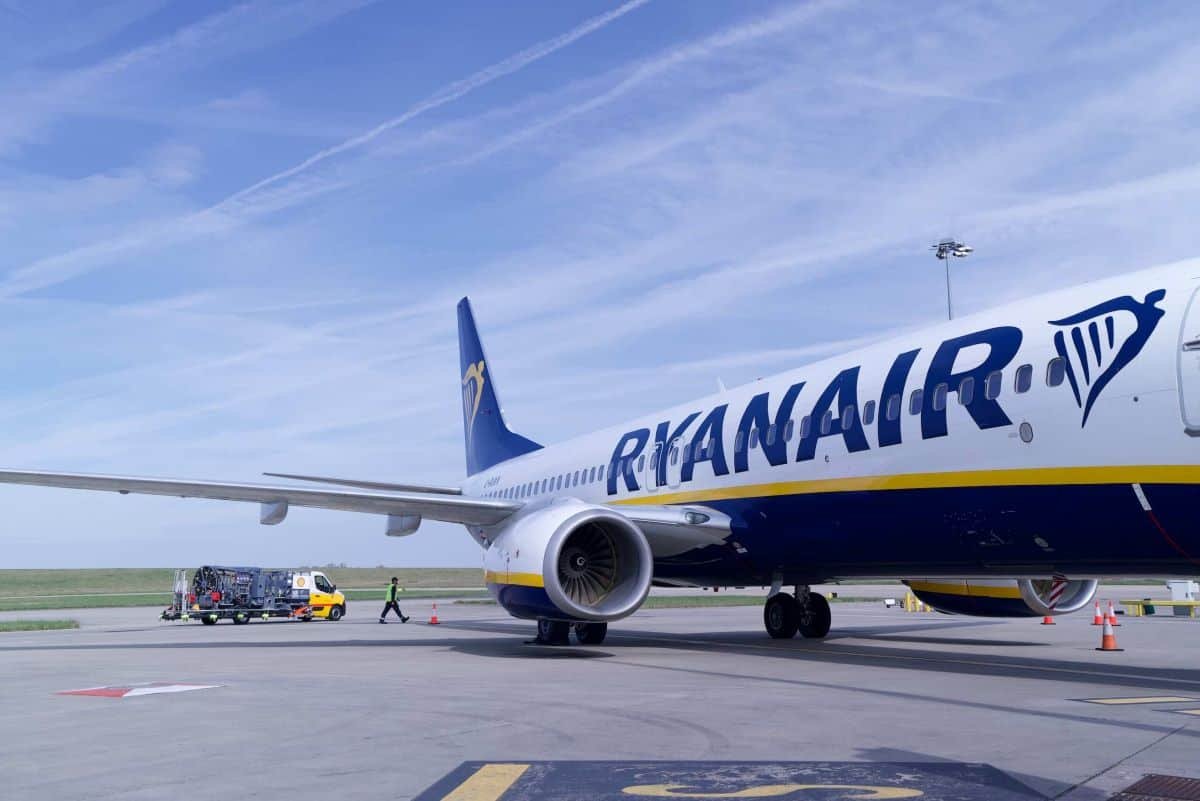
[Image: Ryanair]
The post Ryanair Prepares for a Challenging Winter with easyJet and Other European Airlines as They Reshape Their Networks appeared first on Travel And Tour World.