South Korea Tour Packages Fall to Just a New Rate as Chinese Embassy Warns Travellers About Forced Shopping
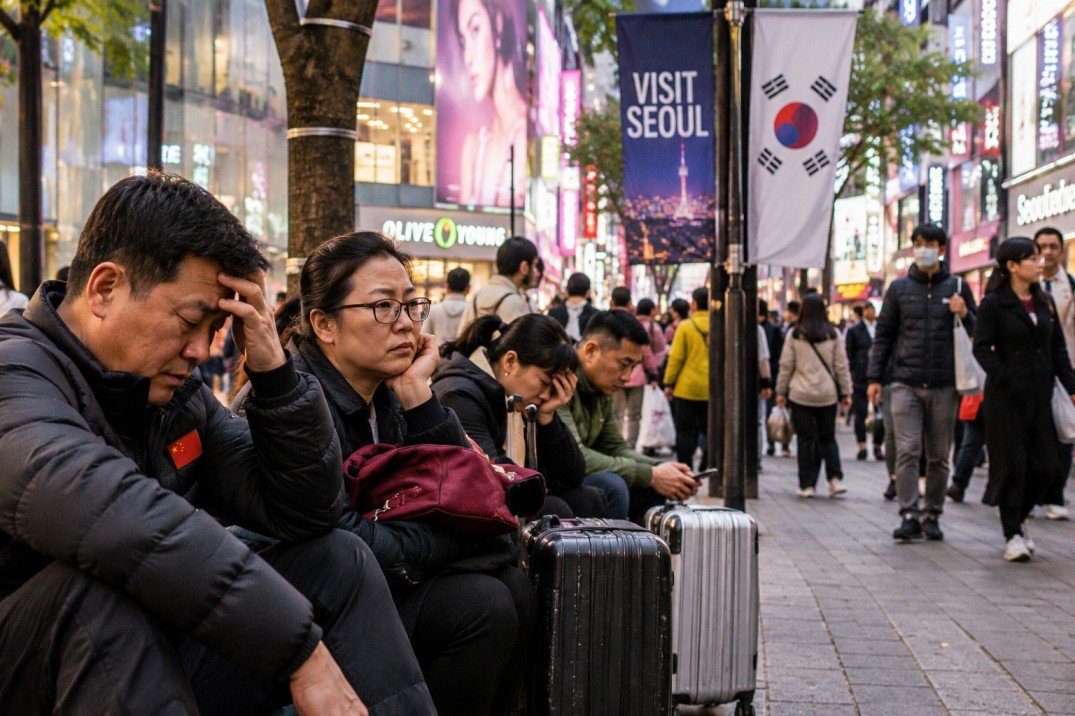

South Korea’s rapidly expanding Chinese group tourism market is being affected by an intense price war, with travel packages reportedly being advertised for as little as US$45 and initial deposits starting at RMB 199, approximately US$30. The unusually low prices have prompted concerns about the commercial practices used by some tour operators, particularly following complaints involving compulsory shopping, unexpected spending demands and shortened itineraries.
The Chinese Embassy in Seoul has issued a warning encouraging group travellers to exercise caution when selecting travel agencies and to remain alert to packages being marketed at prices that appear unreasonably low.
The concerns have emerged during a period of substantial growth in Chinese visitor arrivals to South Korea. During the first nine months of 2026, approximately 5.47 million trips were made by mainland Chinese travellers to the country, representing a year-on-year increase of 29.2%.
The expansion has been supported by visa-free entry arrangements for groups, increased airline frequencies and changing destination preferences, with Japan reportedly losing some ground in the Chinese outbound tourism market.
However, the strong recovery in visitor numbers has also intensified competition among travel agencies operating between China and South Korea.
In some cases, packages are reportedly being sold at prices that may not cover the actual cost of transportation, accommodation and other travel services. Revenue is subsequently expected to be recovered through shopping commissions and additional purchases made by tourists.
The situation has raised questions about consumer protection, tourism quality and the sustainability of extremely low-priced group travel products.
South Korea’s Chinese Group Tour Market Faces Intense Price Competition
A significant reduction in advertised package prices has been reported across parts of the Chinese group travel market to South Korea.
Travel products priced at approximately US$45 have been identified in local media reports, while deposits of RMB 199, equivalent to around US$30, have also been advertised.
These prices have attracted attention because of the costs normally associated with international travel arrangements.
Group tourism packages may involve accommodation, local transportation, sightseeing services and tour management, depending on the terms of the booking.
When packages are offered at unusually low prices, questions may arise about how the services are financed and whether additional spending is expected after arrival.
The current price competition has reportedly become particularly intense among agencies seeking to secure Chinese visitor groups.
Some South Korean operators have been described as accepting arrangements under which payments are made to Chinese travel companies in exchange for receiving tour groups.
This commercial structure can create pressure to generate revenue through activities outside the initial package price.
Shopping commissions have consequently become an important concern within the affected segment of the market.
Chinese Embassy in Seoul Issues Warning Over Extremely Cheap Tour Packages
The Chinese Embassy in Seoul has urged travellers to exercise greater caution when booking group holidays to South Korea.
Particular concern has been expressed about travel packages being advertised at prices that appear significantly below reasonable operating costs.
The warning follows complaints from Chinese visitors who reported being pressured to make purchases during organised tours.
In some cases, itineraries were reportedly shortened when tourists failed to spend the amounts expected by tour operators or associated businesses.
Such incidents have raised concerns about the difference between advertised travel services and the experiences ultimately provided.
Travellers have therefore been encouraged to select travel agencies carefully and examine package conditions before confirming reservations.
The warning highlights the importance of understanding what is included in a tour and whether shopping stops form part of the itinerary.
Greater transparency is particularly important when consumers are attracted by exceptionally low advertised prices.
Although inexpensive travel products are not necessarily fraudulent, unusually low prices may warrant additional scrutiny when the financial arrangements supporting a package are unclear.
Chinese Tourist Arrivals to South Korea Reach 5.47 Million in Nine Months
The controversy surrounding low-priced tours has emerged alongside strong growth in Chinese travel to South Korea.
Approximately 5.47 million trips were recorded from mainland China during January–September 2026.
The figure represented an increase of 29.2% compared with the corresponding period in 2025.
The growth demonstrates the importance of China as an international visitor market for South Korea.
Chinese travellers contribute to demand across accommodation, transportation, restaurants, shopping establishments and tourism attractions.
Organised group travel remains one component of this wider visitor market.
The reported increase in arrivals has been supported by several factors, including visa-free entry arrangements for groups and additional airline services.
Changes in destination preferences have also been identified, with South Korea reportedly benefiting as Japan lost some ground among Chinese outbound travellers.
However, the expansion in visitor numbers has not eliminated concerns about the quality of certain tourism products.
Instead, increased demand has been accompanied by stronger competition among operators seeking a share of the group travel market.
Visa-Free Group Entry and Additional Flights Support Tourism Growth
Visa-free entry arrangements for eligible Chinese groups have been identified as an important factor supporting travel demand to South Korea.
Such arrangements can reduce administrative barriers for travellers participating in qualifying organised tours.
Improved accessibility may encourage additional bookings, particularly where travel packages are designed around short holidays and convenient itineraries.
Increased flight frequencies have also contributed to the expansion of travel opportunities between China and South Korea.
Additional airline capacity can provide greater flexibility when travel agencies organise group departures.
The availability of flights is especially relevant to operators managing large numbers of passengers within fixed travel schedules.
Together, visa facilitation and improved aviation connectivity have helped create conditions for stronger visitor growth.
However, increased accessibility can also intensify competition among travel agencies.
Where numerous operators attempt to attract similar customers, lower prices may be used as a marketing tool.
The resulting pressure can become problematic when package prices are reduced to levels that depend heavily on additional revenue from tourist purchases.
Forced Shopping Complaints Raise Concerns About Tour Quality
One of the principal concerns associated with the low-cost tour market involves reports of compulsory or heavily pressured shopping.
Under certain arrangements, tourists may be taken to selected retail outlets during their organised itineraries.
Tour operators or local agencies may receive commissions linked to purchases made at these establishments.
Shopping visits are not inherently problematic when they are disclosed clearly and remain optional.
However, concerns arise when travellers are pressured to spend money or when access to advertised sightseeing activities is affected by purchasing decisions.
According to the supplied reports, some Chinese groups complained that itineraries had been shortened after expected shopping expenditure was not achieved.
Such practices can undermine the value of a package and create disputes between travellers and service providers.
They may also affect the reputation of the destination among visitors who expected a conventional sightseeing holiday.
The distinction between legitimate retail excursions and coercive shopping arrangements is therefore important when assessing complaints.
Seoul Inspections Identify 85 Suspected Dumping Tours Among 100 Packages
The scale of the low-price tour problem has been highlighted through inspections conducted in Seoul.
According to the reported findings, 85 out of 100 low-priced packages advertised on Chinese online travel platforms were suspected of operating as dumping tours.
These packages were associated with business models in which unusually low advertised prices could be offset through shopping-related revenue.
The findings suggest that the issue may be widespread within the specific group of low-price products examined.
However, the inspection results should not be interpreted as evidence that 85% of all Chinese tours to South Korea involve improper practices.
The reported sample was limited to 100 low-priced packages available through Chinese online platforms.
Furthermore, the classification involved suspected dumping tours rather than a confirmed finding of misconduct in every case.
Nevertheless, the results have drawn attention to the commercial arrangements underlying deeply discounted travel packages.
They also demonstrate why consumer protection and transparency remain important issues within the group tourism market.
Korean Travel Agencies Reportedly Pay Chinese Operators for Tourist Groups
A particularly significant feature of the current market involves the financial relationships between Chinese travel agencies and South Korean receiving operators.
In conventional tourism arrangements, local service providers are generally compensated for delivering accommodation, transportation, guiding and other services.
However, the reported low-price market includes arrangements under which some Korean agencies effectively pay Chinese operators to send them tourist groups.
Such payments may be made in anticipation of revenue generated after visitors arrive in South Korea.
Shopping commissions can become an important source of income under this model.
The commercial risk is that the initial tour price may not provide sufficient revenue to cover the services promised to travellers.
If expected shopping expenditure does not materialise, financial pressure may be transferred to the local operator.
This can create incentives for excessive retail stops or pressure on tourists to make purchases.
The reported arrangements therefore raise questions about the sustainability of business models built around very low package prices.
South Korea Faced Similar Chinese Tour Problems During the Mid-2010s
The controversy is not entirely new to South Korea’s tourism industry.
During the mid-2010s, intense competition for Chinese group travellers was also reported among Korean travel agencies.
At that time, some local operators paid Chinese agencies for the opportunity to receive their tour groups.
The resulting itineraries were often structured around retail visits that generated commission income.
Shopping-related revenue was used to support the financial viability of packages offered at low prices.
The model attracted regulatory attention because of concerns about tour quality and commercial practices.
In 2016, South Korean regulators reduced the number of agencies designated to handle Chinese group tours.
The intervention was intended to address problems within the affected segment of the market.
The recurrence of similar practices in 2026 suggests that earlier regulatory measures did not permanently eliminate the commercial incentives associated with commission-funded tourism.
The current price competition has been described as even more severe in some cases.
Online Travel Platforms Become Central to Low-Price Package Competition
Chinese online travel platforms have become an important distribution channel for group tourism products to South Korea.
Through digital booking services, travel packages can be promoted to large numbers of prospective customers.
Prices, itineraries and promotional offers can be compared quickly, increasing competition among travel agencies.
While online distribution improves accessibility, it can also encourage aggressive discounting.
Packages advertised at exceptionally low prices may attract attention even when the complete cost of the holiday is not immediately apparent.
The inspection findings from Seoul demonstrate the importance of examining the commercial arrangements behind such products.
Clear descriptions of accommodation, transportation, sightseeing and shopping requirements are essential to informed booking decisions.
Where additional charges or compulsory retail visits are not disclosed, travellers may be exposed to unexpected costs.
For online travel platforms, the situation raises questions about how low-price tourism products are presented and monitored.
South Korea Tourism Faces a Balance Between Visitor Growth and Service Quality
The increase in Chinese visitor arrivals represents an important development for South Korea’s tourism economy.
Higher international travel volumes can support businesses across accommodation, transportation, retail and hospitality.
However, the commercial value of tourism cannot be assessed through arrival numbers alone.
Visitor satisfaction, spending patterns and service quality also influence the wider benefits generated by international travel.
When low-cost tour packages depend heavily on shopping commissions, spending may be concentrated among selected retail businesses.
Other tourism providers may receive a smaller share of visitor expenditure.
The reported practice of shortening itineraries can also reduce opportunities for travellers to experience cultural attractions and other destinations.
For South Korea, maintaining a balance between competitive pricing and reliable tourism services will remain important.
The continued expansion of Chinese tourism could create substantial commercial opportunities, but the long-term benefits may be affected if consumer confidence is weakened by negative experiences.
Travel Agencies Face Pressure to Improve Pricing Transparency
The current controversy has highlighted the importance of transparent pricing within organised tourism.
Travellers booking international group holidays need clear information about the services included in the advertised price.
Accommodation arrangements, transportation, meals, sightseeing activities and shopping stops should be explained before a reservation is confirmed.
Where optional purchases are offered, the distinction between voluntary spending and compulsory charges should be clear.
Tour operators also need to ensure that advertised itineraries can be delivered without relying on undisclosed spending expectations.
The financial sustainability of a package is an important consideration for both travel businesses and consumers.
Prices that appear unusually low may require additional explanation, particularly when several services are included.
Greater transparency can help reduce disputes and support confidence in organised group travel.
For agencies operating in competitive markets, maintaining service quality may also provide an alternative to relying exclusively on aggressive price reductions.
Chinese Travellers Encouraged to Check Tour Conditions Before Booking
The warning issued by the Chinese Embassy in Seoul places particular emphasis on careful selection of travel agencies.
Travellers considering inexpensive group packages are being encouraged to examine the full itinerary and the terms associated with the booking.
Special attention should be given to shopping requirements, additional fees and conditions affecting scheduled sightseeing activities.
The reputation and credentials of the travel provider should also be considered.
Where prices appear substantially lower than comparable packages, clarification may be required regarding the services included.
Written booking information can help establish what has been promised.
Travellers may also benefit from retaining copies of itineraries, payment records and communications with travel agencies.
If unexpected spending demands are encountered, these records may assist in explaining the circumstances to the relevant service provider or consumer protection authority.
The objective is not to discourage affordable travel but to reduce the risk of misleading offers and coercive commercial practices.
China–South Korea Tourism Outlook Depends on Sustainable Group Travel Practices
The rapid expansion of Chinese travel to South Korea has created opportunities for airlines, hotels, retailers and tourism operators.
With 5.47 million mainland Chinese trips recorded during the first nine months of 2026, the market has demonstrated substantial growth.
However, the reported price war has raised concerns about how tourism products are being sold and delivered.
Packages advertised for as little as US$45 and deposits starting at RMB 199 have attracted scrutiny because of the potential dependence on shopping-related revenue.
The Chinese Embassy in Seoul has responded by encouraging travellers to remain cautious, while inspections in Seoul have identified suspected dumping practices among low-priced online packages.
The similarities with problems experienced during the mid-2010s have also brought renewed attention to the effectiveness of tourism market oversight.
For South Korea’s tourism industry, the challenge will involve maintaining the benefits of strong visitor growth while addressing concerns about service quality and consumer protection.
More transparent pricing, reliable itineraries and commercially sustainable travel products could help support confidence in the group tourism market.
As China–South Korea travel continues to expand, the quality of visitor experiences will remain an important factor in determining the long-term value of this growing tourism relationship.
The post South Korea Tour Packages Fall to Just a New Rate as Chinese Embassy Warns Travellers About Forced Shopping appeared first on Travel And Tour World.