American, United Airlines Overcharging Solo Travelers; Delta, Southwest Remain Affordable: Here’s What You Need to Know Now
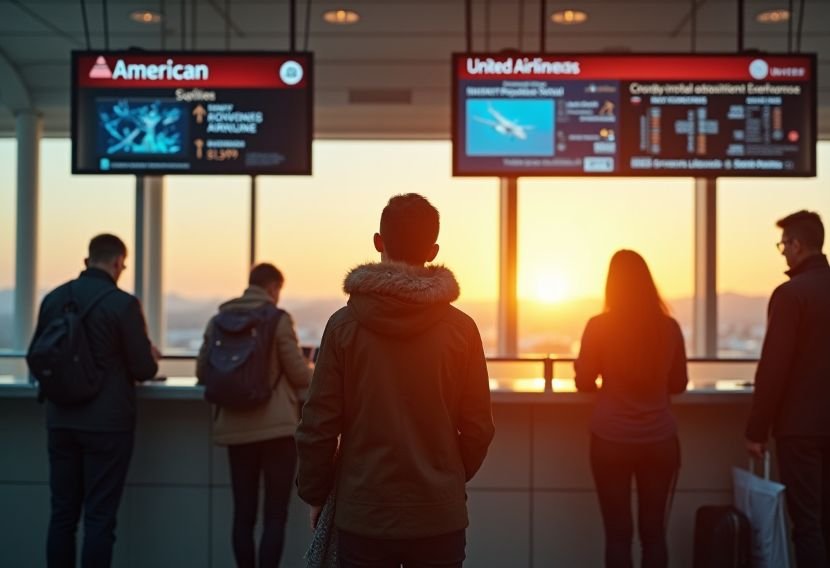

There’s been a bubbling debate in the US travel industry in recent months. Single travelers are increasingly becoming victims of a cost of flying which is stable or higher than the cost of air travel for a pair of (or more) travelers. American Airlines and United Airlines most notably in the epicenter of the controversy, whereas others like Delta and Southwest have held the line on pricing and addressed pricing concerns differently.
The Rise of the Solo Traveler Rip-off
The overcharging of individual passengers was first exposed in May 2025. Kyle Potter, the Executive Editor at Thrifty Traveler, started by discovering that airlines were essentially penalizing singletons by pricing them higher than a group on one of their flights. Potter’s research covered America’s largest airlines, including Delta, American and United, and identified disturbing trends of price differences.
According to Potter’s analysis, lone passengers paid much more per ticket than groups of them. The discrepancies were greatest on flights at the beginning of the week, and solo travelers paid the higher fares. Good Eu-rail group discounts were available, however. On the weekends, the price discrepancy between solo and group bookings was lower, though still present in some cases.
Delta Airlines Acts, American and United Don’t
This realization of price discrimination angered the public. Delta Airlines responded by immediately ending the policy and vowed to charge the same price for solo flyers on similar routes. United Airlines, for its part, had temporarily abandoned its policy but has since, it’s said, been jumping the gun on charging solo flyers once again.
American Airlines, though, has pressed on with its aggressive pricing strategy by charging solo travelers much more for weekday flights. American Airlines in particular has come out strongly in defense of its pricing strategies, arguing that they are the result of dynamic pricing algorithms that automatically change fares based on competition and demand. Even after the company’s explanation, its policies are still provoking the anger of consumers and travel experts.
American Airlines Takes the Lead with Pricing Tactics
A new examination by The Economist confirms that American Airlines is the leader when it comes to charging extra for solo travel. The airline charges these higher fares on 57 per cent of its routes, with its short-haul flights a particular target. American Airlines mostly manages routes where it faces scant or zero competition from budget airlines like Southwest Airlines, which offers low fare options to the same destinations.
United Airlines, for instance, has used this pricing tactic on just 8 percent of its routes. The wide split between the two airlines demonstrates that American Airlines is leading the double cost for single travelers and underscores how bizarre pricing is in the business.
Flights of the Short-Haul Variety: A Favorite Target for Price Discrimination
Short-haul flights are especially susceptible to likely price increases for solo travelers. These routes often face less competition from low-cost carriers, which makes it easier for full-service airlines such as American Airlines to pass on higher fares. Pricier fares for solo travelers on popular routes between major business centers, such as New York, Chicago, Dallas and Los Angeles, are also not uncommon.
For instance, fare variations between solo passengers and group bookings are often sizable on routes that link New York with Chicago or Dallas. Solo travelers simply have no good budget airline options on those routes and, in most cases, there’s very little choice than to pay far higher prices. Airlines such as American Airlines make hay out of this, because that’s a very lucrative route—business travelers travel that route a lot, they love having a nonstop, and businesspeople have traditionally just paid more for plane tickets when they travel during the week.
Dynamic Pricing and the Single Traveller
Airline industry has worked on dynamic pricing for years. This was a tactic to increase ticket prices according to demand, timing and market rivals. American and United Airline Stand By Price Hike for Solo Travelers Getting back to the dynamic pricing philosophy they reason that their ploy of charging single travelers more is just dynamic pricing.
But some argue that dynamic pricing disadvantages solo travelers. Travel experts say that singles, less price sensitive than groups, make ripe targets for price hikes. This pricing is premised on the idea that solo travelers have no one to lose if their options are limited, and no one to notice upward price creep, and that that’s unfair.
Furthermore, this expectation unfairly bears down on leisure travelers especially when solo travel is their preferred method. Business fliers, however, may be equally affected, with schedules that can require flexible or late-notice flight reservations, and be thus more prone to price spikes in fares.
Consumer Concerns and Expert Criticism
The idea of price discrimination is worrying travel pros and consumer rights advocates. Some suggest opaque pricing in the airline sector makes it hard for passengers to know how and why the cost of their ticket is changing. The ticket might continue to be offered at the same price to solo travelers who never even know it’s more expensive for them simply because they’re traveling alone.
Alex Monroe, a travel industry analyst, said most people traveling alone don’t realize there is a price discrepancy and then pay grossly inflated rates. “Monroe thinks you should be more forthright about your fare policies to stem any public outcry and long-term damage to your reputation. Clearer pricing mechanisms would help customers make an informed decision and trust the aviation industry better, he added.
The latest Flurry of Litigation and the General Legal and Regulatory Focus on Drug Pricing Practices
As the backlash over the pricing practices grows, airlines are already facing the threat of legal and regulatory action. Antidiscrimination groups have urged investigations into whether the practice constitutes unfair pricing, and therefore runs up against laws meant to protect consumers.
The Department of Transportation (DOT) and other regulators are currently examining the pricing practices of major US carriers, like American and United. In accordance with existing legislation, the airlines are committed to a price fairness and transparency. Airlines found in violation could be subject to legal action, fines or other penalties.
Impact on Airline Brand Perception
An airline’s public image can be rocked when it is crime for doing just that with solo travelers. There is growing awareness among consumers that they are being price-discriminated against, and that is resulting in loyalty transferring to airlines with more transparent pricing models.
Consumers applauded Delta Airlines quick decision to stop being a discriminator in the pricing space. Delta scores goodwill and earns loyalty points through its action to treat solo travelers equitably. Meanwhile, airlines such as American and United who stick to these controversial price-hiking strategies do so at the expense of driving a significant portion of their clientele away.
Alternatives for Solo Travelers
For those traveling alone, stacking several different airlines for the best price is key. So you’re ready to say sayonara to both American and United (which wouldn’t be great choices for me as a solo traveler when price matters), there are other options out there. Delta Airlines, Southwest Airlines and budget airlines such as Spirit Airlines have become known for offering cheaper fares to the individual traveler.
Specialists in travel booking also recommend floating the idea of booking flights over weekends, when gaps between single and multiple travelers are normally smaller. Also, if you’re flying solo, it pays to look out for travel packages or specials from travel companies, who often provide discount group rates to single travelers.
Bottom Line: The future of airline pricing
No matter that the fight over dynamic pricing and solo travel overcharging rages on: American and United need to change their pricing strategy. Dynamic pricing is a fact of life in the airline sector but all passengers, whether single or in a family, must have an open and transparent fare system.
It is likely that those that favor equitable resolutions, like Delta and Southwest, will enjoy greater customer loyalty and public goodwill. On the other hand, airlines that keep up with the discrimination face the danger of prosecution and consumer alienation.
Staying informed and vigilant is especially important for solo travelers to avoid overpaying for flights. It’s evident that consumers speak for themselves and are unwilling to accept these never-ending fees. As the industry changes inherently and approaches maturation, people want to know what they are really paying for.
The post American, United Airlines Overcharging Solo Travelers; Delta, Southwest Remain Affordable: Here’s What You Need to Know Now appeared first on Travel And Tour World.