Delta Flight from Atlanta to Orlando Carrying Two Hundred and Six Passengers Makes Emergency Landing in Jacksonville After Mid Air Cabin Depressurization
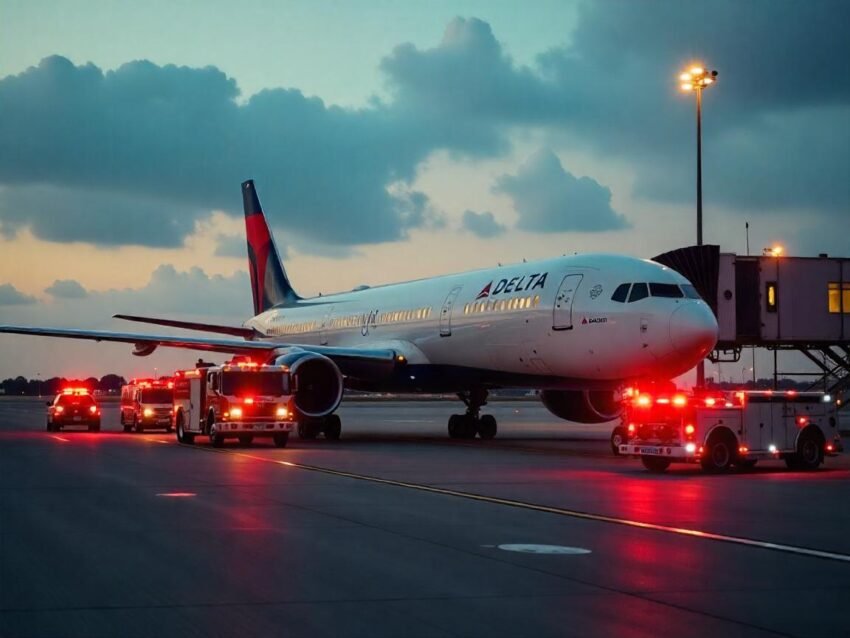

A terrifying mid-air emergency unfolded when a Delta flight from Atlanta to Orlando carrying two hundred and six passengers made an unexpected emergency landing in Jacksonville. The Delta aircraft was cruising toward its destination when a sudden cabin depressurization sent shockwaves through the cabin. Moments later, oxygen masks dropped, panic surged, and passengers braced for impact. The aircraft, packed with two hundred and six anxious travelers, diverted swiftly toward Jacksonville, a city unprepared for such a high-stakes arrival.
Delta Flight 1576 had just minutes to execute a life-saving emergency descent. Meanwhile, fears of smoke and suffocation gripped the cabin. As the aircraft made its final descent, tension reached its peak. The FAA launched a probe within hours, aiming to uncover the cause behind this terrifying event. Jacksonville became the unplanned epicenter of an aviation scare that could have ended far worse. What exactly happened onboard that Delta flight carrying two hundred and six passengers? This is the full story.
Terrifying Moments in the Sky as Delta 757 Makes Sudden Emergency Landing in Jacksonville, No Injuries Reported
A Delta Air Lines flight carrying 206 people was forced into an emergency landing after cabin depressurization triggered panic and oxygen mask deployment mid-flight. The dramatic event unfolded aboard Delta Flight 1576, en route from Atlanta (ATL) to Orlando (MCO), on June 9, when the Boeing 757-200 aircraft rapidly diverted to Cecil Airport (VQQ) in Jacksonville, Florida.
A Routine Flight Turns Chaotic
The flight departed Atlanta’s Hartsfield-Jackson International Airport as scheduled, with passengers expecting a short hop to Orlando. But midway through the journey, the atmosphere shifted. Cabin temperatures rose suddenly. Moments later, oxygen masks dropped from overhead compartments as the cabin lost pressure.
Passengers froze in confusion. Within seconds, the aircraft began an aggressive descent. Though trained for emergencies, even frequent flyers onboard felt the fear. Some described the experience as the most terrifying of their lives.
Emergency Descent and Unlikely Landing
Delta’s pilots took swift action. With exceptional control, they performed a steep and rapid descent. The aircraft was diverted to Cecil Airport—an airfield rarely used by commercial jets. As the plane banked and dropped altitude, anxiety grew onboard. Yet the landing was executed smoothly.
Three minutes later, the cabin door opened to safety. Emergency crews were on standby, but no fire was found. Despite early smoke-like reports, there were no visible flames, and passengers disembarked without injury.
Passengers Rattled, Crew Applauded
The silence inside the plane spoke volumes. Many passengers held hands, others prayed. The crew remained calm, guiding everyone through the ordeal. Upon landing, relief washed over the cabin. Applause broke out, tears were shed, and deep breaths finally came.
The quick thinking of the cockpit crew likely made the difference. Their military-grade precision in handling the emergency descent impressed even seasoned travelers. Flight attendants kept order as oxygen masks dropped and uncertainty loomed.
FAA Investigation Underway
The Federal Aviation Administration wasted no time. An immediate investigation into the cause of the depressurization has been launched. Mechanical checks are ongoing, and the Boeing 757 remains grounded at Cecil Airport until further notice.
Such depressurization events, though rare, are treated with the utmost urgency due to their life-threatening potential. Experts believe the aircraft’s cabin pressure system will be scrutinized, along with black box data and maintenance logs.
Wider Implications for Delta and the Industry
This emergency marks another critical reminder of the safety protocols airlines must follow—and how vital quick crew response is. Delta, already in the spotlight for expanding new routes and modernizing its fleet, now faces renewed scrutiny over its aging Boeing 757s.
As global airlines move toward newer, fuel-efficient models, incidents like this could accelerate retirements of older aircraft still in service. Moreover, the FAA’s findings could influence future safety advisories or policy changes across U.S. carriers.
Local Response and Passenger Logistics
Following the landing, Delta activated emergency support protocols for all 206 passengers. Buses and alternate flights were arranged to transport travelers to Orlando. Jacksonville officials confirmed that Cecil Airport operated without disruption following the landing.
Despite the unexpected nature of the diversion, local responders executed all emergency plans seamlessly. Medical teams evaluated passengers onsite, but no hospitalizations were required.
A Harrowing Reminder
The incident underscores the razor-thin margins that exist in modern aviation. One small failure can escalate in moments. Cabin depressurization not only endangers breathing ability but also risks structural damage if not contained swiftly.
Thanks to training, teamwork, and sheer professionalism, this flight landed without loss. But it will live on in the memories of all onboard as a close call that could have gone very differently.
Conclusion
As the FAA digs deeper into the cause, this emergency landing is a wake-up call. For Delta. For passengers. For regulators. As air travel rebounds globally, safety must remain non-negotiable.
The safe return of Delta Flight 1576 is a story of success amidst danger. But it’s also a clear sign that aviation, while one of the safest modes of transport, must constantly adapt and evolve.
The post Delta Flight from Atlanta to Orlando Carrying Two Hundred and Six Passengers Makes Emergency Landing in Jacksonville After Mid Air Cabin Depressurization appeared first on Travel And Tour World.