Dominican Republic, Cabo Verde, Mexico, Portugal, Spain Spark Tourism Revolution with New Communication Tactics at First International Summit on Communication and Tourism
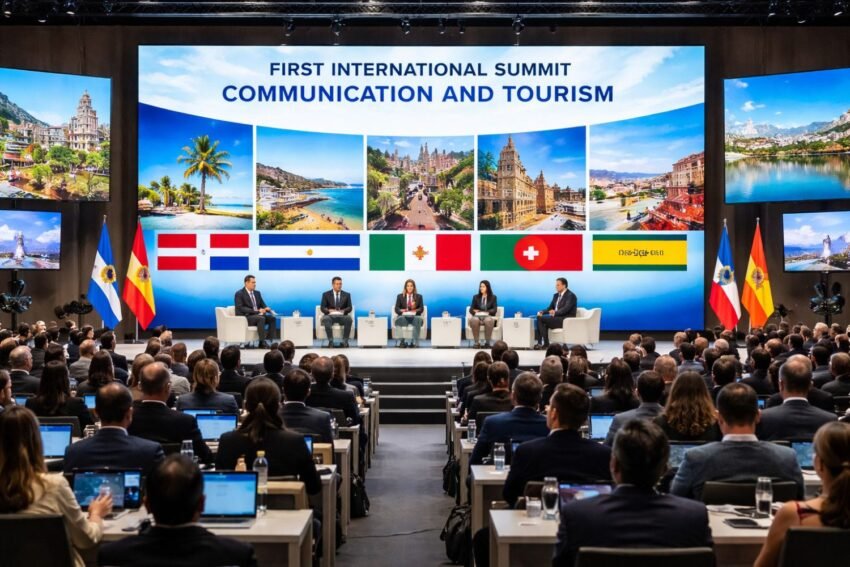

The Dominican Republic, Cabo Verde, Mexico, Portugal, and Spain recently became the center of attention at the First International Summit on Communication and Tourism. This landmark event, held during FITUR 2026, gathered global tourism leaders to discuss the future of tourism communication, a crucial sector in today’s dynamic travel industry. Experts from across the world came together to share insights and strategies that will shape the future of tourism marketing and branding.
During the summit, discussions focused on the role of communication in overcoming challenges such as tourism-phobia and misinformation. Countries like the Dominican Republic, Mexico, Portugal, Cabo Verde, and Spain all played key roles in highlighting how effective communication can strengthen country brands and drive tourism growth even in uncertain times. The summit emphasized the need for tourism professionals to be better trained and more adaptable in the face of these challenges.
The event also underscored the importance of authentic experiences in tourism. As Spain, Mexico, and Cabo Verde shared their efforts to promote local cultures, it became clear that the future of tourism communication must be more focused on local communities and authentic narratives. These countries and others are now looking to connect with travelers in new and meaningful ways, building trust and credibility through well-crafted communication strategies.
By fostering collaboration between Dominican Republic, Cabo Verde, Mexico, Portugal, and Spain, the summit set the stage for a new era in tourism, one where communication leads to more sustainable, inclusive, and emotionally driven travel experiences.
Tourism Branding Amid Uncertainty: A Necessity for Professional Training
The first panel, sponsored by the Ministry of Tourism of the Dominican Republic, addressed the need for effective tourism communication in today’s uncertain global environment. Experts highlighted the critical role of professional training in maintaining a strong country brand. José Luis Sá Nogueira, Minister of Tourism of Cabo Verde, emphasized that tourism professionals must be well-equipped to handle emerging challenges. He also discussed how the country is preparing for the 2026 FIFA World Cup, where Cabo Verde will make its first appearance. The panel agreed that well-trained professionals are essential to inspiring trust and delivering effective campaigns.
Navigating Tourism-Phobia: A New Approach to Communication
The “Living from tourism or surviving tourism” panel, sponsored by the Secretariat of Tourism of the State of Chihuahua (Mexico), delved into the growing issue of tourism-phobia. This term, used to describe the tensions between local residents and visitors, has emerged as a challenge for many popular destinations. María de Lurdes Vale, Director of Tourism of Portugal in Spain, explained that tourism-phobia often involves misunderstandings between people, not the tourism industry itself. Experts agreed that communication strategies need to evolve to address these tensions and ensure that both residents and tourists benefit from tourism.
Combating Misinformation: A Major Challenge for Tourism
In today’s digital age, misinformation and fake news are significant threats to destination reputations. A panel sponsored by Embratur, the Brazilian Tourism Board, explored how disinformation negatively impacts tourism. Jonathan Gómez, Director General of Tourism for the City Council of Málaga, criticized the use of influencer marketing for gaining virality at the expense of neighboring destinations. He cited an instance where misinformation about shark sightings in Marbella damaged the region’s tourism reputation. Nuria Cabrero, Editorial Director of Lonely Planet Spain, emphasized that reliable sources and thorough verification are key to fighting misinformation.
Authenticity in Tourism: A Path to the Future
The final panel focused on the future of tourism communication, sponsored by the Secretariat of Tourism of the State of Nayarit (Mexico). The discussion centered on telling authentic stories and embracing local culture. Juan Enrique Suárez, Secretary of Tourism of Nayarit, highlighted the region’s commitment to showcasing the lifestyles of its indigenous populations. Travelers today are increasingly seeking authentic experiences that connect with local communities and cultures. Experts agreed that effective tourism communication must tap into these desires for deeper, more meaningful travel experiences.
Empathy and Hope: The Future of the Tourism Sector
In her closing address, Natalia Bayona, Executive Director of UN Tourism, called for the tourism sector to become “more human” in the face of global tensions. She emphasized that tourism has a unique capacity to generate hope and social cohesion. Bayona’s call to action highlighted the need for continued investment in the sector to ensure its resilience and growth. Despite global challenges, tourism remains one of the world’s most dynamic and rapidly growing sectors.
The post Dominican Republic, Cabo Verde, Mexico, Portugal, Spain Spark Tourism Revolution with New Communication Tactics at First International Summit on Communication and Tourism appeared first on Travel And Tour World.