Fly for ₹2500: A Complete Guide to India’s UDAN Scheme Rules, Routes, and Booking Tips
Fly for ₹2500: A Complete Guide to India’s UDAN Scheme Rules, Routes, and Booking Tips

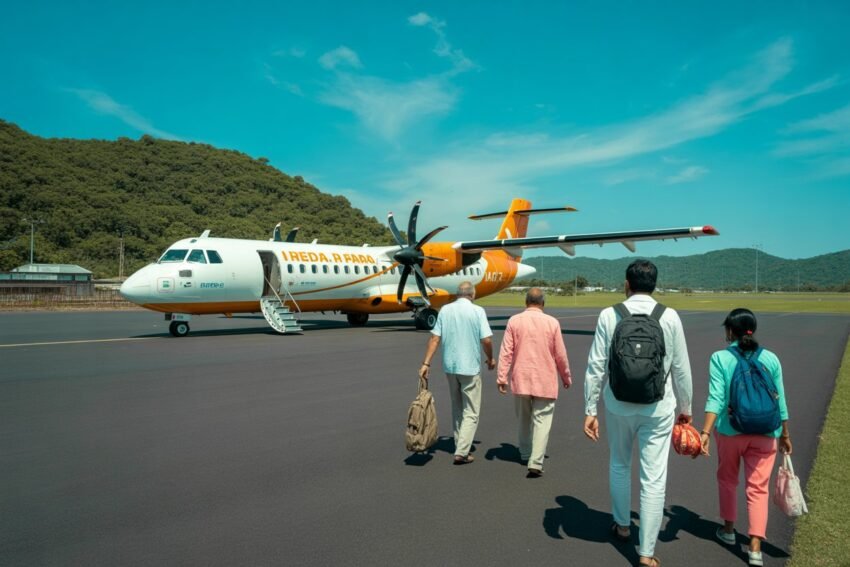
For decades, the roar of jet engines was a sound reserved for India’s tier-1 metros. But in 2026, the landscape of Indian aviation has fundamentally shifted. Under the central government’s flagship UDAN (Ude Desh Ka Aam Nagrik)scheme, the dream of the common citizen—the one wearing Hawai Chappals—boarding a Hawai Jahaz has become a daily reality.
As of March 2026, the scheme has operationalized over 650 routes, connecting 93 airports, heliports, and water aerodromes. The most attractive feature? A price cap that allows you to fly for roughly ₹2500 per hour.
What is the UDAN Scheme?
Launched by the Ministry of Civil Aviation, UDAN is a regional connectivity initiative designed to bring unserved and underserved airports onto the national aviation map. By providing financial incentives to airlines, the government ensures that even remote towns like Shimla, Nanded, Cooch Behar, and Kadapa have regular flight access to major cities.
The ₹2500 Rule: How Does the Math Work?
At first glance, a ₹2500 ticket for a one-hour flight seems financially impossible for an airline, given the high cost of fuel and maintenance. Here is how the government makes it sustainable:
- Viability Gap Funding (VGF): This is the “secret sauce.” If an airline’s operational cost for a regional route is higher than the revenue from low-cost seats, the government pays the difference. In the 2026 Union Budget, approximately ₹550 crore was allocated specifically for this subsidy.
- Seat Capping: Not every seat on a plane costs ₹2500. Usually, 50% of the seats (or a minimum of 9 and a maximum of 40) are reserved at the subsidized rate. The remaining seats are sold at market prices.
- Operational Concessions: To keep costs low, airport operators waive landing and parking charges, while state governments provide free security and fire services.
UDAN in 2026: More Than Just Planes
The scheme has evolved through several phases, and in 2026, it is no longer just about 70-seater jets.
- Heliports: Critical for the Northeast and hilly regions like Himachal Pradesh and Uttarakhand. A 30-minute helicopter ride is also capped at ₹2500.
- Water Aerodromes: Seaplanes are now connecting water bodies like the Sabarmati Riverfront to the Statue of Unity, providing a unique “last-mile” tourist experience.
- Krishi UDAN: Helping farmers transport perishable agricultural products from remote areas to big-city markets via air.
The Catch: Rules You Need to Know
While the scheme is a boon, securing a ₹2500 seat requires some strategy:
- Limited Inventory: Since only half the seats are capped, these are the first to sell out. Booking at least 3-4 weeks in advance is highly recommended.
- Specific Routes: The cap only applies to designated “Regional Connectivity Scheme” (RCS) routes. A flight from Delhi to Mumbai will never be ₹2500, but a flight from Delhi to Shimla or Kolkata to Cooch Behar likely will.
- Flight Duration: The ₹2500 cap is specifically for flights covering a distance of roughly 500 km (approximately a one-hour journey). Fares scale proportionally for longer or shorter regional hops.
How to Book Your UDAN Ticket
Booking is simpler than most people think. You don’t need a special portal; the subsidized seats are integrated into standard booking platforms:
- Airlines: Visit the websites of participating carriers like Alliance Air, SpiceJet, IndiGo, or Star Air.
- Travel Aggregators: Sites like MakeMyTrip, Yatra, and EaseMyTrip list these flights. Look for routes involving smaller regional airports.
- Identification: No special “common man” ID is required. Anyone can book these seats—from students and senior citizens to business travelers.
A Human Story: Connecting Families
The true success of UDAN isn’t in the budget spreadsheets; it’s in the human connections. It’s about the grandmother in Nanded who can now visit her grandchildren in Mumbai in 60 minutes rather than enduring a 12-hour train journey. It’s about the entrepreneur in an “Aspirational District” who can now meet clients in a metro and return home the same day.
Conclusion: Looking Toward the Future
With a proposed ₹30,000 crore expansion strategy aimed at connecting 120 new destinations over the next decade, UDAN is set to bring 4 crore additional passengers into the skies. As the infrastructure in tier-2 and tier-3 cities continues to upgrade, the “Hawai Jahaz” is no longer a symbol of luxury—it’s a tool for national progress.
The post Fly for ₹2500: A Complete Guide to India’s UDAN Scheme Rules, Routes, and Booking Tips appeared first on Travel And Tour World.