Newark Joins New York’s Battle Against Winter Storm Fern with FAA Flight Caps, Cancellations, and Delays at JFK, LGA, and EWR – What You Need to Know!
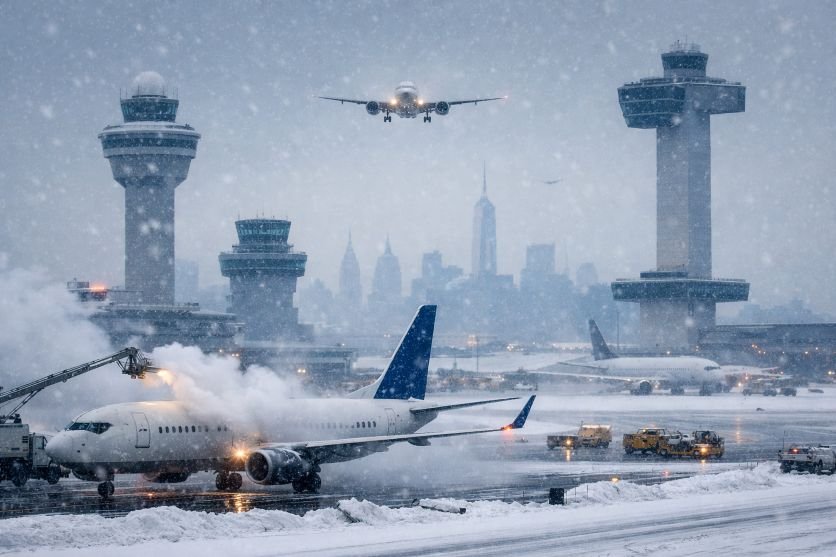

Newark (EWR), LaGuardia (LGA), and John F. Kennedy (JFK) airports are facing major disruptions as the Federal Aviation Administration (FAA) and U.S. Department of Transportation (DOT) confirm ongoing staffing shortages and immediate operational slowdowns due to Winter Storm Fern. These challenges are expected to continue throughout the weekend, with potential delays and flight cancellations affecting the entire New York metropolitan area.
As of January 24, 2026, travelers planning to fly from these major airports should prepare for a combination of long-term regulatory restrictions and immediate disruptions due to severe weather conditions. This news comes after the FAA announced that Newark Liberty International Airport (EWR) will continue to operate under flight caps, which are now extended through October 2026, in addition to the expected impacts of the winter storm.
Who is Affected?
Airports:
Newark (EWR), LaGuardia (LGA), and John F. Kennedy (JFK) airports in New York are the primary points of disruption. While the storm’s effects are concentrated on the region, the FAA has also issued broader warnings for other hubs along the Northeast Corridor, such as Boston and Atlanta, where weather-related delays are expected.
Passengers:
Travelers flying through New York’s major airports should anticipate flight delays, cancellations, and potential ground stops as both staffing shortages and severe weather conditions converge. Airlines are issuing waivers for rebooking, but many passengers will face difficulties in getting re-accommodated quickly due to the operational slowdowns.
What is Happening?
The FAA has been forced to implement a series of flight caps at the New York-area airports in light of persistent staffing shortages and a lack of sufficient air traffic controllers (ATCs). The Philadelphia Terminal Radar Approach Control (TRACON) facility, which manages air traffic for EWR, continues to face a shortage of controllers. This is compounded by the ongoing recovery from the late 2025 government shutdown, which froze critical air traffic controller training nationwide.
In addition to these ongoing operational challenges, the FAA is closely monitoring the major winter storm (Winter Storm Fern) that has caused significant snowfall across the Northeast. The storm, which began affecting the region on January 24, 2026, is expected to bring over 14 inches of snow to New York City and surrounding areas. This extreme weather will reduce visibility, increase de-icing requirements, and slow down the arrival and departure rates at the affected airports.
When is This Happening?
Immediate Weather Impact (January 23–26, 2026):
The immediate disruptions began on January 24 and will continue through at least January 26, 2026. The storm’s peak effects are forecasted to hit the New York area on January 25, making conditions extremely hazardous for travel.
Long-Term Staffing Caps (Through October 2026):
While the storm represents an immediate threat to travelers, the FAA’s decision to extend the flight caps at Newark until October 2026 indicates that the staffing shortages will continue to affect operations well into the future. This decision impacts air traffic flow and limits the number of flights that can operate during peak hours.
Where Are the Impacts Most Severe?
The FAA’s warnings and restrictions apply to all flights operating to and from Newark (EWR), LaGuardia (LGA), and John F. Kennedy (JFK) airports. These airports are not only the busiest in the region but also play a critical role in connecting New York City with both domestic and international destinations.
EWR is facing the most significant caps, limiting operations to just 72 per hour—far below its standard capacity of 77 to 80 per hour. This cap is expected to remain in place until October 2026 due to the understaffing at the Philadelphia TRACON facility, which services the New York region’s airspace.
In addition to the staffing-related flight restrictions, the winter storm is expected to worsen conditions across the New York metro area, with ground stops and delays possible at all three airports. Travelers should remain alert to changes in their flight status and be prepared for extended delays.
Why is This Happening?
The core reason for these ongoing disruptions is a severe shortage of air traffic controllers, which the FAA has acknowledged as a critical issue in maintaining normal flight operations. The shortage of controllers at the Philadelphia TRACON facility means that flight operations are significantly restricted, and the FAA has had to implement flight caps at Newark and other affected airports to prevent excessive delays. These caps have been extended for the foreseeable future as staffing issues continue to affect air traffic control throughout the region.
Meanwhile, the winter storm currently affecting the Northeast is exacerbating the situation, with snow, ice, and poor visibility significantly impairing air traffic operations.
How Are Airlines and Airports Responding?
In response to the FAA’s restrictions and weather-related disruptions, airlines are taking proactive steps to manage the situation. Almost all major carriers, including Delta Air Lines, United Airlines, and JetBlue, have issued travel waivers for affected travelers. These waivers allow passengers to rebook flights without paying change fees or fare differences, although availability for rebooking may be limited.
Airlines have also been preemptively canceling flights to stay within the FAA’s mandated hourly limits. As of January 24, 2026, over 2,300 flights have already been canceled nationwide, and additional cancellations are expected as the storm progresses. Airlines are working closely with the FAA to ensure that they adhere to flight caps and minimize operational delays.
Key Travel Tips for Affected Passengers:
- Check the FAA’s Real-Time Flight Status: Passengers are advised to visit fly.faa.gov for up-to-date information on airspace status, ground stops, and operational delays.
- Consider Morning Flights: Flights scheduled before 12:00 PM local time on January 24 have the highest chance of departing on time before the storm’s effects worsen.
- Know Your Rights: Under DOT regulations, passengers whose flights are delayed by more than three hours or canceled due to airline issues are entitled to a full refund.
Conclusion:
The combination of staffing shortages and the current winter storm has created a difficult situation for air travelers in the New York City metro area. With flight caps in place at Newark, JFK, and LaGuardia, and significant weather disruptions expected throughout the weekend, passengers are advised to stay informed and prepared for possible delays and cancellations. By checking real-time flight statuses and understanding their rights under DOT regulations, travelers can better navigate this challenging period and minimize the impact on their travel plans.
The post Newark Joins New York’s Battle Against Winter Storm Fern with FAA Flight Caps, Cancellations, and Delays at JFK, LGA, and EWR – What You Need to Know! appeared first on Travel And Tour World.