Sofia And Thessaloniki Passenger Rail Service Poised To Resume In 2026, Opening A New Chapter For Danube–Aegean Connectivity And Regional Mobility
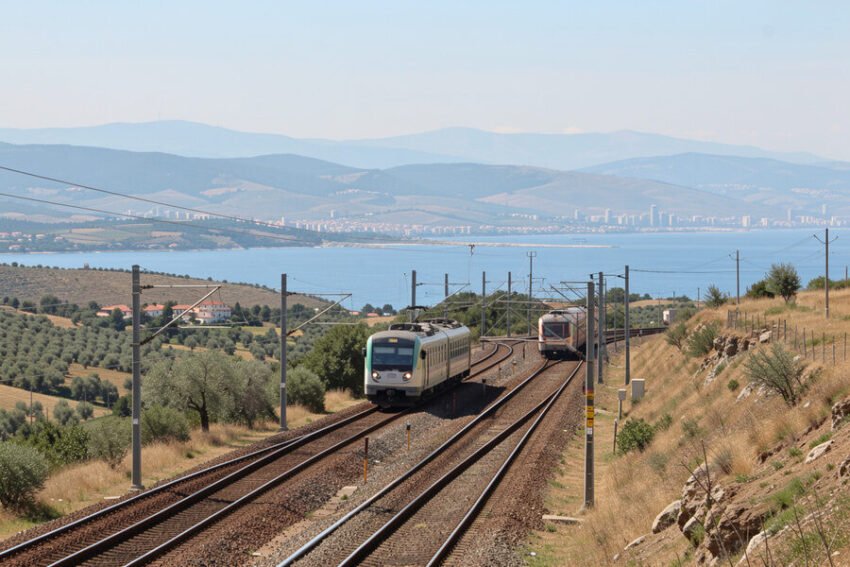

The Sofia–Thessaloniki passenger rail service is expected to resume in 2026 as Bulgaria and Greece work to revive a long-suspended cross-border route, driven by the need to improve Danube–Aegean connectivity, offer a reliable alternative to road travel, and support smoother regional mobility for business travelers, tourists, and local communities across Southeast Europe.
A long-suspended passenger rail service linking Sofia and Thessaloniki is expected to return next year, bringing an end to a nine-year interruption and restoring one of Southeast Europe’s most strategically important cross-border transport routes. The reopening of this rail link is widely seen as a catalyst for stronger regional connectivity, offering smoother travel for passengers while also supporting trade flows and tourism across Bulgaria and Northern Greece.
The route last operated in 2017, after which cross-border passenger services were halted due to infrastructure constraints and shifting transport priorities. Its planned revival is now being framed as part of a much wider effort to modernize rail transport in the Balkans. Rather than serving as an isolated connection, the Sofia–Thessaloniki service is intended to function as a key section of a north–south rail corridor that links the Danube region with the Aegean coast, creating a faster and more reliable alternative to long-distance road travel.
Beyond this north–south alignment, transport planners are also working toward a broader Black Sea–Aegean rail axis. This corridor is designed to connect ports, industrial centers, and logistics hubs across multiple countries, strengthening supply chains and reducing pressure on road networks. By improving interoperability and cross-border rail capacity, the initiative aims to make rail a more competitive option for both passengers and freight operators throughout Southeast Europe.
To support these ambitions, Bulgaria, Greece, and Romania have agreed to jointly seek European Union funding for the modernization of the rail route linking Thessaloniki, Sofia, and Bucharest. The three countries are focusing on coordinated planning to ensure that infrastructure upgrades are delivered on aligned timelines. This approach is intended to prevent delays caused by fragmented permitting processes or uneven construction schedules, which have historically slowed cross-border rail projects in the region.
Guidance from European-level institutions has indicated that transport projects capable of reaching implementation readiness by 2030 may qualify for EU funding support. However, applications must be formally submitted by mid-September 2026, placing a clear deadline on technical preparation, feasibility updates, and cross-border coordination. This timeline has added urgency to national infrastructure strategies, particularly for projects that can deliver measurable economic and environmental benefits.
One of Bulgaria’s most significant priorities within this framework is the development of a third bridge over the Danube, connecting Ruse with Giurgiu. The existing bridge, while operational, is heavily utilized and increasingly strained by growing freight and passenger volumes. Authorities are now working to move the third-bridge project beyond feasibility studies and into detailed design and construction planning, recognizing its importance for long-term regional mobility.
At the same time, renovation work on the existing Danube Bridge is scheduled for completion by June, improving structural reliability and extending the asset’s operational life. Alongside these repairs, technical planning is underway for the electrification of the rail section connecting the bridge. This upgrade is seen as essential for ensuring seamless electric rail operations between Bulgaria and Romania, eliminating the need for locomotive changes at the border.
Electrifying the 11-kilometre stretch between the Ruse marshalling yard and the midpoint of the bridge would allow uninterrupted electric train movement across the river. This improvement is expected to deliver tangible economic benefits, including a potential reduction in freight transport costs of around thirty percent. Lower operating costs could make rail a more attractive option for logistics operators, encouraging a shift away from road transport and reducing emissions.
Beyond Ruse and Giurgiu, several additional cross-border infrastructure projects are under active discussion. Proposed new Danube bridges between Nikopol and Turnu Măgurele and between Silistra and Călărași are being evaluated as part of a longer-term strategy to increase river-crossing capacity. These projects would improve regional resilience by offering alternative routes during peak traffic periods or maintenance closures.
There are also plans to potentially reactivate the Ruse–Giurgiu ferry service, providing an additional river-crossing option that could support both passengers and light freight. While not a replacement for fixed rail infrastructure, such a service could offer flexibility and redundancy within the broader transport network.
Further south, attention is turning to the modernization of the rail corridor running from Svilengrad through Plovdiv and Stara Zagora to Ruse. This route plays a central role in linking southern and northern Bulgaria, as well as connecting to international corridors. Planned upgrades include track improvements, signaling modernization, and capacity enhancements to support higher train speeds and increased traffic volumes.
A particularly ambitious element of this plan is the construction of a new tunnel beneath the Balkan Mountains. The tunnel is expected to significantly shorten travel times and improve reliability by bypassing challenging terrain. For both passenger and freight services, this would represent a major leap in performance, making rail a more competitive option across the country’s central axis.
Discussions on these projects were held in Sofia, bringing together national transport authorities and representatives from international financial institutions. The focus was on aligning investment priorities, identifying funding mechanisms, and ensuring that projects meet eligibility criteria for European support. Emphasis was placed on the importance of cross-border coordination, particularly for corridors that span multiple countries and jurisdictions.
Participating countries underscored that isolated infrastructure upgrades are not enough to transform regional mobility. Instead, success depends on synchronized investment, shared technical standards, and long-term planning that treats the rail network as an integrated system. This coordinated approach is seen as essential for making the north–south corridor economically viable and operationally efficient.
The Sofia–Thessaloniki passenger rail link is set to return in 2026 as Bulgaria and Greece revive a key cross-border route to strengthen Danube–Aegean connectivity, ease regional travel, and unlock new mobility options for passengers, tourism, and trade across Southeast Europe.
If funding approvals and technical preparations remain on schedule, the return of the Sofia–Thessaloniki passenger rail service could become the first visible milestone in a broader transformation of Southeast Europe’s transport landscape. More than just the revival of a single route, it would signal renewed momentum toward reconnecting the Danube basin with the Aegean coast through modern, sustainable, and interconnected rail infrastructure.
The post Sofia And Thessaloniki Passenger Rail Service Poised To Resume In 2026, Opening A New Chapter For Danube–Aegean Connectivity And Regional Mobility appeared first on Travel And Tour World.