United Airlines 777 Makes Emergency Landing in Canada, Leaves All Passengers Stranded on Halifax Tarmac for Seven Grueling Hours, What You Need To Know
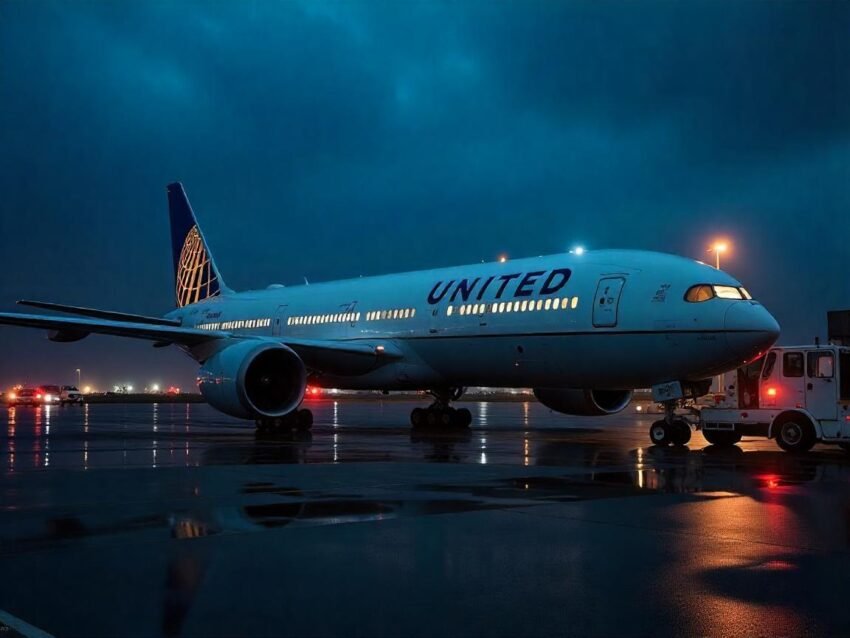

A United Airlines Boeing 777 made an unexpected emergency landing in Canada—and what happened next turned an already tense situation into a full-blown ordeal. The aircraft, bound for Frankfurt, was diverted to Halifax, but passengers weren’t prepared for what lay ahead. As the massive 777 touched down safely, relief turned quickly into rising panic. For seven grueling hours, passengers remained stranded on the Halifax tarmac, unable to deplane, confused and exhausted. Meanwhile, the clock kept ticking. Why didn’t they leave the aircraft? What caused the delay? And how did a medical emergency spiral into chaos? As the United Airlines crew scrambled, frustration grew inside the grounded 777. The promise of a short delay soon shattered. With every passing minute, the situation worsened. The words “emergency landing” took on a new, heavier meaning. What really happened on that cold Canadian tarmac? The answers are as shocking as the ordeal itself. Keep reading.
Tarmac Turmoil: United Airlines Flight Turns Mid-Atlantic Nightmare After Emergency Landing in Canada
What began as a routine transatlantic journey soon spiraled into a nightmarish ordeal for passengers aboard United Airlines Flight UA989. The long-haul flight, operated by a Boeing 777-300ER, departed Washington Dulles International Airport (IAD) en route to Frankfurt (FRA) on the evening of Monday, June 11, 2025. Within hours, it was forced to divert and make an unexpected emergency landing in Halifax, Nova Scotia.
The cause? A reported medical emergency onboard. But what followed plunged passengers into an entirely different kind of crisis—one that unfolded not in the sky, but on the tarmac.
From Emergency to Exhaustion: What Really Happened
Shortly after takeoff at 22:07 UTC, UA989 cruised steadily toward Europe until over two and a half hours in, when flight attendants flagged a serious onboard medical situation. The flight crew promptly diverted to Halifax Stanfield International Airport (YHZ), a logical choice given its proximity and facilities.
However, what passengers believed would be a brief 30-minute stopover turned into a more than 7-hour marathon on the tarmac. Trapped in a sealed metal tube, passengers grew increasingly frustrated as the minutes stretched into hours with no deplaning, sparse updates, and mounting confusion.
Compounding Chaos: Fuel Imbalance and Crew Duty Limits
Once safely on the ground, the aircraft underwent refueling, but further delays emerged due to a detected fuel imbalance between the wings—an issue that required technical recalibration. Operational complexity escalated as crew duty-time limitations came into question. With every hour ticking by, the likelihood of the flight continuing to its original destination diminished.
Crew duty limits are designed to protect passengers and crew from the risks of fatigue-related errors. However, in this case, they also threatened to leave passengers stranded overnight in an airport they never planned to see.
No Exit, No Updates: Passengers Express Outrage
One of the most infuriating elements for those onboard was the lack of communication. Many reported receiving minimal to no updates throughout the ordeal. The inability to deplane in Halifax added insult to injury, especially for families, elderly travelers, and those with health concerns exacerbated by extended confinement.
With the aircraft grounded in Canada, passengers found themselves effectively caught between borders—neither able to re-enter the U.S. nor proceed to Europe. No hotel accommodations. No clear timeline. No empathy in sight.
The Bigger Picture: Operational Fragility and Traveler Confidence
The incident reflects growing concerns about how airlines handle in-flight emergencies and prolonged delays. As global travel demand continues to rebound post-pandemic, airlines are stretched thin with tight crew schedules, increasing mechanical stress on aging fleets, and high passenger volumes.
For United Airlines, this incident not only raises questions about crisis communication but also highlights potential vulnerabilities in logistical response. Delays related to fueling logistics and crew availability expose weaknesses in real-time decision-making.
Moreover, the inability to deplane—a scenario reminiscent of infamous tarmac delay horror stories—amplifies public scrutiny at a time when consumer trust in air travel is already fragile.
Tourism and Travel Sector Reactions
Airline industry analysts point out that events like this can have ripple effects beyond the airline itself. Halifax Stanfield, a regional airport not equipped for large-scale international contingencies, saw its ground operations temporarily overwhelmed.
Meanwhile, the travel and tourism industry in Canada, particularly in Nova Scotia, could face reputational setbacks if passengers associate the destination with travel disruption rather than hospitality. Tourism boards across Atlantic Canada may need to launch PR efforts to counteract any negative impressions.
On the European end, Frankfurt Airport reported no significant disruptions but flagged UA989 as delayed indefinitely. Travel agencies, corporate clients, and passengers dependent on timely transatlantic connections were left scrambling for alternative arrangements.
Lessons for the Industry: Time to Prioritize the Passenger Experience
This situation throws a spotlight on the urgent need for airlines to invest more in real-time communication systems, cross-border contingency protocols, and stronger passenger rights guarantees. As travel resumes at scale, travelers expect not only safety but also compassion and accountability when things go wrong.
Airlines must train ground crews and flight attendants to handle prolonged emergencies with empathy and transparency. Regulatory authorities may also need to revisit policies surrounding international emergency landings to mandate more flexible deplaning rights when prolonged delays occur.
What Happens Next?
The Boeing 777-300ER involved—registration N2136U, an 8.3-year-old aircraft—was eventually cleared for departure after the fuel imbalance was addressed and fresh crew arrangements were made. However, by then, United had to rebook or reroute many passengers due to cascading scheduling impacts.
As of now, United Airlines has not issued a formal apology or compensation announcement. But the fallout on social media, travel forums, and in the press is intensifying by the hour.
For the 200+ passengers who thought they were just crossing the Atlantic, the experience will remain unforgettable—for all the wrong reasons.
Conclusion: A Wake-Up Call for Travel’s New Normal
This event isn’t just an isolated misstep—it’s a symptom of a larger, more pressing issue. With the travel industry undergoing rapid recovery, the pressure is on airlines to match that pace with resilience, responsiveness, and respect for the people they serve.
In an age of instant information and viral outrage, poor communication and reactive operations no longer go unnoticed. For global carriers like United, the stakes aren’t just high—they’re sky-high.
The post United Airlines 777 Makes Emergency Landing in Canada, Leaves All Passengers Stranded on Halifax Tarmac for Seven Grueling Hours, What You Need To Know appeared first on Travel And Tour World.