Italy And Others Discover Valmarecchia Valley Travel Through Sacred Heritage
Italy And Others Discover Valmarecchia Valley Travel Through Sacred Heritage 
Italy is presenting a distinctive cultural tourism opportunity through the Valmarecchia Valley, where historic parish churches, medieval monasteries and Franciscan heritage create an appealing itinerary for international travellers. Visitors from the United Kingdom, Germany, France, the United States and other important international travel markets can discover a quieter side of the Italian countryside, combining religious history, architectural attractions and picturesque villages within a single journey.
The 24-hour Valmarecchia Valley Travel itinerary connects Verucchio, Talamello and San Leo across approximately 55 kilometres, offering opportunities to explore centuries-old religious landmarks, traditional settlements and scenic landscapes. With connections to Saint Francis of Assisi, Romanesque architecture and remarkable medieval artworks, the route presents an alternative cultural experience for travellers interested in history, spirituality and slower-paced holidays.
Italy Strengthens Cultural Tourism Appeal Through Valmarecchia Valley Travel
Italy continues to attract international visitors through its extraordinary combination of historic architecture, religious traditions, artistic heritage and natural landscapes. While major destinations remain important components of the country’s tourism appeal, smaller villages and less-publicised cultural routes provide opportunities to discover different aspects of Italian identity.
The Valmarecchia Valley represents this opportunity particularly well. Located in the historical Montefeltro area of Emilia-Romagna, the valley offers an interconnected landscape of medieval settlements, ancient religious buildings, countryside viewpoints and cultural attractions. Its proximity to the Adriatic coast also creates opportunities for travellers to combine inland exploration with established seaside destinations.
The latest 24-hour itinerary introduces visitors to three important locations, Verucchio, Talamello and San Leo. Together, these destinations provide a journey through the religious and architectural history of the region, with each settlement presenting distinctive attractions and historical associations.
The approximately 55-kilometre driving route has been designed for travellers seeking a manageable cultural excursion rather than an extensive multi-day journey. Its combination of short village walks, monastery visits and countryside experiences makes it suitable for couples, families, independent travellers and groups interested in heritage tourism.
Valmarecchia Valley Offers A Different Italian Travel Experience
The Valmarecchia Valley stands apart from conventional holiday destinations because its attractions are closely connected to centuries of religious devotion, rural traditions and medieval development. Instead of concentrating on a single monument or historic centre, the itinerary creates a broader understanding of the region through several interconnected locations.
Visitors can discover Romanesque churches, Franciscan convents, historic monasteries and religious artworks while travelling through a landscape characterised by hills, forests, cultivated fields and traditional settlements.
The experience also reflects growing interest in slow tourism, where visitors spend more time understanding local communities, architecture, traditions and landscapes. Travelling between smaller villages allows visitors to experience a more contemplative atmosphere than that generally associated with crowded urban attractions.
Another important attraction is the manageable distance between the three principal destinations. Travellers can explore the different sites without spending excessive time on the road, making the route practical for those with limited holiday schedules.
The journey is particularly attractive during spring and autumn, when moderate temperatures can make walking through historic villages and countryside surroundings more comfortable. These seasons may also offer a quieter atmosphere for visitors seeking opportunities for photography, cultural discovery and reflection.
United Kingdom, Germany, France And United States Present International Tourism Opportunities
United Kingdom
Travellers from the United Kingdom can find the Valmarecchia Valley appealing because the itinerary combines European religious heritage, medieval architecture and traditional countryside experiences. British visitors interested in cultural holidays can explore the historical connections associated with Saint Francis of Assisi while discovering lesser-known destinations beyond Italy’s most heavily visited tourist centres.
The route also offers opportunities for combining a countryside excursion with a wider Emilia-Romagna holiday. Visitors can include the region’s historic towns, food traditions and Adriatic coastal attractions within a longer Italian travel programme.
Germany
Germany represents another relevant international market for Italy’s cultural tourism sector. German visitors interested in historical architecture, religious landmarks and outdoor activities can discover a destination that combines heritage exploration with peaceful countryside surroundings.
The presence of Romanesque architecture, medieval artworks and traditional settlements provides several reasons to explore the valley. Short walking experiences around the villages and surrounding natural landscapes can also complement a wider regional holiday.
France
French travellers seeking cultural experiences in Italy can explore the historical and spiritual dimensions of the Valmarecchia Valley. The region’s monasteries, churches and Franciscan traditions provide an opportunity to understand the religious influences that shaped local communities over several centuries.
The itinerary’s combination of architecture, art and traditional food experiences also offers an appealing alternative to conventional city-focused holidays. Its compact geographical structure makes it suitable for visitors looking to incorporate an inland cultural excursion into a wider Italian journey.
United States
Visitors from the United States can discover a different dimension of Italian tourism through the valley’s historic religious sites and countryside attractions. Travellers interested in European history, medieval architecture and heritage destinations may appreciate the opportunity to explore smaller communities with distinctive cultural identities.
The connection with Saint Francis of Assisi also adds historical and spiritual significance to the experience. For American visitors planning extended Italian holidays, the route provides an opportunity to move beyond familiar destinations and discover the cultural landscapes of Emilia-Romagna.
Verucchio Introduces Visitors To Centuries Of Franciscan Heritage
The first stop on the itinerary is Verucchio, a historic settlement associated with the development of Franciscan religious heritage in the region. The principal attraction is the Convent of Saint Francis, traditionally regarded as the oldest convent in Romagna, with its foundation dating to 1215.
According to local tradition, Saint Francis visited the settlement during his journey through the region. Stories associated with his presence include three miracles, one of which describes how he silenced birds so that he could pray peacefully.
These traditions contribute to the spiritual identity of the convent and make it an important attraction for visitors interested in the history of Franciscan communities.
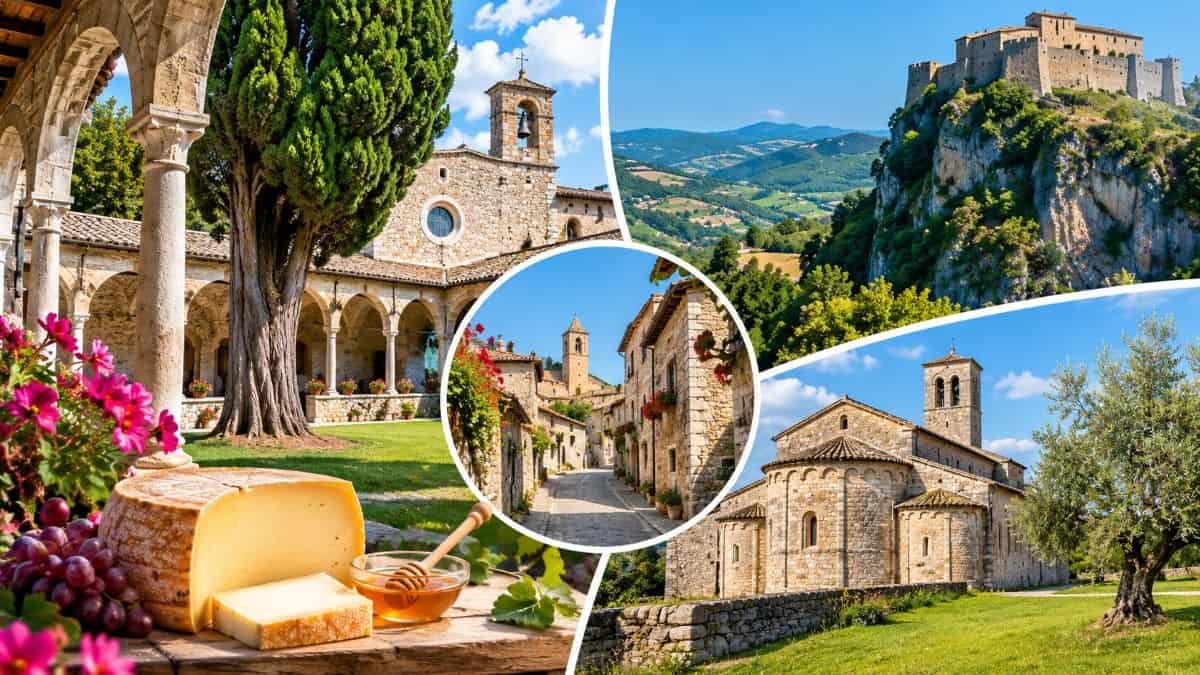
The convent’s cloister is particularly significant. It contains an ancient cypress tree traditionally associated with Saint Francis, who is said to have planted his walking staff in the ground. According to the legend, the tree subsequently grew from the staff.
The cypress has survived for more than seven centuries and remains one of the site’s most distinctive attractions. Its presence creates a connection between local religious traditions and the physical landscape of the convent.
Visitors can explore the peaceful cloister and appreciate its architectural atmosphere while learning about the stories associated with the religious community. The surrounding setting also encourages a slower approach to sightseeing.
Another important attraction near Verucchio is the Parish Church of San Martino in Rafaneto, situated approximately three kilometres away in Villa Verucchio.
Dating to around 990 AD, the church represents an important example of early Romanesque religious architecture. Its position at the foot of a hill, surrounded by ancient olive trees, contributes to its distinctive countryside atmosphere.
The church’s crypt is particularly noteworthy because of its historical and architectural importance. Visitors interested in early religious architecture can explore the relationship between the building’s stone construction, traditional design and historical purpose.
Together, the convent and parish church create a strong introduction to the spiritual heritage of the Valmarecchia Valley.
Talamello Combines Monastic History With Medieval Artistic Heritage
The second destination is Talamello, which can be reached from Verucchio through an approximately 20-minute scenic drive. This small settlement in the Montefeltro area offers another important opportunity to explore the religious and artistic heritage of the region.
The principal attraction is the Monastery of Saint Lawrence, founded in 1300. Its historical significance is closely connected to the miraculous Crucifix attributed to Giovanni da Rimini, an important object of religious devotion.
According to local religious traditions, the Crucifix has been associated with numerous healings over the centuries. Its significance extends beyond its artistic qualities, reflecting the historical relationship between religious artworks and community devotion.
The monastery provides visitors with an opportunity to understand the importance of religious institutions in shaping the cultural identity of smaller Italian settlements.
Talamello itself is also worth exploring. The village is sheltered by Monte Pincio and offers attractive views towards the surrounding landscape, including the dramatic cliffs associated with San Leo.
Chestnut groves and countryside surroundings provide opportunities for relaxing walks, particularly during the milder months. The village’s compact historic centre also makes it convenient for visitors who prefer exploring on foot.
One of its recognisable features is the fountain situated in the main square. The settlement also preserves historic artistic treasures connected to the regional school of Rimini.
A particularly important attraction is the cemetery chapel, which contains significant fifteenth-century artistic works. Its collection includes a remarkable crucifix associated with the fourteenth-century Rimini School.
Beyond religious architecture, Talamello introduces visitors to the region’s culinary traditions.
The settlement is particularly associated with Ambra di Talamello, a distinctive Fossa cheese connected to the cultural legacy of Italian poet and artist Tonino Guerra. Its characteristic colour and flavour make it an interesting regional speciality.
Traditionally, the cheese can be enjoyed with honey or aged red wine. For international visitors, discovering local food traditions provides another dimension to the cultural experience.
The combination of religious history, artistic heritage, countryside scenery and traditional gastronomy makes Talamello an important part of the itinerary.
San Leo Presents A Dramatic Finale To The Spiritual Journey
San Leo provides the final destination on the 24-hour route. Located approximately 10 kilometres from Talamello, the settlement is recognised for its dramatic rocky landscape and distinctive historic setting.
Its elevated position creates impressive views across the surrounding countryside, making it one of the most visually striking locations in the Valmarecchia Valley.
The principal religious attraction on this stage is the Convent of Sant’Igne. Situated a short distance from the town centre, the monastery occupies a peaceful setting near the Marecchia River.
Its surroundings include woodland, pastures and cultivated fields, creating an atmosphere that differs from the more concentrated historic environments of larger Italian destinations.
The convent is particularly important because of its association with Saint Francis of Assisi. Local religious tradition identifies an oak tree beneath which the saint preached during his visit to the region.
The site preserves a relic associated with this historic oak, giving visitors another opportunity to explore the Franciscan traditions connected to the valley.
The monastery’s architectural features also contribute to its cultural importance. Its quiet cloister and Gothic chapter house reflect the organisation and atmosphere of medieval monastic life.
Visitors can appreciate the relationship between religious architecture and the natural environment, with the surrounding landscape providing an atmosphere of tranquillity.
However, travellers should be aware that the monastery cannot necessarily be visited throughout the year. Although the outdoor area offers scenic surroundings, access to the interior is restricted to particular occasions.
Checking access arrangements before travelling is therefore important for anyone wishing to explore the complete religious complex.
San Leo’s position as the final stop also creates an opportunity to reflect on the broader historical connections between the three settlements. Together, they illustrate how religious institutions, artistic traditions and local communities contributed to the development of the region.
Complete 24-Hour Valmarecchia Valley Travel Itinerary
The following table summarises the principal destinations, attractions and recommended experiences along the approximately 55-kilometre route.
| Destination | Principal Attraction | Historical Significance | Recommended Experience |
|---|---|---|---|
| Verucchio | Convent of Saint Francis | Traditionally dated to 1215 | Explore the cloister and ancient cypress |
| Villa Verucchio | Parish Church of San Martino | Dates to approximately 990 AD | Discover Romanesque architecture and the crypt |
| Talamello | Monastery of Saint Lawrence | Founded in 1300 | Admire the miraculous Crucifix |
| Talamello | Historic village centre | Medieval and Renaissance heritage | Explore the fountain and artistic treasures |
| Talamello | Local Fossa cheese tradition | Regional culinary heritage | Taste Ambra di Talamello |
| San Leo | Convent of Sant’Igne | Franciscan religious associations | Explore the surrounding landscape and accessible areas |
The route can be organised around three principal stages, allowing visitors to experience the valley without rushing between its attractions.
The first stage focuses on Verucchio and Villa Verucchio, where visitors can explore the Franciscan convent and Romanesque parish church. The second stage introduces Talamello’s monastery, historic centre and culinary traditions.
The final stage takes travellers to San Leo and the Convent of Sant’Igne, where the natural surroundings and religious associations provide a fitting conclusion to the journey.
Although the itinerary is described as a 24-hour experience, visitors should consider their preferred pace, the opening arrangements of individual attractions and the time required for meals and walking.
Religious Architecture Creates A Strong Cultural Tourism Proposition
The religious buildings along the Valmarecchia Valley route provide an important understanding of the region’s architectural development.
The Parish Church of San Martino demonstrates the historical significance of Romanesque religious architecture. Its stone construction, crypt and traditional setting illustrate the architectural characteristics of early medieval Christian buildings.
Meanwhile, the convents of Saint Francis and Sant’Igne introduce visitors to the development of Franciscan religious communities and their historical influence on local settlements.
The Monastery of Saint Lawrence in Talamello provides a further artistic dimension through its association with the Crucifix attributed to Giovanni da Rimini.
These attractions also demonstrate how religious institutions functioned as important cultural centres. Beyond their spiritual responsibilities, monasteries and convents preserved artistic traditions, supported community activities and contributed to the historical identity of surrounding settlements.
For cultural travellers, these buildings provide more than opportunities for sightseeing. They offer a chance to understand the historical relationship between architecture, faith, craftsmanship and community life.
Scenic Landscapes Encourage Walking And Slow Tourism
The natural environment is another important component of the Valmarecchia Valley experience. The route passes through a landscape of rolling hills, woodland, cultivated fields, chestnut groves and historic villages.
These surroundings provide opportunities for short walks and photography between cultural visits. The countryside around Talamello, particularly the areas near Monte Pincio, offers an attractive setting for travellers interested in combining heritage exploration with outdoor activities.
The Marecchia River also contributes to the region’s natural character. The countryside surrounding Sant’Igne provides a peaceful environment where visitors can appreciate the relationship between the historic monastery and its landscape.
Unlike demanding mountain excursions, the itinerary focuses on accessible village walks and relatively easy unpaved trails. Nevertheless, visitors should choose footwear suitable for uneven surfaces and check local conditions before setting out.
The route is particularly relevant to slow tourism because it encourages visitors to spend time in smaller communities rather than treating destinations simply as brief photographic stops.
Best Time To Explore The Valmarecchia Valley
Spring and autumn are recommended seasons for exploring the Valmarecchia Valley. During these periods, moderate weather can create favourable conditions for walking through historic settlements and visiting outdoor attractions.
Spring brings fresh vegetation and colourful countryside surroundings, while autumn introduces seasonal changes across the region’s woodland and chestnut groves.
Summer visitors may also appreciate the opportunity to explore the valley, although warmer conditions can make midday walking less comfortable. Planning outdoor activities earlier or later in the day may improve the experience.
Winter travel requires additional preparation because weather conditions can influence access to rural roads and outdoor walking areas. For detailed itineraries and seasonal travel updates, visitors can consult Emilia Romagna Turismo, the official tourism board of the Emilia-Romagna regional government.
The availability of individual religious attractions is another important consideration. Some monasteries operate according to religious calendars or specific visitor arrangements, meaning that access cannot always be guaranteed.Travellers should contact the relevant local tourist information offices or religious facilities before departure to confirm opening days, visiting hours and any restrictions.
Practical Travel Information For International Visitors
The Valmarecchia Valley itinerary is designed primarily for visitors travelling by car. Its approximately 55-kilometre route connects three principal settlements and allows flexibility when planning individual stops.
| Travel Detail | Information |
|---|---|
| Destination | Valmarecchia Valley, Emilia-Romagna, Italy |
| Duration | Approximately 24 hours |
| Route Distance | Around 55 kilometres |
| Main Settlements | Verucchio, Talamello and San Leo |
| Main Interest | Art, culture and religious heritage |
| Transport Recommended | Private or hired car |
| Walking Activities | Historic villages and easy countryside trails |
| Recommended Seasons | Spring and autumn |
| Suitable Visitors | Families, couples, friends and independent travellers |
A car provides the most convenient way to travel between the settlements, particularly for visitors wishing to explore the smaller religious sites and countryside attractions.
International travellers should plan their wider journey according to their arrival airport, accommodation arrangements and available regional transport connections.
The route itself does not require extensive hiking experience. However, some attractions involve walking along historic streets, uneven pathways and unpaved surfaces.
Visitors with mobility requirements should check individual site accessibility before travelling, particularly where historic buildings have preserved original architectural features.
Food and accommodation arrangements should also be considered when planning the 24-hour experience. Staying overnight in or near one of the historic settlements may allow visitors to explore the surrounding landscape at a more relaxed pace.
Local Tourism Offices Support Visitor Planning
Local tourist information offices play an important role in helping visitors organise their journey through the valley.
The Verucchio tourist information office can assist with information about the Convent of Saint Francis and the Parish Church of San Martino. Visitors can also contact the relevant religious facilities to confirm access arrangements.
For Talamello, the municipal administration can provide information about visiting the Monastery of Saint Lawrence, particularly because opening arrangements may be associated with liturgical activities.
San Leo also has a tourist information office where visitors can seek guidance about the historic settlement and the Convent of Sant’Igne.
Consulting these local services before travelling can help international visitors avoid unnecessary delays and understand any restrictions affecting access to religious buildings.
Why Valmarecchia Valley Could Attract More Cultural Travellers
The growing international interest in distinctive cultural experiences creates opportunities for destinations such as the Valmarecchia Valley.
Travellers increasingly have reasons to explore places that offer a combination of history, architecture, local gastronomy and natural surroundings. Smaller settlements can respond to this interest by presenting experiences that are different from conventional sightseeing itineraries.
The three-stop journey offers a clear example of how regional tourism can connect individual attractions into a meaningful cultural experience.
Verucchio introduces the traditions associated with Saint Francis and early Romanesque architecture. Talamello combines religious artworks with village heritage and regional gastronomy. San Leo completes the experience through its dramatic landscape and Franciscan associations.
This combination provides a compelling proposition for visitors seeking a more thoughtful understanding of Italian cultural heritage.
The itinerary also demonstrates the value of distributing tourism beyond major destinations. Encouraging visitors to explore smaller communities can create opportunities for local hospitality businesses, restaurants, accommodation providers and cultural institutions.
However, sustainable development will depend on maintaining the historic character of the settlements, respecting religious spaces and managing visitor access responsibly.
Frequently Asked Questions
1. Where Is The Valmarecchia Valley Located?
The Valmarecchia Valley is located in the Emilia-Romagna region of Italy, within the historical Montefeltro area. It features historic settlements, religious buildings and attractive countryside landscapes.
2. How Long Does The Valmarecchia Valley Itinerary Take?
The suggested itinerary takes approximately 24 hours and connects Verucchio, Talamello and San Leo across around 55 kilometres by car.
3. Which Destinations Are Included In The Route?
The three principal destinations are Verucchio, Talamello and San Leo. The route also includes Villa Verucchio, where visitors can explore the historic Parish Church of San Martino.
4. What Is The Main Attraction In Verucchio?
The Convent of Saint Francis is the principal attraction. Traditionally dated to 1215, it is associated with the saint’s visit and an ancient cypress tree preserved within its cloister.
5. Why Is Talamello Important For Religious Tourism?
Talamello is home to the Monastery of Saint Lawrence, founded in 1300. It is particularly associated with the miraculous Crucifix attributed to Giovanni da Rimini.
6. What Is Ambra Di Talamello?
Ambra di Talamello is a distinctive local Fossa cheese associated with the cultural legacy of Tonino Guerra. It is recognised for its characteristic colour and flavour and can be enjoyed with honey or aged red wine.
7. Can Visitors Explore The Convent Of Sant’Igne?
The outdoor surroundings are accessible and offer scenic views. However, access to the monastery itself is available only on certain occasions, so visitors should confirm arrangements before travelling.
8. What Is The Best Season To Visit The Valmarecchia Valley?
Spring and autumn are recommended because their generally mild conditions are suitable for exploring historic villages, religious buildings and countryside walking routes.
9. Is A Car Necessary For Exploring The Itinerary?
A car is the most convenient transport option because the route connects several smaller settlements and religious attractions across approximately 55 kilometres.
10. Is The Valmarecchia Valley Suitable For Family Holidays?
Yes. The itinerary is designed for families, friends and independent visitors interested in history, culture and nature. Its combination of short walks and manageable driving distances makes it suitable for a variety of travel preferences, although individual site accessibility should be checked in advance.
The post Italy And Others Discover Valmarecchia Valley Travel Through Sacred Heritage appeared first on Travel And Tour World.