Qatar Airways Joins with United, American, Singapore, Air Canada, British, Emirates in Temporary Flights Suspension Due to Traffic Movement Closure as Iran Strikes Back, New Update for You is Here
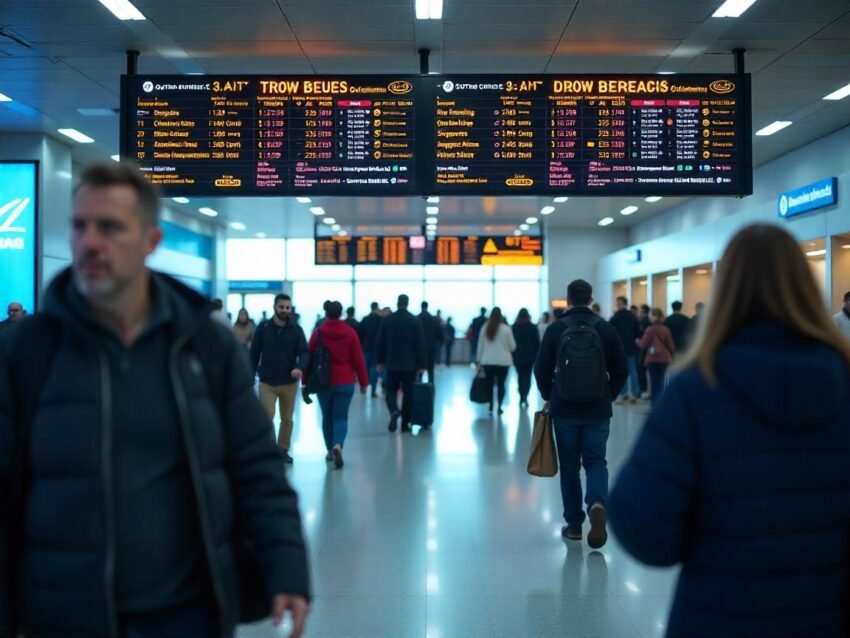
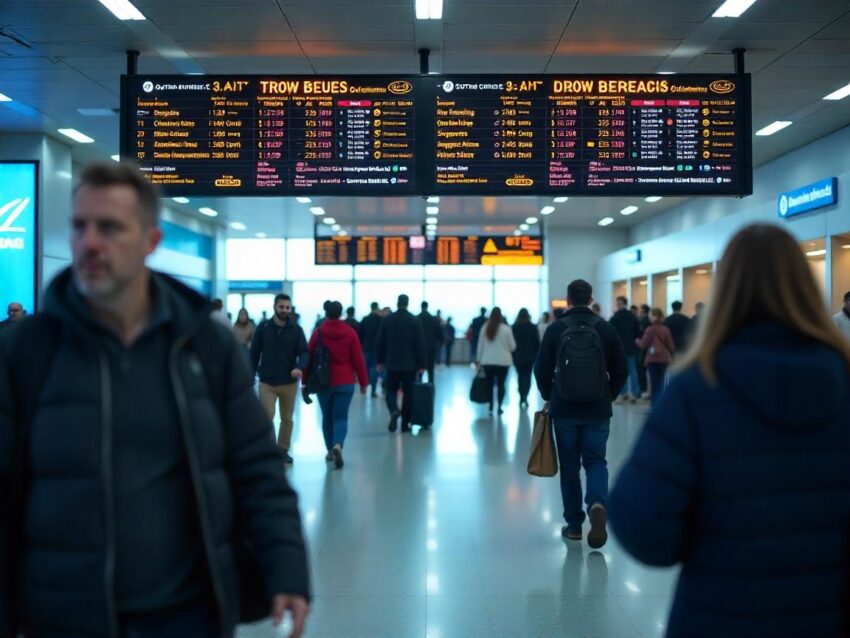
Qatar Airways joins with United, American, Singapore, Air Canada, British, Air India, and Emirates in a dramatic move that’s shaking global skies. As Iran strikes a U.S. air base, chaos unfolds in real time. The ripple effect is brutal. Qatar Airways grounds flights. United halts its routes. American Airlines pauses its network. Singapore follows. Air Canada, British Airways, Air India, and Emirates all respond—one after another.
Flight schedules are collapsing. Airports are overwhelmed. And travelers are stuck in limbo.
This isn’t just another travel disruption—it’s a full-scale aviation alarm. Air traffic movement closure across the region now forces these airline giants to act fast. Qatar Airways stands alongside United, American, Singapore, Air Canada, British, Air India, and Emirates, each navigating through a storm of uncertainty.
As Iran’s missile strike sparks global fear, the skies grow tense. Now, passengers worldwide wait, watch, and wonder—how long will this international suspension last?
Qatar Airways has officially suspended all flights, triggering widespread global travel disruption. The suspension, prompted by the sudden closure of airspace in the State of Qatar, has left travelers stranded and airlines scrambling to recalibrate routes.
The closure comes amid a spike in regional tensions, creating immediate ripple effects across global aviation corridors. Flights in and out of Doha, a major international hub, have ground to a halt. Connections to Europe, Asia, and Africa are disrupted. Passengers are now facing delays, cancellations, and an urgent need for rebooking.
This isn’t just a localized issue. The ripple effects are being felt from London to Sydney. Airlines that rely on Qatar as a key transit point are now reassessing their operations. Meanwhile, passengers are facing long wait times, missed connections, and heightened uncertainty.
Qatar Airways, known for its expansive global network and premium service, announced the move as necessary due to the nationwide air traffic movement closure. The airline is coordinating closely with government agencies and aviation authorities to ensure safety and compliance. Until clearance is given, operations remain grounded.
Additional ground staff have been deployed at Hamad International Airport and other global gateways to support affected travelers. However, congestion and confusion have overwhelmed even the best-prepared terminals.
The airline has also confirmed that once operations resume, significant delays are expected across its global schedule. Travelers are advised to prepare for rolling delays and to monitor the airline’s official website and mobile app for the latest updates.
This crisis comes at a peak travel period, worsening the blow. Many passengers were mid-journey, connecting through Doha to destinations across Europe, Africa, and Southeast Asia. With flights paused, they have no immediate alternatives.
Meanwhile, other Gulf carriers like Emirates and Etihad are experiencing higher traffic, rerouted passengers, and similar constraints due to airspace avoidance strategies. The regional air network is under severe strain.
For the tourism industry, this development couldn’t come at a worse time. The Middle East, particularly Doha, has become a key link in the global travel chain. The suspension disrupts inbound and outbound traffic for conferences, business events, and seasonal tourism.
More broadly, the airspace closure is prompting security analysts to re-evaluate the risks of flying over sensitive geopolitical zones. Qatar’s decision to shut its airspace underscores just how quickly aviation stability can unravel in the face of conflict escalation.
For the hospitality sector, the fallout has begun. Hotels in Doha are preparing for last-minute bookings from stranded travelers. Regional resorts may see cancellations as guests miss connections or abandon travel plans altogether.
In the coming days, airline alliances may step in to rebook passengers on partner flights where possible. But capacity is limited, and disruptions will persist as long as Qatar’s skies remain closed.
Passengers holding future bookings with Qatar Airways are urged to check their flight status frequently and consider flexible rebooking options. Refund policies are expected to be relaxed in light of the exceptional circumstances.
Aviation analysts warn that if the closure continues into the week, global airline schedules will feel a cumulative effect. Planes out of position, overworked crews, and route congestion could paralyze portions of the international network.
The travel industry, still recovering from pandemic-era turbulence, now faces a new chapter of uncertainty. And for Qatar Airways, the focus remains clear: safety first. Yet, for travelers, the question is more pressing: when will it be safe to fly again?
For now, caution is the new normal.
The post Qatar Airways Joins with United, American, Singapore, Air Canada, British, Emirates in Temporary Flights Suspension Due to Traffic Movement Closure as Iran Strikes Back, New Update for You is Here appeared first on Travel And Tour World.