France Aligns with Spain and Others as Europe’s Aviation Crisis Deepens with 114% Jet Fuel Price Surge, Severe Air Traffic Delays and Falling Flight Volumes
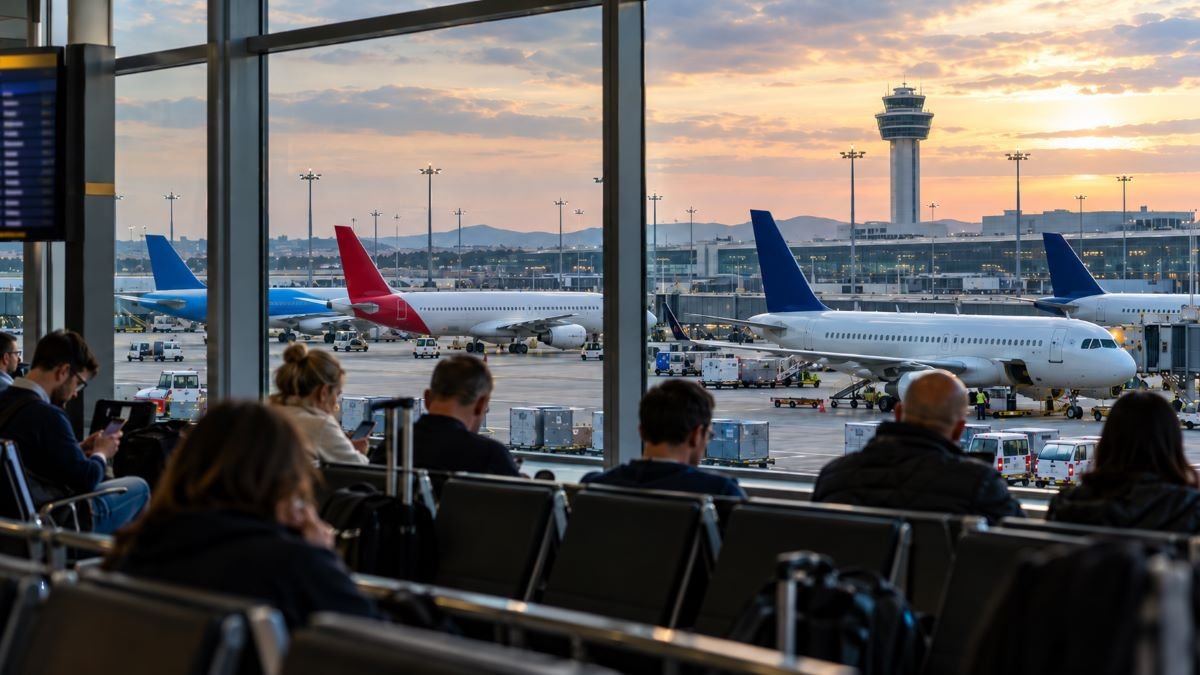

France aligns with Spain, Greece and the Netherlands as Europe’s aviation crisis deepens, with a 114% jet fuel price surge, severe air traffic delays and falling weekly flight volumes putting travellers under pressure. EUROCONTROL’s latest figures reveal that France and Spain account for 69% of Europe’s en-route air traffic delay minutes, while Greece and the Netherlands face reduced weekly flight activity. Soaring fuel costs, airspace congestion and changing airline schedules are raising concerns about flight reliability, travel expenses and winter connectivity across Europe, despite continued year-on-year traffic growth.
Europe’s Aviation Crisis at a Glance – Four Countries, Four Different Risks
The EUROCONTROL European Aviation Overview, published on 29 October 2026, examines flight operations from 19–25 October. Its country breakdown reveals very different travel risks.
| Country | Daily flights | Weekly change | Annual change | Main issue for travellers |
|---|---|---|---|---|
| France | 4,185 | −4% | −4% | Airspace delays and higher measured fares |
| Spain | 5,846 | −1% | +3% | Congestion around Barcelona and Madrid |
| Greece | 1,712 | −7% | +3% | Fewer off-season flight options |
| Netherlands | 1,647 | −4% | −2% | Reduced weekly links through Amsterdam |
The flight changes compare different periods. A weekly fall is not automatically a cancellation rate or a fall in passenger arrivals.
Jet Fuel Prices Surge 114% – But Airfares Have Not Doubled
EUROCONTROL puts Europe’s October-to-date average jet fuel price at US$4.84 per US gallon, against US$2.26 in January–February 2026. The 114% increase compares those periods, not two consecutive weeks. The price reached US$4.93 on 27 October.
This squeeze raises the cost of operating aircraft, but it cannot be directly converted into a ticket-price forecast. Airlines purchase fuel under different arrangements and set fares according to demand, competition and other costs. A person booking Paris–Barcelona may therefore see a different price movement from someone booking Amsterdam–Athens.
France’s Air Traffic Delays Expose a Second Cost to Travellers
France generated 35% of European en-route flow-management delay minutes. Marseille’s control centre contributed 18% of the network total, with Reims contributing 7% and Brest 6%. Staffing limitations, stormy weather and restricted sector availability all played roles.
There is an additional price signal. France’s official passenger fare index shows September 2026 fares departing France rose 10.6% year on year; fares to other EU+ European destinations increased 16%. Across January–September, however, metropolitan French fares were only 3% higher. That gap underlines why travellers should compare actual dates and routes instead of assuming every European ticket has become equally expensive.
Spain’s Barcelona and Madrid Airspace Create Delays Beyond Spain
Spain accounted for 34% of Europe’s en-route delay minutes. Barcelona control centre alone contributed 17%; Madrid contributed 14%. Barcelona averaged 2.7 minutes of en-route flow-management delay per flight, compared with 1.9 minutes for Madrid. Controller capacity, severe weather and military airspace restrictions contributed to the pressure.
Yet demand remained strong. Airport operator Aena recorded 31.67 million passengers at its Spanish airports in September, up 4.2% annually. The challenge is handling strong demand within limited airspace.
Greece’s Flight Drop Makes Winter Connectivity the Real Story
Greece posted the largest weekly decline among Europe’s ten busiest aviation states at 7%, reflecting fewer domestic services and links with Denmark, Poland and Germany. The same week still had 3% more flights than in 2025, so the fall is not proof of a tourism collapse.
Greece contributed 6% of European en-route delay minutes, split between Athens and Makedonia control centres. For holidaymakers, the more practical question is whether a preferred winter connection or onward island flight still runs on the intended day, particularly when a missed service could require an overnight stay.
Netherlands and KLM – Why Amsterdam Connections Need Attention
The KLM Group operated 909 daily flights, down 4% from the previous week but 1% above 2025. Fewer links from the Netherlands to the UK, France and Spain drove much of the weekly reduction. Schiphol averaged 1,371 flights daily, down 3% weekly, while wind and airport capacity restrictions complicated operations.
These figures measure flights, not the number of available seats or cancelled bookings. Amsterdam remains an important connecting hub; travellers gain more by checking their precise onward flight than by treating the national weekly percentage as a prediction of disruption.
The Hidden Risk Is a Connection, Not Just a Departure Delay
Air traffic control restrictions can affect aircraft passing through Spanish or French airspace without landing there. A punctual first flight can also become an expensive trip if a later connection is missed. That makes the itinerary’s weakest link important: short transfers, separately booked tickets and limited last flights of the day deserve particular scrutiny.
Europe still averaged 32,480 flights a day, up 0.7% annually despite a 2.3% weekly decline. Arrival punctuality reached 73.5% and departure punctuality 69.4%, both better than a year earlier. Storms Austen and Boelo caused further disruptions on 23–25 October. The network is under pressure, not at a standstill.
Is Europe Running Out of Jet Fuel? The Official Answer Is No
The European Commission stated on 22 October that jet fuel supplies remained tight but there was no physical shortage in Europe. Its 28 October refining dialogue noted that EU refineries supply about 70% of the jet fuel consumed in Europe. Price volatility and supply security are concerns; blanket claims of grounded aircraft because Europe has run out of fuel are unsupported.
Five Checks That Can Protect a European Flight Itinerary
- Check the operating flight, not just the destination: Winter timetables may differ from summer schedules, especially for Greek islands.
- Give connections room: Allow more than the minimum transfer time where possible and check the next available flight.
- Prefer one booking where practical: Separate tickets may leave passengers with weaker protection if a delay breaks the journey.
- Monitor the airline and airport directly: Verify changes before leaving for the airport, particularly during strong winds or restrictions.
- Keep evidence and receipts: Preserve cancellation notices, boarding passes and necessary additional-expense records.
Under applicable EU air passenger rights, eligible cancellations can bring rerouting or refunds and a duty of care. Compensation of up to €600 may also apply, but air traffic restrictions or severe weather can justify an exemption if the airline proves the legal conditions; assistance may still be owed. The Commission says airlines cannot retrospectively add fuel surcharges to purchased standalone air tickets.
Europe’s Aviation Outlook – The Pressure May Last Beyond Winter
EUROCONTROL’s autumn forecast anticipates 11.2 million European flights in 2026, up 1.7%, followed by 11.6 million in 2027, up 3.2%, under its baseline assumptions. It estimates around 110,000 fewer movements in 2026 than in a hypothetical world without Middle East tensions; these are not 110,000 recorded cancellations.
Europe’s aviation crisis involves uneven costs, delays and connection choices, not the end of European holidays. Travellers should judge the complete itinerary, compare final prices and understand their ticket rights.
Europe Aviation Crisis 2026 – Key Figures, Flight Disruptions and What Travellers Need to Know
| Country / Region | Latest Verified Aviation Data | What It Means for Travellers |
|---|---|---|
| France | 35% of Europe’s en-route ATFM delay minutes; airfares up 10.6% year on year in September | Expect potential airspace delays; compare fares and allow extra connection time |
| Spain | 34% of Europe’s en-route ATFM delay minutes; 5,846 daily flights | Barcelona and Madrid airspace restrictions may affect connecting and overflying services |
| Greece | Weekly flights down 7%, but up 3% year on year | Check winter flight schedules and island connections before booking |
| Netherlands | Weekly flights down 4%; KLM Group flights also down 4% | Verify Amsterdam Schiphol connections and airline schedule changes |
| Europe – Fuel Prices | Jet fuel up 114% to US$4.84 per gallon versus the January–February average | Airlines face higher costs, but ticket prices have not necessarily risen by 114% |
| Europe – Air Traffic | 32,480 daily flights; 73.5% arrival punctuality | European aviation remains operational despite delays and regional reductions |
In conclusion, France aligns with Spain, Greece and the Netherlands as Europe’s aviation crisis deepens amid a 114% jet fuel price surge, severe air traffic delays and falling weekly flight volumes. Travellers face rising cost pressures, disrupted connections and changing schedules.
The post France Aligns with Spain and Others as Europe’s Aviation Crisis Deepens with 114% Jet Fuel Price Surge, Severe Air Traffic Delays and Falling Flight Volumes appeared first on Travel And Tour World.