Rwanda and Uganda Alongside Other African Nations Show How Wildlife Permit Refund Rules Shape Travel and Tourism
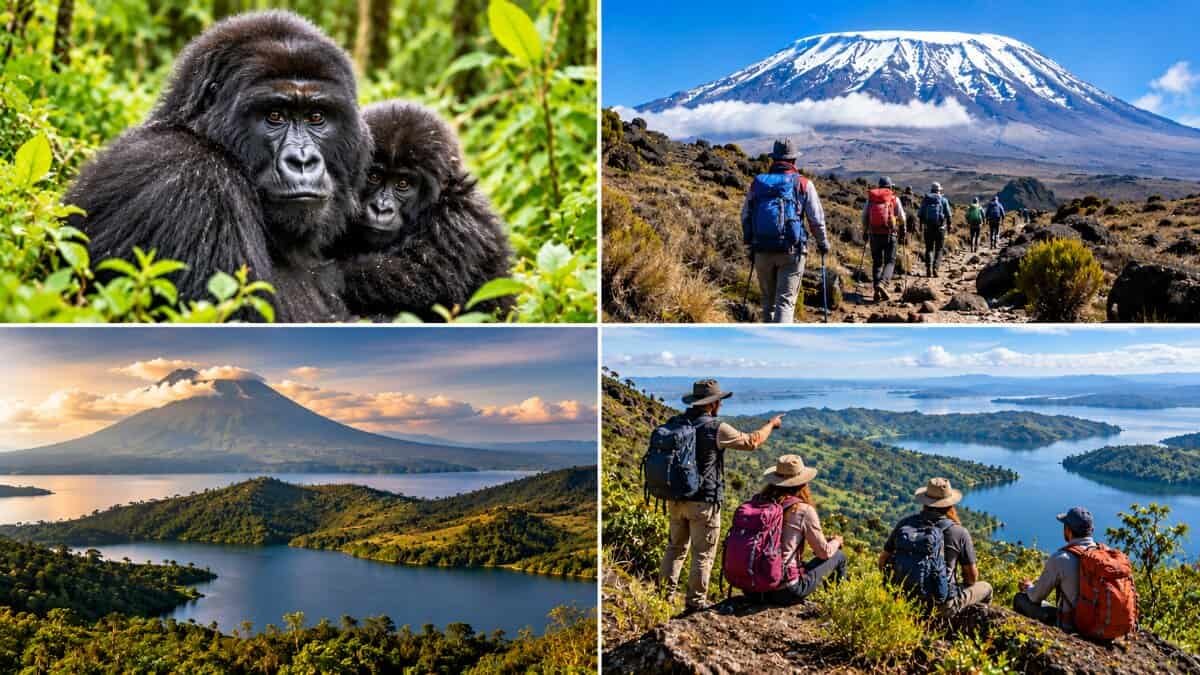

Rwanda, Uganda, the Democratic Republic of the Congo, Tanzania and Ethiopia face a common adventure tourism challenge as wildlife trekking permits carry different cancellation, refund and rescheduling conditions. Rwanda charges for permit changes, while Uganda’s 2026 discounted gorilla permits cannot be rescheduled. Virunga National Park currently lists gorilla and volcano treks as closed. Tanzania and Ethiopia maintain non-refundable conditions for specified park activities. An examination of official policies reveals how illness, security-related closures and changing itineraries can expose international travellers and tour operators to financial losses.
Five African Tourism Destinations Share the Same Permit Challenge but Offer Different Traveller Protections
The five countries share a dependence on protected natural environments for specialised adventure tourism. However, their booking systems address cancellations differently.
Rwanda, Uganda and the Democratic Republic of the Congo offer mountain gorilla tourism within the wider Albertine Rift region. Tanzania attracts climbers and chimpanzee trackers. Ethiopia offers high-altitude trekking and wildlife experiences, particularly in the Bale Mountains.
The resulting comparison is not evidence of a coordinated policy change. It is an examination of existing rules, including Uganda’s significant 2026 booking amendments.
| Country | Main Tourism Experience | Official Position on Refunds and Changes |
|---|---|---|
| Rwanda | Volcanoes National Park gorilla trekking | Paid rescheduling, discretionary late changes and restricted cancellation refunds |
| Uganda | Bwindi and Mgahinga gorilla tracking | Graduated refunds, medical exceptions and restrictions on discounted permits |
| DR Congo | Virunga gorilla and Nyiragongo treks | Current trek closures; published alternatives or refunds for park-led security closures |
| Tanzania | Kilimanjaro climbing and chimpanzee viewing | Non-refundable fees for specified activities |
| Ethiopia | Bale Mountains wildlife and trekking | Published non-refundable park entrance fees |
Sources: Rwanda Development Board, Uganda Wildlife Authority, Virunga National Park, TANAPA and Bale Mountains National Park.
Rwanda’s USD 1,500 Gorilla Trekking Permits Highlight the Financial Stakes
Rwanda’s premium gorilla tourism model demonstrates why refund transparency matters.
According to the Rwanda Development Board’s official permit information, a standard foreign visitor gorilla permit costs USD 1,500. The minimum trekking age is 15.
The authority charges 20% of the application fee for rescheduling. For a full-price foreign visitor permit, that represents USD 300.
Requests submitted more than seven days before the activity receive automatic approval through the published process. Changes within seven days require RDB approval.
The authority also operates a discretionary service for expired permits when unforeseen circumstances prevented attendance. Applicants must provide supporting evidence.
Importantly, ordinary trip cancellations, flight delays and late arrivals do not automatically qualify for refunds.
Unsuccessful Gorilla Tracking Creates a Separate Refund Category
RDB distinguishes traveller cancellations from circumstances involving unsuccessful gorilla encounters.
Its published rules provide another opportunity or a full refund in specified cases involving gorilla group movement. They also provide a 75% refund where visitors complete an unsuccessful full-day tracking attempt under the stated conditions.
These provisions should not be confused with compensation for voluntarily cancelling a holiday.
Disease prevention creates another operational consideration. Visitors suffering from contagious illnesses may be denied access to the gorillas.
For international travel companies, the implications extend beyond permits. Accommodation, transfers and flights require separate contractual arrangements.
Uganda’s 2026 Low-Season Permit Changes Create a Major Booking Flexibility Trade-Off
Uganda provides the clearest recent regulatory development within this comparison.
In an official communication dated 26 February 2026, the Uganda Wildlife Authority introduced discounted gorilla and chimpanzee tracking rates for April, May and November.
The discounted foreign non-resident gorilla permit costs USD 600, compared with the standard USD 800 rate.
However, low-season discounted permits cannot be rescheduled.
The authority also suspended its previous seven-day unpaid reservation window effective 1 March 2026. Operators must now complete full payment when securing permits.
These changes affect how travel businesses manage customer commitments, payments and itinerary adjustments.
Under UWA’s general guidelines, an eligible standard permit may be rescheduled twice. The first approved change is free, while the second attracts a 25% surcharge. Late requests can also attract additional charges.
Previously rescheduled permits are not eligible for refunds under those guidelines.
Uganda’s Gorilla Permit Cancellation Policy Provides Graduated Refunds
Unlike Rwanda’s ordinary cancellation approach, Uganda publishes refund percentages based on the period remaining before tracking.
Under UWA’s July 2024 permit-management guidelines, the following structure applies to qualifying cancellation requests, subject to the authority’s procedures.
| Cancellation Notice | Published Refund | Example on USD 800 Permit |
|---|---|---|
| 61 days or more | 75% | USD 600 |
| 46–60 days | 50% | USD 400 |
| 15–45 days | 25% | USD 200 |
| Within 14 days | 0% | USD 0 |
Illustrative refund amounts are before applicable deductions for incidental costs, including taxes and bank charges. Approval and eligibility conditions apply.
UWA requires written cancellation requests and uses their receipt date to determine the applicable refund window.
Its separate medical provisions allow the Executive Director to authorise a 50% refund when a visitor develops or displays medically confirmed illness while already at the park, before tracking.
An accident sustained inside the park before tracking can also qualify for consideration under the stated conditions.
These exceptions do not establish a general refund entitlement for illness arising before arrival. Uganda Wildlife Authority
DR Congo’s Virunga Closures Place Official Safety Decisions at the Centre of Refund Protection
The Democratic Republic of the Congo presents a different situation because operational access itself remains uncertain.
The official Virunga tourism website currently states that mountain gorilla and Nyiragongo treks are closed until further notice.
Its published FAQ explains that management can close attractions following security concerns and may provide affected customers with full refunds or alternative arrangements.
However, that FAQ also contains older information describing tourism operations as open, conflicting with the current homepage notice.
Virunga’s published booking conditions separately establish cancellation penalties and restrictions on compensation for associated travel expenses.
For tour operators, the correct approach is to obtain direct written confirmation before selling any future trekking departure.
A refund arising from a park-directed closure must not be presented as an automatic guarantee covering airfares, visas, accommodation outside the booking or privately arranged transport.
The park’s published insurance requirements include at least USD 100,000 for emergency medical evacuation and USD 100,000 for medical expenses.
Tanzania’s Kilimanjaro and Chimpanzee Experiences Demonstrate Activity-Specific Refund Restrictions
Tanzania’s tourism framework requires distinctions between different protected-area activities.
The Tanzania National Parks Authority regulates Kilimanjaro climbing through authorised operators, designated routes and applicable conservation charges.
Its official guidelines for technical climbing on Mawenzi, Kilimanjaro’s 5,149-metre peak, establish that payments for that activity are non-refundable.
Those guidelines also require experienced climbers, appropriate equipment and emergency-response arrangements.
Separately, TANAPA’s chimpanzee viewing guidelines for activities including Gombe and Mahale establish non-refundable payments.
Visitors with infectious diseases must not participate in chimpanzee tracking.
However, these activity-specific provisions do not establish every possible refund outcome for ordinary Kilimanjaro climbs or authority-directed closures.
The publicly accessible TANAPA tariff section also contains older financial-year information. Consequently, operators should obtain current fee schedules and written cancellation conditions before calculating 2026 departure costs.
Ethiopia’s Bale Mountains Introduce Another Layer of Adventure Tourism Payment Risk
Ethiopia broadens the comparison beyond mountain gorilla tourism.
Bale Mountains National Park attracts visitors seeking high-altitude trekking, wildlife encounters and distinctive Ethiopian landscapes.
The park became a UNESCO World Heritage property in 2023. According to the UNESCO World Heritage Centre, it encompasses approximately 215,000 hectares and is managed by the Ethiopian Wildlife Conservation Authority.
The park’s published visitor-fee instructions state that entrance fees are non-refundable.
Visitors must report to the headquarters near Dinsho, declare their intended stay and retain proof of payment.
Nevertheless, the available park information does not establish comprehensive, updated 2026 exceptions for official closures, illness or independently booked trekking services.
Therefore, the non-refundable entrance-fee condition should not be extended automatically to every Ethiopian adventure tourism product.
Illness, Unsafe Conditions and Park Closures Create Three Different Financial Risks
The most important distinction across these countries concerns the reason an activity cannot proceed.
Medical exclusion protects vulnerable wildlife from infectious diseases. It does not necessarily create an unconditional refund right.
Uganda provides a defined medical refund mechanism for qualifying visitors already at the park. Rwanda restricts participation by infectious travellers while applying its own cancellation and rescheduling provisions.
Tanzania’s chimpanzee guidelines similarly prohibit tracking when infectious disease risks exist.
Safety-related cancellations introduce different questions. Virunga’s published policy addresses park-directed security closures, while Tanzania and Ethiopia require activity-specific confirmation.
A traveller deciding independently to cancel because of perceived danger may face different terms from someone whose activity has officially been suspended.
For this reason, travel agents must distinguish medical exclusion, voluntary cancellation and an authority-initiated closure before advising customers about recoverable costs.
Rwanda’s Tourism Revenue Demonstrates Why Permit Confidence Matters Economically
The commercial importance of protected-area tourism is particularly visible in Rwanda.
According to the Rwanda Development Board’s 2026 reporting on 2025 performance, the country generated USD 685 million in tourism revenue during 2025.
Visitor arrivals reached 1.49 million.
National parks recorded 155,394 visits and generated USD 40.8 million in revenue. Volcanoes National Park contributed USD 35.8 million.
The meetings and events sector separately generated USD 94.7 million, illustrating Rwanda’s broader high-value tourism economy.
Uganda also links protected-area revenue with surrounding communities. According to UWA’s revenue-sharing framework, 20% of annual park revenue supports neighbouring communities, alongside a designated contribution from Bwindi gorilla permits.
These arrangements demonstrate why authorities must balance conservation funding with visitor protection.
Original Tourism Industry Analysis: The Hidden Cost of Permit Flexibility
The most significant finding from this five-country assessment is that a lower permit price does not necessarily translate into a lower-risk holiday.
Uganda’s USD 600 seasonal gorilla permit illustrates the issue. A traveller saves USD 200 against the normal foreign non-resident rate but loses the ability to reschedule under the discounted arrangement.
For tour operators, that creates a measurable trade-off between customer price sensitivity and booking flexibility.
Rwanda presents the opposite calculation. A full-price USD 1,500 foreign visitor permit can attract a USD 300 rescheduling charge, but an approved change may preserve access to a valuable experience.
Virunga introduces operational uncertainty, while Tanzania and Ethiopia demonstrate the importance of separating individual park charges from wider package contracts.
This suggests that adventure tourism businesses should manage four distinct financial exposures: the permit itself, associated travel arrangements, the timing of cancellation and the authority responsible for the disruption.
It also reveals a potential competitive advantage for operators offering clearly documented cancellation protection and flexible itinerary construction.
The analysis does not establish a new regional policy or coordinated investigation. Instead, it identifies a recurring commercial vulnerability within several different national tourism systems.
What Travel Agents and Tour Operators Must Do Before Accepting Adventure Tourism Bookings
The comparison identifies several practical measures for reducing disputes and protecting traveller expenditure.
- Verify original permit conditions: Obtain rules directly from the relevant park authority.
- Separate payment categories: Identify permits, accommodation, transport and guiding charges individually.
- Check discount restrictions: Explain when promotional permits cannot be rescheduled.
- Monitor cancellation deadlines: Submit requests early and preserve dated correspondence.
- Document medical exclusions: Obtain the required medical evidence and park confirmation.
- Verify official closures: Never assume that an advisory automatically triggers refunds.
- Review travel insurance: Confirm activity coverage, cancellation exclusions and emergency evacuation limits.
- Protect customer communications: Explain refund deductions and discretionary approvals before collecting full payment.
These controls are particularly important when wildlife experiences involve limited availability, substantial upfront payments and travel through multiple countries.
Africa’s Adventure Tourism Future Will Depend on Clearer Booking Protections
The comparison highlights an increasingly important commercial consideration for African adventure tourism.
Rwanda, Uganda, the Democratic Republic of the Congo, Tanzania and Ethiopia possess distinctive wildlife and mountain-tourism assets. Yet their published payment conditions differ significantly.
Uganda’s 2026 changes demonstrate how seasonal pricing and faster payment requirements can influence tour packaging. Rwanda’s premium permit model illustrates the importance of protecting high-value reservations.
Looking ahead, clearer digital booking terms, better communication during official closures and more transparent insurance arrangements could improve international traveller confidence.
For destinations competing in the global nature-based tourism market, reliable refund information may become an increasingly valuable component of the visitor experience.
FAQs
1. Are gorilla trekking permits refundable in Rwanda?
Ordinary cancellations and flight delays do not qualify for automatic refunds. RDB publishes specific exceptions for unsuccessful tracking and provides paid or discretionary rescheduling options.
2. Can travellers reschedule discounted Uganda gorilla permits in 2026?
No. Uganda Wildlife Authority’s February 2026 notice states that discounted low-season permits for April, May and November cannot be rescheduled.
3. Are gorilla trekking and Nyiragongo volcano experiences operating in DR Congo?
Virunga’s official tourism homepage currently lists both activities as closed until further notice. Travellers should obtain direct confirmation before planning or paying for future departures.
4. Does Tanzania refund Kilimanjaro trekking permits following bad weather?
The official documents examined do not establish a universal weather-related refund rule for all Kilimanjaro climbs. TANAPA expressly makes fees non-refundable for specified activities, including Mawenzi technical climbing.
5. Can tourists receive refunds for Ethiopian national park entrance fees?
Bale Mountains National Park publishes a non-refundable entrance-fee condition. The available official information does not confirm comprehensive 2026 exemptions for weather disruptions, illness or official closures.
The post Rwanda and Uganda Alongside Other African Nations Show How Wildlife Permit Refund Rules Shape Travel and Tourism appeared first on Travel And Tour World.