Ryanair Launches €2 Billion Fuel Cost Battle, Threatening Cheap Flights Across Ireland and Other European Destinations

Europe’s largest low-cost airline, Ryanair, is preparing an extensive cost-cutting programme to counter an estimated €2 billion increase in fuel expenditure during financial year 2028. The airline is reviewing airport agreements, workforce arrangements, aircraft crewing levels and artificial intelligence applications. The announcement follows a 15% decline in first-half profit after tax to €2.15 billion, despite passenger traffic increasing 6% to 125.8 million. Escalating Middle East tensions have pushed aviation fuel prices higher, creating uncertainty across European travel markets. Meanwhile, Ryanair expects airlines to raise short-haul fares materially in 2027. However, higher ticket prices may not fully absorb the additional expenditure, potentially changing Europe’s affordable air travel landscape.
Ryanair Confronts a €2 Billion Fuel Challenge
Ryanair’s latest financial announcement signals a significant change in its operating priorities. The airline now faces an increasingly difficult balance between maintaining affordable fares and protecting profitability.
On 2 November 2026, the Dublin-based carrier confirmed plans to examine expenditure across its airline businesses. Management intends to pursue savings through airport negotiations, labour agreements, staffing arrangements and greater automation.
The immediate challenge involves an estimated €2 billion increase in annual fuel expenditure during FY2028. This financial year runs from 1 April 2027 to 31 March 2028.
The projection reflects current forward fuel prices and the anticipated expiration of several existing lower-cost hedging arrangements. Consequently, the airline expects considerably greater exposure to market volatility.
Ryanair’s announcement followed its half-year results for the six months ending 30 September 2026. Although passenger numbers increased, operating expenses accelerated and profitability weakened.
Chief Executive Michael O’Leary warned that the Middle East conflict could keep aviation fuel prices elevated well into 2027.
He stated on 2 November 2026, “Unless there is a swift resolution of the Middle East conflict, we expect jet-fuel prices to remain elevated well into 2027.”
The warning highlights how geopolitical instability can quickly influence airline economics. For a carrier built around affordable European short-haul journeys, fuel expenditure represents a particularly important competitive variable.
First-Half Results Reveal Growing Financial Pressure
Ryanair’s latest financial figures illustrate the pressure developing across its operating structure. Passenger growth remained positive, but the airline struggled to translate increased traffic into stronger profitability.
The carrier transported 125.8 million passengers during the first half of FY2027. That represented a 6% increase against 119 million passengers during the corresponding previous-year period.
However, average fares declined 4% to €55.70. Meanwhile, total operating revenue increased just 3% to €10.08 billion.
Operating expenses climbed 10% to €7.69 billion. Consequently, profit after tax fell from €2.54 billion to approximately €2.15 billion.
The figures demonstrate a widening gap between passenger growth and financial performance. Higher traffic alone cannot protect profitability when fuel, staffing, airport and other operating expenses increase.
Ryanair’s Half-Year Financial Performance
| Financial Indicator | H1 FY2026 | H1 FY2027 | Change |
|---|---|---|---|
| Passenger traffic | 119 million | 125.8 million | +6% |
| Average fare | €58.00 | €55.70 | -4% |
| Load factor | 95% | 95% | Unchanged |
| Total revenue | €9.82 billion | €10.08 billion | +3% |
| Operating expenses | €6.96 billion | €7.69 billion | +10% |
| Profit after tax | €2.54 billion | €2.15 billion | -15% |
| Operating profit | €2.86 billion | €2.40 billion | -16% |
One particularly important development concerns the relationship between passenger numbers and ticket revenue. Ryanair attracted more customers while collecting less revenue per passenger.
This suggests that consumers remain interested in low-cost travel but increasingly scrutinise ticket prices and booking decisions.
Furthermore, the Middle East conflict contributed to booking hesitation and later reservations. This development reduced the airline’s visibility over future passenger demand.
For travellers, the financial results offer an early indication of potential changes. The airline may need higher fares, more selective capacity deployment and stricter operational spending to protect its margins.
Fuel Hedging Offers Temporary Financial Protection
Fuel hedging has traditionally helped airlines manage unpredictable energy markets. Carriers purchase financial protection against future fuel price movements, reducing their exposure to sudden increases.
Ryanair entered the current financial year with substantial protection. Approximately 80% of its FY2027 fuel requirements were hedged at around $67 per barrel.
However, the position changes considerably for the following financial year. Ryanair reported that only 25% of its FY2028 fuel requirements were covered, at approximately $95 per barrel.
This leaves a much larger proportion of its future fuel consumption exposed to prevailing market prices.
The airline also reported that the price of its previously unhedged 20% fuel requirement had doubled. That increase contributed significantly to the first-half operating cost escalation.
Ryanair’s Fuel Hedging Position
| Financial Period | Fuel Requirements Hedged | Average Hedged Price | Financial Implication |
|---|---|---|---|
| FY2027 | 80% | Approximately $67 per barrel | Stronger protection against price volatility |
| FY2028 | 25% | Approximately $95 per barrel | Greater exposure to market movements |
| FY2028 unhedged portion | 75% | Market-dependent | Higher potential expenditure |
The difference between these positions explains why management is preparing its cost-cutting programme now. Existing fuel protection cannot indefinitely shield the airline from rising energy prices.
Nevertheless, hedging provides only partial protection. Actual expenditure depends on fuel consumption, contract structures, delivery arrangements and market movements.
The wider aviation industry faces similar challenges. According to the International Air Transport Association’s Jet Fuel Price Monitor, global average jet fuel prices remain an important indicator of airline cost pressures.
IATA reported a weekly global average of $196.70 per barrel in its latest available monitor. This figure illustrates the wider price environment, although it should not be directly equated with Ryanair’s individual hedge contracts.
Airport Negotiations Could Change Route Availability
Ryanair’s airport negotiations represent one of the most significant elements of its new strategy. The airline intends to examine existing commercial arrangements and prioritise airports offering competitive operating conditions.
Airport charges cover several essential services. These include aircraft landing, terminal facilities and access to airport infrastructure.
Consequently, lower airport fees can influence an airline’s decision to maintain, expand or relocate particular services.
Ryanair already follows a selective capacity allocation strategy. Its latest financial statement identifies countries and regions offering lower aviation taxes or reduced airport fees as attractive growth markets.
These include Albania, Italy, Morocco, Slovakia and Sweden. Conversely, the airline identifies Austria, Germany and regional Spain among markets facing higher taxes or increasing costs.
This approach could become more pronounced as the airline confronts higher fuel expenditure.
The company has also indicated that airport negotiations will take advantage of incoming Boeing 737 MAX 10 aircraft from spring 2027.
The aircraft’s additional seating capacity could strengthen Ryanair’s bargaining position. Airports seeking increased passenger volumes may have greater incentives to negotiate attractive commercial agreements.
The European Commission regulates airport charging frameworks through Directive 2009/12/EC. The legislation establishes transparency, consultation and non-discrimination principles for covered airports.
However, individual airport commercial arrangements still influence airline network decisions.
Markets Ryanair Identifies in Its Capacity Strategy
| Market | Ryanair’s Position | Potential Travel Implication |
|---|---|---|
| Albania | Lower-cost operating environment | Potential for additional capacity |
| Italy | Competitive aviation incentives | Opportunities for route expansion |
| Morocco | Attractive airport and tax conditions | Potential network development |
| Slovakia | Lower-cost market | Opportunities for increased services |
| Sweden | Competitive regional incentives | Potential additional connections |
| Austria | Higher-cost operating environment | Greater pressure on route economics |
| Germany | Rising aviation costs | Potential capacity reallocation |
| Regional Spain | Increasing operating costs | Greater scrutiny of route profitability |
For travellers, the implications could extend beyond ticket prices. Some regional airports might attract additional flights, while others could face reduced capacity if commercial agreements become less attractive.
Nevertheless, Ryanair has not announced a blanket withdrawal from these markets. Its strategy indicates selective network adjustments rather than an immediate European route reduction.
Leaner Crewing Raises Operational Questions
Ryanair is also examining lower crewing ratios as part of its wider expenditure review. This proposal could become a sensitive issue because aircraft staffing directly influences operational requirements.
Airlines must balance workforce costs against passenger services, onboard safety responsibilities and regulatory compliance.
Any adjustment must remain within applicable aviation safety requirements. Therefore, lower staffing should not automatically be interpreted as a reduction below legally required cabin crew levels.
The potential financial benefits could emerge through workforce scheduling, aircraft utilisation and more efficient deployment of available personnel.
However, implementation would depend on operational assessments, labour agreements and regulatory requirements.
The company is simultaneously reviewing maturing labour agreements. These negotiations could involve temporary pay freezes if management considers them necessary to control expenditure.
Such developments introduce another challenge for the airline. Ryanair’s established low-cost model depends on efficient operations, but sustained workforce pressure could affect employee relations.
For passengers, the immediate question concerns service consistency. Any changes involving staffing or onboard arrangements will need to preserve existing safety standards and the airline’s operational reliability.
Artificial Intelligence Becomes a Cost-Saving Priority
Artificial intelligence could become another important instrument in Ryanair’s restructuring programme. The airline is considering wider applications across operational and administrative functions.
For a carrier operating thousands of flights daily, even modest improvements in productivity can generate substantial savings.
AI applications could support workforce scheduling, operational planning, customer support and administrative processing. They could also help airlines identify inefficiencies across complex networks.
However, Ryanair has not published a detailed implementation schedule or quantified the savings expected from AI.
The immediate opportunity lies in improving back-office productivity. Automation could reduce repetitive administrative tasks while helping employees manage larger workloads.
AI could also assist operational teams with information processing. Nevertheless, aircraft safety decisions and essential regulatory responsibilities must remain subject to appropriate human oversight.
This development reflects a broader transformation across aviation. Airlines increasingly view digital technology as a strategic tool for controlling costs and improving operational efficiency.
For Ryanair, the challenge involves converting technological investment into measurable savings without compromising passenger experience.
Boeing Deliveries Could Strengthen Fuel Efficiency
Aircraft efficiency will play an important role in Ryanair’s longer-term response. The airline is preparing to introduce more fuel-efficient aircraft while managing its immediate expenditure pressures.
Its existing Boeing 737-8200 Gamechanger aircraft already provide an efficiency advantage. Ryanair states that these aircraft offer approximately 4% more seats and consume 16% less fuel.
The company expects its first 16 Boeing 737 MAX 10 aircraft in spring 2027, subject to the necessary certification and delivery arrangements.
Ryanair expects the MAX 10 to provide approximately 20% more seats and 20% lower fuel consumption.
Higher seating capacity could also reduce fuel expenditure per passenger when aircraft operate with strong load factors.
Aircraft Efficiency and Fleet Development
| Aircraft Development | Expected Benefit | Strategic Importance |
|---|---|---|
| Boeing 737-8200 Gamechanger | 4% more seats and 16% less fuel | Lower fuel consumption per passenger |
| Boeing 737 MAX 10 | 20% more seats and 20% less fuel | Greater capacity and operating efficiency |
| First 16 MAX 10 deliveries | Expected spring 2027 | Supports summer network expansion |
| Winglet retrofit programme | 1.5% lower fuel burn | Improves existing fleet efficiency |
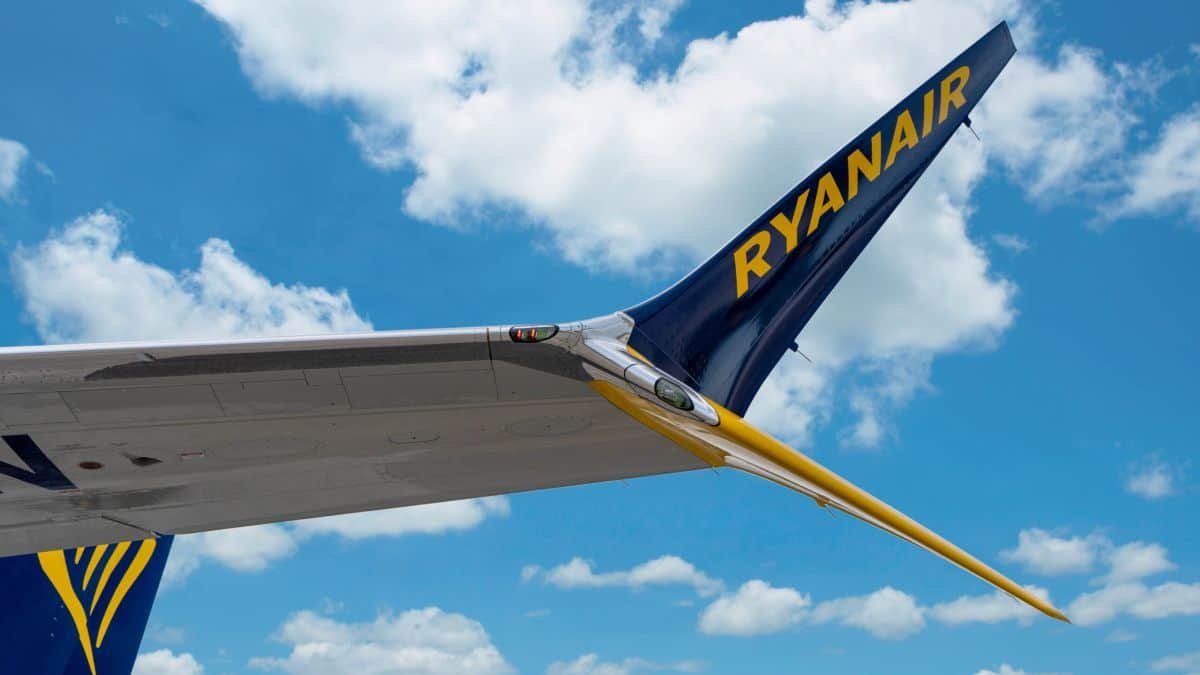
The airline also plans to complete winglet retrofits across its Boeing 737 Next Generation fleet during winter 2026–27.
These modifications are expected to reduce fuel consumption by approximately 1.5%. They also offer a reported 6% reduction in noise.
However, aircraft deliveries alone cannot eliminate the immediate financial challenge. The benefits will emerge gradually as newer aircraft enter commercial service.
European Airfares Could Rise During 2027
The prospect of higher ticket prices represents the most immediate concern for leisure travellers. Ryanair expects European short-haul fares to increase materially during 2027.
However, management believes fare increases will not completely compensate for the projected fuel expenditure.
This creates a difficult commercial situation. Airlines must protect profitability without discouraging passengers who remain sensitive to travel costs.
Ryanair’s first-half results already demonstrate this tension. Passenger traffic increased 6%, yet average fares declined 4%.
The airline expects demand to remain strong during the current quarter. However, its management acknowledges that customers are booking closer to departure.
This shorter booking window creates uncertainty for airline revenue forecasting. It also makes advance pricing decisions more complicated.
Meanwhile, capacity constraints across Europe could provide additional support for higher fares. Ryanair expects limited short-haul capacity growth into the early 2030s.
Aircraft manufacturing delays, engine supply constraints and financial pressures among competing carriers contribute to this outlook.
Potential Changes for European Travellers
| Development | Possible Passenger Impact | What Travellers Should Consider |
|---|---|---|
| Higher jet fuel prices | Increased ticket prices | Compare total fares before booking |
| Airport fee negotiations | Changes in regional route availability | Check alternative departure airports |
| Reduced winter capacity | Fewer available seats on selected routes | Monitor seasonal schedules |
| Greater AI adoption | Potentially improved digital services | Check official airline communications |
| New fuel-efficient aircraft | Improved operating efficiency | Watch for new aircraft-based routes |
| Higher operating expenditure | Greater pressure on ancillary charges | Check baggage and seat-selection costs |
The airline has already reduced its FY2027 passenger target from 216 million to 214 million. This adjustment limits exposure to unhedged fuel prices.
Ryanair expects winter passenger traffic between November 2026 and March 2027 to remain broadly flat year-on-year. Nevertheless, it plans to carry more than 220 million passengers during FY2028.
That projection represents approximately 3% annual growth. investor.
What Existing EU Passenger Rules Mean
Higher fuel expenditure does not give airlines unlimited freedom to change previously confirmed bookings or introduce retrospective fuel surcharges.
European passenger protection rules remain particularly important as carriers reassess their commercial operations.
Under the European Union’s air passenger rights framework, airlines must offer eligible passengers reimbursement or rerouting when flights are cancelled.
Passengers may also qualify for compensation when cancellations occur within 14 days of departure. However, exceptions apply when airlines establish qualifying extraordinary circumstances.
Importantly, high fuel prices alone do not constitute extraordinary circumstances under the European Commission’s published guidance.
Furthermore, airlines cannot retrospectively impose additional fuel surcharges on tickets already purchased. EU air services legislation requires airlines to display the final ticket price upfront.
These protections offer reassurance to passengers booking European journeys during uncertain market conditions.
Important Passenger Protections
| Situation | Relevant Passenger Protection |
|---|---|
| Airline cancels a flight | Refund or alternative rerouting |
| Cancellation announced less than 14 days before departure | Compensation may apply, subject to exceptions |
| Arrival delayed by at least three hours | Compensation may apply, subject to extraordinary circumstances |
| Airline increases fuel expenditure | No automatic right to impose retrospective fuel surcharges |
| Passenger requires assistance during disruption | Applicable meals, refreshments and accommodation provisions |
Travellers should retain booking confirmations, boarding passes and receipts for eligible expenses. They should also monitor airline notifications before travelling.
Ryanair’s Financial Strategy Faces a Defining Test
Ryanair’s latest announcement illustrates how quickly geopolitical instability can challenge the economics of low-cost aviation. The airline still enjoys substantial advantages through its fleet, passenger volumes and established operating model.
Its financial position also provides some protection. The company reported approximately €2.6 billion in gross cash at the end of September 2026.
Furthermore, its extensive route network gives management considerable flexibility when allocating aircraft capacity.
Nevertheless, the projected Ryanair fuel costs increase represents a substantial financial challenge. Airport negotiations, labour restructuring and automation may reduce expenditure, but their combined impact remains uncertain.
The airline’s ability to maintain affordable fares will depend on fuel prices, customer demand and its capacity to secure competitive operating agreements.
For travellers, 2027 could bring a more expensive European short-haul market. However, the scale of any increase will depend on how geopolitical developments influence energy prices and airline competition.
Ryanair’s next financial year will therefore become an important test of Europe’s low-cost travel model. Its response could influence not only ticket affordability but also airport competition and regional connectivity across the continent.
The Next Phase of European Budget Travel
Ryanair’s restructuring plans reveal a wider challenge confronting European aviation. Airlines must manage volatile energy prices while protecting passenger demand and maintaining competitive fares.
The carrier’s immediate priorities include airport negotiations, labour productivity, artificial intelligence and more efficient aircraft. However, these measures will take time to deliver meaningful financial benefits.
Meanwhile, travellers should prepare for potentially higher fares and changing seasonal schedules during 2027. Early price comparisons and flexible departure choices could become increasingly valuable.
Ultimately, Ryanair’s response to the €2 billion fuel challenge will provide an important indication of how Europe’s largest low-cost airline intends to protect its competitive advantage.
The post Ryanair Launches €2 Billion Fuel Cost Battle, Threatening Cheap Flights Across Ireland and Other European Destinations appeared first on Travel And Tour World.