Oman Engages with Kazakhstan and More to Expand Energy Networks and Strengthen Regional Tourism Infrastructure
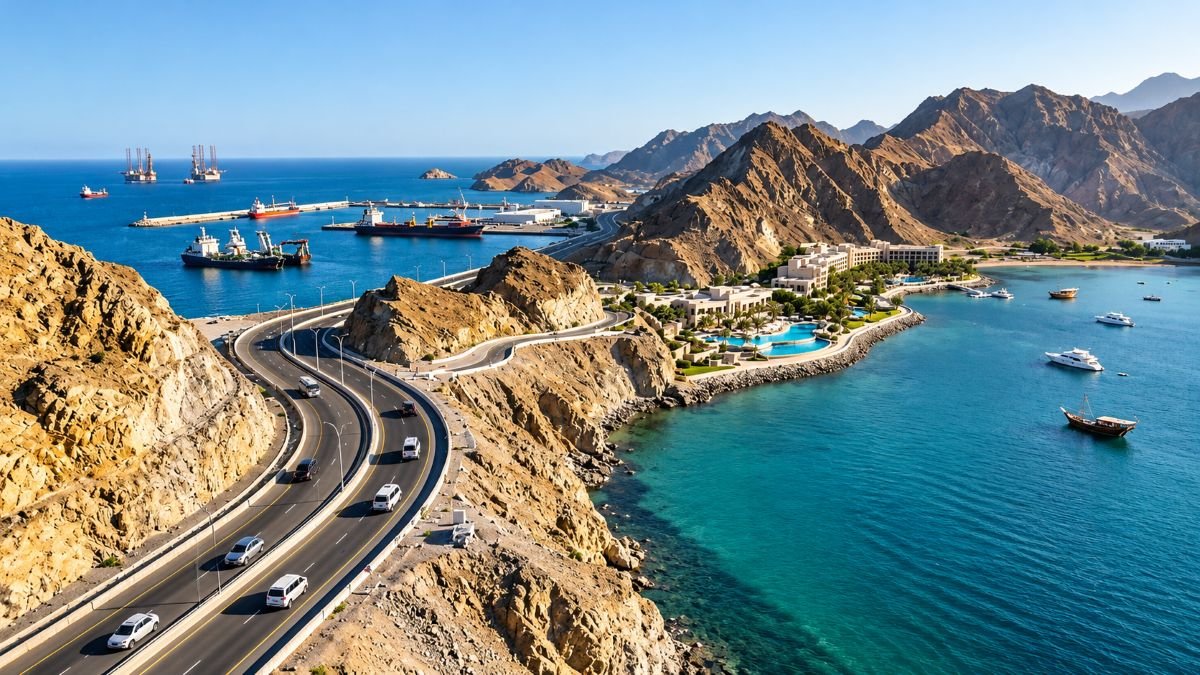

Oman continues to accelerate its comprehensive economic diversification programme by balancing substantial hydrocarbon advancements with extensive tourism development. OQ Exploration and Production, the upstream arm of the Sultanate, has initiated significant strategic ventures alongside partners in Kazakhstan and Libya. This strategic industrial growth directly underpins national efforts to broaden state revenues beyond conventional domestic oil extraction. By generating robust capital inflows through cross-border commercial alliances, the Sultanate reinforces its domestic investment landscape. Consequently, these combined financial capabilities actively support public infrastructure projects, maritime connectivity, and sustainable transport channels necessary for establishing long-term leisure and hospitality appeal across all administrative governorates.
Muscat demonstrates that sovereign energy management can effectively coexist with cultural preservation and international visitor growth. The nation achieved a first-half production rate of 228,200 barrels of oil equivalent per day in 2026, marking a 2.7 per cent annual increase. Sustained commercial growth provides essential fiscal stability, ensuring that cultural heritage programmes and environmental tourism initiatives receive uninterrupted public funding. Modern governance connects natural resource revenues with regional transformation, creating secondary employment and attracting global travel interest. As OQEP moves toward its strategic target of 300,000 boepd by 2030, capital security facilitates steady logistical improvements across international entry ports, cultural heritage restorations, and regional transit corridors.
Upstream Capital Fueling Sustainable Hospitality Networks
Industrial progress across key energy blocks guarantees fiscal stability for the hospitality supply chain. The strategic acquisition of a 35 per cent interest in Block 27 from Mitsui E&P Middle East adds critical output to the national portfolio. Operated primarily by Occidental, this producing asset is projected to contribute roughly 3,500 boepd throughout 2026. Consistent domestic cash flow enables the sovereign administration to fund hospitality facilities, restore historic coastal settlements, and improve public conveniences for arriving international visitors. Sound corporate performance creates an investment climate that attracts reputable global hotel operators into emerging nature reserves.
Economic resilience across sovereign portfolios reduces dependency on fluctuating leisure markets while funding visitor infrastructure. Long-term energy revenues facilitate modern highway developments connecting Muscat with inland heritage destinations like Nizwa and the historic trade routes of Ad Dakhiliyah. As upstream extraction methodologies adopt cleaner production systems, regional ecosystems remain preserved for environmental travel and rural eco-resorts. Institutional investors recognise that stable domestic hydrocarbon yields fund modern civil aviation, road safety improvements, and coastal environmental safeguards. The integrated commercial approach ensures that sovereign resources build sustainable public value, supporting municipal facilities that accommodate international travellers and local commercial trade simultaneously.
Strategic Alliances Strengthening Transnational Economic Resilience
Cross-border agreements with external partners broaden institutional knowledge and create interconnected trade environments. OQEP New Ventures signed an extensive framework with Kazakhstan national operator KazMunayGas to explore collaborative exploration, production, and joint corporate investments. This bilateral engagement reflects an ambition to access broader Central Asian trade networks, establishing modern commercial corridors that encourage future cultural exchange. Bilateral relations between Muscat and Astana promote commercial interest, business transit, and cultural exchange programmes. Sovereign institutional stability encourages foreign direct investment into Oman, generating secondary expansion in boutique hospitality, international travel conferences, and bespoke ecological ventures throughout the territory.
Collaborative initiatives extend into North Africa through a formal memorandum of understanding signed with the Libyan Investment Authority. This cooperative arrangement establishes structured evaluation parameters for upstream opportunities across both sovereign jurisdictions and broader international markets. Institutional coordination across North Africa and the Middle East stimulates cross-regional business mobility, demanding superior aviation facilities and high-standard executive accommodations in regional capitals. Shared operational strategies encourage enterprise stability across domestic frontiers, generating substantial commercial wealth that underwrites cultural development. Oman uses these strategic partnerships to position itself as a central, dependable meeting ground for international business delegations, executive travel, and commercial summit hosting.
Northern Gateway Development and Offshore Marine Conservation
Regional development in the northern enclave of Musandam highlights the delicate harmony between natural preservation and technical exploration. OQEP secured a concession agreement alongside Turkish Petroleum for offshore Block 80, holding equal operational shares across the maritime concession. Musandam represents one of the most prominent natural travel destinations in the Middle East, celebrated for dramatic fjords, clear waters, and abundant marine wildlife. Rigorous environmental assessment standards govern offshore activities to protect fragile coastal ecosystems and preserve flourishing diving and marine leisure sectors. Sound operational management prevents industrial disruptions across natural dolphin habitats and coastal villages.
Offshore operations in maritime concessions demand stringent environmental management to safeguard aquatic life and pristine shorelines. Collaborative concession agreements with international energy partners ensure environmental compliance while providing regional employment opportunities for local communities. Expanding employment in northern enclaves improves local living conditions, providing community stability that enriches traditional cultural interactions for incoming visitors. Sustainable industrial policies encourage maritime conservation groups and tourism authorities to collaborate on protecting coral systems and coastal waters. Musandam demonstrates how technical capability, environmental oversight, and leisure industries can prosper together without compromising pristine landscapes or historic maritime traditions.
| Asset or Partnership Initiative | International Counterpart | Operational Scope | Impact on National Infrastructure and Tourism Support |
| Block 27 Concession | Mitsui E&P Middle East | 35% Equity Acquisition | Generates 3,500 boepd to fund transport links and regional hospitality development. |
| Offshore Block 18 | Petronas Malaysia | Deepwater Concession | Explores marine territory while enforcing strict coastal conservation standards. |
| Offshore Block 80 | Turkish Petroleum | Joint Concession Holding | Balances northern resource operations with Musandam fjord tourism protection. |
| Central Asian Venture | KazMunayGas | Bilateral Exploration | Broadens transnational investment to stimulate international business travel. |
| North African Framework | Libyan Investment Authority | Upstream Assessment | Establishes regional investment ties that support high-level corporate hospitality. |
Hydrocarbon Security Underwriting National Vision Horizons
Diversified revenue streams remain vital for fulfilling the long-term socioeconomic objectives outlined within Oman Vision 2040. Deepwater exploration across offshore Block 18, finalised through an extensive concession agreement with Malaysia’s Petronas, encompasses over 21,000 square kilometres of maritime territory. Concurrently, operational amendments regarding Block 9 and successful output across Blocks 60 and 48 provide strong production capabilities. Chief Executive Mahmoud bin Abdullah Al Hashmi confirmed that corporate strategy remains anchored in generating domestic value while seeking prudent foreign partnerships. Sustainable revenues underwrite ambitious state initiatives, converting traditional oil income into renewable energy projects, desert luxury camps, and sustainable cultural heritage sites.
Integrated national expansion ensures that industrial developments enrich municipal communities and support travel infrastructure throughout the interior regions. Modern corporate performance from Bisat field developments inside Block 60 provides capital that supports domestic airports in Duqm, Sohar, and Salalah. Expanding regional transit options enables international tourists to navigate seamlessly between lush southern monsoon landscapes and northern coastal ranges. Omani state planning models demonstrate that responsible natural resource management generates financial security required to build non-oil industries. By maintaining strong institutional integrity and clear environmental guidelines, the Sultanate establishes an enduring foundation for economic prosperity, cultural preservation, and world-class sustainable travel.
Fiscal Stability and the Broader Tourism Economy
Sustained industrial progress across primary domestic energy blocks guarantees fiscal resilience for the nationwide hospitality supply chain. The strategic acquisition of a 35 per cent interest in Block 27 from Mitsui E&P Middle East adds critical output to the national portfolio. Operated primarily by Occidental, this producing asset is projected to contribute roughly 3,500 boepd throughout 2026 for an outlay of 28.8 million Omani rials. Consistent domestic cash flow enables the sovereign administration to underwrite modern hospitality facilities, restore historic coastal settlements, and upgrade public conveniences for arriving international visitors.
A stable macro-fiscal environment allows the government to de-risk high-capital development zones, drawing institutional private investment into under-visited regional governorates:
- Sovereign revenue redistribution: Direct channeling of hydrocarbon revenues into heritage conservation, rural hospitality access, and airport passenger terminals.
- Capital de-risking: Government backing for infrastructure in emerging tourist destinations, notably eco-reserves in Dhofar and coastal wellness developments in Al Wusta.
- Public transport enhancements: Co-funding multimodal transit schemes, electric bus fleets, and dual-carriageway access linking historical mountain villages to coastal motorways.
Economic resilience across sovereign portfolios reduces domestic vulnerability to cyclical leisure market downturns while preserving long-term capital allocations for visitor infrastructure. Steady energy revenues finance comprehensive roadway improvements connecting Muscat with inland heritage attractions such as the historic forts of Nizwa, the mountain corridors of Jebel Akhdar, and the historic trade routes of Ad Dakhiliyah. As upstream extraction facilities increasingly adopt lower-emission technologies, surrounding ecosystems remain protected for ecotourism and luxury desert hospitality.
Domestic Concessions and Upstream Infrastructure Synergies
Oman operates a diverse portfolio of domestic concessions that underpin state capital formation. The strategic balance between mature, highly productive fields and unexplored deepwater blocks mirrors the country’s dual economic agenda of sustaining present earnings while funding future non-oil sectors.
| Concession Asset | Operational Partners | Asset Type & Scale | Impact on Public Infrastructure & Tourism |
| Block 27 | Occidental (Operator), OQEP (35%), Mitsui E&P | Onshore Producing (est. 3,500 boepd share) | Provides reliable non-inflationary cash flow for local municipal upgrades. |
| Block 60 (Bisat Field) | OQEP (100% / Primary Operator) | Core producing asset, major output driver | Funds public utility modernisation and highway corridors in central regions. |
| Offshore Block 18 | Petronas Malaysia, OQEP | Deepwater Exploration (>21,000 sq km) | Encourages maritime survey capacity while strictly preserving offshore ecosystems. |
| Offshore Block 80 | Turkish Petroleum, OQEP (50/50 Joint Concession) | Maritime frontier, northern gateway exploration | Reinforces northern logistical access while preserving Musandam fjords. |
| Block 9 & Block 48 | International consortium partners, OQEP | Multi-horizon production and appraisal | Supplies steady fiscal dividends directly backing national heritage protection. |
Concession performance remains tied to state modernization efforts across inland provinces. Revenue yields generated through long-term partnerships allow the Ministry of Heritage and Tourism to systematically renovate remote geological landmarks, historic oases, and Frankincense trail destinations. Transparent operational management ensures that resource extraction supports local supply chains, benefiting nearby towns through upgraded electrical grids, water desalination lines, and municipal road access.
Central Asian Alliances and Transnational Corridors
Cross-border agreements with external partners broaden institutional capabilities and establish interconnected international trade routes. OQEP New Ventures signed a formal cooperation framework with Kazakhstan’s national oil and gas operator, KazMunayGas, to pursue collaborative exploration, production, and joint corporate investments. This bilateral engagement reflects an ambition to access broader Central Asian trade networks, creating commercial corridors that stimulate bilateral business travel and diplomatic engagement. Bilateral ties between Muscat and Astana foster commercial interest, international business delegations, and reciprocal cultural exchange programmes.
Key pointers driving the strategic partnership with Central Asian institutions include:
- Joint asset evaluations: Technical knowledge exchanges regarding deep-reservoir drilling, mature field optimisation, and carbon abatement technologies.
- Bilateral travel stimulation: Establishing regular executive air links and corporate delegations between Muscat and Astana to support hospitality demand.
- Institutional investment frameworks: Establishing cross-border investment platforms that diversify sovereign wealth assets outside conventional regional boundaries.
Sovereign institutional stability attracts foreign direct investment into Oman, generating secondary expansion across corporate conference facilities, bespoke leisure tours, and luxury urban hotels. Transnational alliances improve diplomatic standing, transforming Oman into an accessible host for intergovernmental forums, trade symposia, and global investment conventions.
North African Upstream Cooperation and Corporate Mobility
Collaborative initiatives extend into North Africa through a formal memorandum of understanding signed between OQEP and the Libyan Investment Authority. This cooperative arrangement establishes structured parameters for evaluating upstream opportunities across Oman, Libya, and international markets. Institutional coordination across North Africa and the GCC stimulates cross-regional business mobility, demanding superior aviation facilities and high-standard executive accommodations in regional capitals. Shared operational strategies encourage enterprise stability, generating capital returns that underwrite domestic diversification agendas.
To successfully execute upstream partnerships while enhancing sovereign soft power, bilateral stakeholders prioritise several operational milestones:
- Resource asset benchmarking: Joint risk-assessment criteria to identify producing fields capable of immediate positive cash generation.
- Cross-regional capacity building: Professional exchange schemes between technical, geological, and financial experts across both nations.
- Executive hospitality growth: Increased high-yield corporate travel between North Africa and Muscat, supporting executive hotels and meeting facilities.
Oman uses these international relationships to establish itself as a stable, neutral, and dependable commercial meeting ground. By hosting trade summits and bilateral technical committees, the Sultanate reinforces its reputation as a peaceful hub for international diplomacy, business travel, and regional commerce.
Maritime Conservation and Coastal Leisure Safeguards
Regional development in the northern enclave of Musandam highlights the balance required between industrial exploration and environmental preservation. OQEP secured a concession agreement alongside Turkish Petroleum for offshore Block 80, holding equal operational shares across the maritime tract. Musandam represents one of the most prominent natural travel destinations in the Middle East, celebrated for dramatic fjords, clear waters, and abundant marine wildlife. Rigorous environmental impact assessments govern all offshore activities to protect fragile coastal ecosystems and preserve flourishing diving and marine leisure sectors.
Marine-based economic protection relies on comprehensive oversight protocols:
- Ecological exclusion perimeters: Ensuring exploration rigs and survey vessels operate safely away from coral reefs, dolphin pods, and established dhow cruise paths.
- Stringent discharge controls: Zero-discharge standards for offshore drilling fluids to prevent any degradation of pristine dive locations.
- Community tourism alignment: Direct financial contributions toward small-craft fishing cooperatives, coastal safety patrols, and village preservation schemes.
Offshore operations in maritime concessions demand stringent environmental management to safeguard aquatic life and pristine shorelines. Collaborative concession agreements with international energy partners ensure regulatory compliance while providing employment opportunities for coastal communities. Expanding employment in northern enclaves improves local living conditions, providing community stability that enriches traditional cultural interactions for incoming visitors. Sustainable industrial policies encourage maritime conservation groups and tourism authorities to collaborate on protecting coral systems and coastal waters.
Long-Term Vision Realisation and Economic Diversification
Diversified revenue streams remain vital for fulfilling the long-term socioeconomic objectives outlined within Oman Vision 2040. Deepwater exploration across offshore Block 18, finalised through an extensive concession agreement with Malaysia’s Petronas, encompasses over 21,000 square kilometres of maritime territory. Concurrently, operational amendments regarding Block 9 and successful output across Blocks 60 and 48 provide strong production capabilities. Chief Executive Mahmoud bin Abdullah Al Hashmi confirmed that corporate strategy remains anchored in generating domestic value while seeking prudent foreign partnerships.
Sustainable revenues underwrite ambitious state initiatives, converting traditional hydrocarbon income into structural enablers for the travel and leisure sectors:
- Regional airport integration: Capital backing for expanded international capacity at Muscat, Salalah, Duqm, and Sohar airports to handle rising passenger traffic.
- Heritage destination development: Major investments in restoration projects across remote forts, ancient falaj irrigation networks, and UNESCO archaeological sites.
- Sustainable leisure real estate: Long-term financing for mixed-use integrated tourism complexes, public marinas, and world-class nature reserves.
Integrated national expansion ensures that industrial developments enrich municipal communities and support travel infrastructure throughout the interior regions. Modern corporate performance from Bisat field developments inside Block 60 provides capital that supports domestic logistical connections across Duqm, Sohar, and Salalah. Expanding regional transit options enables international tourists to navigate seamlessly between lush southern monsoon landscapes and northern coastal ranges. Omani state planning models demonstrate that responsible natural resource management generates financial security required to build non-oil industries.
Strategic Operational Enablers and Institutional Delivery
The convergence of hydrocarbon enterprise efficiency and travel infrastructure depends on consistent execution across sovereign institutions. Oman balances technical capabilities with financial discipline, ensuring every upstream dollar yields tangible public utility outcomes:
- Institutional transparency: Public reporting and rigorous governance models that reassure both foreign venture partners and international hotel developers.
- Skilled domestic workforce: Targeted national training initiatives that transfer engineering and logistics competencies to young Omani professionals.
- Integrated ministerial planning: Close coordination between the Ministry of Energy and Minerals and the Ministry of Heritage and Tourism on shared land zoning.
- Environmental remediation mandates: Obligatory site restoration funds established prior to drilling, ensuring natural terrain is returned to pristine conditions.
By linking heavy industry with eco-conscious travel, the Sultanate protects its cultural authenticity while funding the infrastructure needed to welcome millions of visitors annually. The strategy creates a resilient macroeconomic cycle where energy production, transnational diplomacy, and world-class hospitality reinforce one another indefinitely
Frequently Asked Questions
How does OQEP expansion influence tourism growth within the Sultanate of Oman?
Revenue generated from upstream hydrocarbon investments provides the capital needed to build roads, modernise international airports, and preserve cultural heritage sites for global travellers.
What is the specific production target outlined by OQEP for 2030?
The company aims to achieve an extraction rate of 300,000 barrels of oil equivalent per day by 2030, expanding from 228,200 boepd recorded in early 2026.
Which international energy companies are participating in current domestic concessions?
Major operational partners include Occidental, Petronas, Turkish Petroleum, Mitsui E&P Middle East, BP, Shell, Eni, and TotalEnergies across various onshore and offshore concession blocks.
How does offshore energy exploration protect marine leisure spaces in Musandam?
Joint operations between OQEP and Turkish Petroleum in Block 80 adhere to stringent environmental regulations designed to protect marine habitats, fiord ecosystems, and coastal travel activities.
What role does Kazakhstan play in the international growth strategy of Omani energy?
OQEP New Ventures partnered with KazMunayGas to evaluate joint exploration and production investments, establishing commercial relationships that stimulate transnational business mobility and trade dialogue.
Why is economic diversification central to the national Vision 2040 framework?
Diversification ensures stable state revenue by expanding non-oil sectors such as tourism, logistics, and renewable energy, reducing sovereign vulnerability to global oil price cycles.
How do commercial energy agreements with Libya support long-term regional development?
The memorandum of understanding with the Libyan Investment Authority creates structured evaluation channels for joint upstream investments, enhancing diplomatic, financial, and executive corporate travel ties.
What makes Block 60 a cornerstone of domestic production infrastructure?
Block 60 contains the highly productive Bisat field, which utilises modern extraction technologies to deliver consistent oil and gas output that supports national fiscal stability.
How do regional transport upgrades benefit international visitors travelling outside Muscat?
Capital investments fund modern arterial motorways and regional air terminals, allowing international tourists to travel conveniently to historic destinations like Nizwa, Jebel Akhdar, and Salalah.
In what manner does sustainable resource development safeguard coastal environmental assets?
Strict environmental impact assessments and advanced operational oversight prevent industrial contamination along shorelines, ensuring clean waters for scuba diving, sailing, and eco-resort tourism operations.
The post Oman Engages with Kazakhstan and More to Expand Energy Networks and Strengthen Regional Tourism Infrastructure appeared first on Travel And Tour World.