Brazil Sees New UNESCO Biodiversity Projects Alongside Other Countries With Sustainable Travel Implications
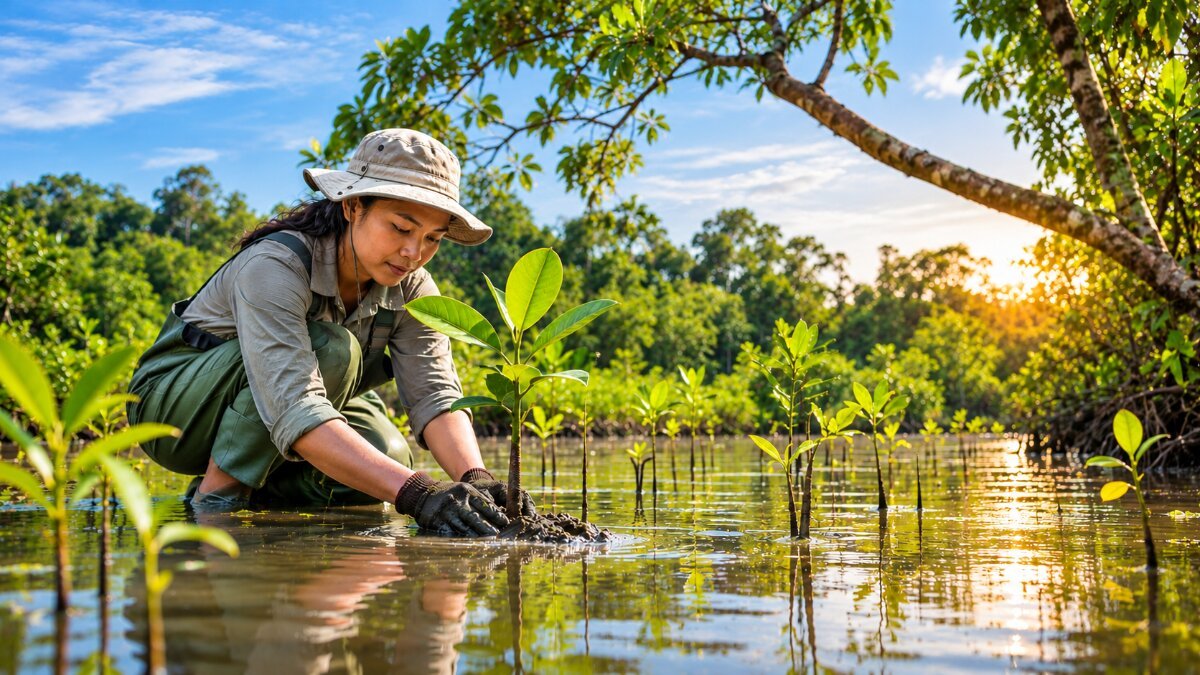

UNESCO and the Volkswagen Group have signed two agreements worth €1.74 million over three years for conservation work across six existing biosphere reserves. Officially announced on 3 November 2026 and updated on 4 November, the funding is split into two distinct initiatives under the newly established Volkswagen Group Biodiversity Fund. The first focus area aims to restore mangroves and support community ecotourism businesses in Latin America—specifically covering Brazil, Mexico, and Peru—though UNESCO’s official announcement establishes the framework scope and has not introduced new tourist routes, accommodation, flights, or visitor facilities. The second initiative focuses on reconnecting wildlife habitats, expanding its ecological connectivity projects across Brazil, Zambia, and Indonesia.
One UNESCO Conservation Initiative Connects Five Countries Through Two Projects
The Volkswagen Group Biodiversity Fund extends the partners’ cooperation, which began in 2020. UNESCO’s Man and the Biosphere Programme and local partners will deliver the work, with Indigenous Peoples, local communities, women and young people involved. All five countries share a conservation and livelihoods agenda, not a new travel route.
The Mangrove Guardians project covers Mata Atlântica in Brazil, La Encrucijada in Mexico and Noroeste Amotapes-Manglares in Peru. Its combined goal is to restore 50–100 hectares of degraded mangroves. The second project spans Brazil’s Pantanal, Zambia’s Kafue Flats and Indonesia’s Gunung Leuser, whose combined area exceeds 32.8 million hectares. That is their geographical scope, not an announced restoration total.
| Country and UNESCO biosphere reserve | Listed reserve area | Confirmed project activity | Official reserve record |
|---|---|---|---|
| Brazil — Mata Atlântica | 88,908,000 ha | Mangrove recovery and community livelihoods | UNESCO |
| Mexico — La Encrucijada | 390,503 ha | Mangrove and natural water-flow restoration | UNESCO |
| Peru — Noroeste Amotapes-Manglares | 1,115,947 ha | Mangrove recovery, monitoring and local enterprise | UNESCO |
| Brazil — Pantanal | 26,417,653 ha | Better ecological corridor management | UNESCO |
| Zambia — Kafue Flats | 2,609,400 ha | Habitat repair, anti-poaching and conflict reduction | UNESCO |
| Indonesia — Gunung Leuser | 5,294,762 ha | Elephant habitat reconnection and native planting | UNESCO |
Areas describe the broader UNESCO-listed reserves, not hectares funded for direct intervention. National protected-area boundaries can differ from biosphere reserve records.
Brazil Links Coastal Restoration With Pantanal Wildlife Connectivity
Brazil is the only participating country in both projects. Its Atlantic Forest biosphere reserve includes rainforest, coastal mangroves and traditional communities across a vast region. The mangrove work addresses water flows, habitat monitoring and local livelihoods. UNESCO has not identified new Brazilian visitor products.
The Pantanal work addresses a different problem: wildlife needs connected habitat across a seasonally flooded landscape. UNESCO intends to strengthen corridor management and monitoring and incorporate connectivity into the reserve’s long-term governance. Its Pantanal profile already recognises ecotourism and recreational fishing as forms of sustainable resource use. Conservation therefore matters to an existing visitor economy.
Brazil’s Ministry of Tourism described existing wildlife observation, river activities and community experiences in August 2026. Yet access varies within the wider region. The federal conservation agency ICMBio states that visits to Pantanal Matogrossense National Park require prior authorisation. Tour operators must distinguish the whole biosphere reserve from individual protected areas and their access rules.
Mexico Makes Mangrove Protection Relevant to Established Birdwatching
La Encrucijada in Chiapas brings together lagoons, wetlands and coastal mangroves. UNESCO’s reserve profile records more than 300 bird species, including roughly 100 migratory species, and identifies birdwatching as an emerging tourism activity. The new agreement adds restoration, environmental education and the prospect of locally managed businesses to this established conservation setting.
Mexico’s protected-area authority, CONANP, already lists nature observation and authorised activities at La Encrucijada. It also prohibits recreation outside approved paths and routes. The grant does not change those visitor rules. CONANP records the federal reserve at about 144,868 hectares, while UNESCO’s biosphere profile lists 390,503 hectares. These separate official figures should not be treated as the same mapped boundary when marketing a trip or reporting project reach.
Any long-term opportunity rests on habitat recovery, community participation and authorised small-group activities. UNESCO has issued no forecast for additional visitors or new services.
Peru Connects Tumbes Mangroves With Community Income and Visitor Management
Peru’s Noroeste Amotapes-Manglares reserve spans Tumbes and Piura. It includes the Tumbes mangroves, dry forest and adjoining landscapes. UNESCO’s site record describes livelihoods supported by fishing, shellfish and crab harvesting alongside tourism and farming. Here, damaged mangroves threaten both biodiversity and incomes.
There is already a managed visitor setting within the larger biosphere reserve. Peru’s protected-area agency, SERNANP, identifies designated visitor sectors at the Tumbes National Mangrove Sanctuary and existing birdwatching and boat-based experiences. These are not new UNESCO-funded routes. A separate Peruvian tourism agency update from October 2025 described a tourism-services improvement proposal worth more than 13 million soles, then still in technical preparation. That is a separate public-sector project, not part of the €1.74 million UNESCO agreements, and its completion status is not established by that update.
The November announcement concerns restoration and monitoring. Any tourism gains will need proof of healthier ecosystems and fair local benefits.
Zambia Strengthens the Ecological Foundations of Kafue Flats
In Zambia, the focus is Kafue Flats, a floodplain influenced by the rise and fall of the Kafue River. UNESCO’s biosphere profile describes the Lochinvar and Blue Lagoon national parks within the wider area, an internationally recognised Ramsar wetland, and habitat for the endemic Kafue lechwe antelope and many waterbirds. The new project will support restoration, anti-poaching work and reduced conflict between people and wildlife.
This is not a safari launch. Healthier habitats could support wildlife tourism, but no additional access or facilities have been announced. Seasonal flooding, conservation rules and relationships with local communities remain central to responsible planning.
The tourism connection also predates the new agreement. A 2024 UNESCO Earth Network mission examined the potential for locally led ecotourism and homestays as part of broader livelihoods work. Those were development possibilities, not confirmed new products under the November 2026 funding. Agents should not market them as confirmed itineraries.
Indonesia Prioritises Elephant Corridors in Gunung Leuser
Indonesia’s contribution centres on Gunung Leuser in northern Sumatra. The biosphere reserve contains tropical forest, rivers, peat swamps and mountain ecosystems. UNESCO’s site record documents habitat for Sumatran elephants, orang-utans, tigers and rhinoceroses, as well as the area’s existing research and ecotourism role.
Habitat fragmentation is the central problem addressed by the new funding. The programme will use tracking, local engagement and native-species replanting to help reconnect elephant habitats. The objective is ecological. Wildlife corridors are not being opened to tourists.
Gunung Leuser National Park is also one component of the established Tropical Rainforest Heritage of Sumatra World Heritage property. These three designations have different extents. Travel sellers must confirm access with the relevant management authority.
Why the Timing Matters for the Global Sustainable Tourism Industry
UNESCO’s Man and the Biosphere network currently encompasses 797 reserves in 145 countries. It brings conservation, education and livelihoods together; the new projects do not form a UNESCO tourism circuit. They build on the earlier MangRes initiative, launched in 2022 and taken into a second phase in 2025 with support from Flanders and Spain.
New global evidence adds urgency. A UN Environment Programme assessment published on 29 October 2026 reports approximately 252 million hectares under restoration across 149 countries. Yet only 5.7 million hectares of marine and coastal ecosystems were documented as under restoration. The assessment estimates that annual global restoration finance needs to rise from US$64 billion to US$296 billion by 2030. These are worldwide figures, not outcomes or budget needs for the six UNESCO reserves.
The Real Travel Opportunity Is Credible Conservation, Not a Rush to Sell Access
For destinations, protecting habitats is part of maintaining the natural assets on which nature tourism depends. But stronger ecosystems do not automatically create market-ready experiences. Operators still need clear permits, safe transport, trained guides, community consent, accessible information and fair revenue sharing. Conservation may even require temporarily limiting visits while habitats recover.
The clearest near-term tourism link sits in the mangrove initiative, where UNESCO explicitly includes ecotourism enterprises alongside aquaculture and non-timber forest products. Benefits in Pantanal, Kafue Flats and Gunung Leuser are more indirect, through habitat quality and wildlife protection. The distinction prevents future visitor revenue from being presented as an approved deliverable. It also protects destinations from promises that the project does not make.
Industry analysis: Success should be judged by more than planted trees or marketing impressions. A responsible destination scorecard would track recovered water flows, native vegetation survival, wildlife movement, local participation, the share of visitor income retained by residents and compliance with access rules. These are proposed indicators for travel-industry due diligence, not UNESCO’s published performance targets. Results require monitoring across seasons, not promises made at launch. Mangrove sites need evidence of recovered tidal exchange and surviving native plants; wildlife corridors need evidence of animal movement without harmful disturbance. These examples are proposed monitoring tests, not UNESCO targets. Guides and accommodation providers may ultimately gain from healthier landscapes, but uncontrolled visitation could undermine the same conservation investment. The IUCN’s protected-area tourism guidance supports visitor management that balances economic benefits with protection. The competitive advantage for tourism businesses will come from being able to demonstrate that their experiences protect the landscape and reward local communities, not merely from using the UNESCO name.
Operational Takeaways for Travel Agents and Tour Operators
- Verify authorisation: Check individual park and sanctuary rules before publishing routes or taking bookings; biosphere designation alone does not permit access.
- Separate current experiences from future plans: Do not advertise the November agreements as new safaris, cruises, trekking routes or hotels.
- Build local partnerships: Prioritise trained community guides, clear benefit-sharing and genuine consent for cultural experiences.
- Manage environmental risk: Account for seasonal floods, sensitive nesting areas, wildlife safety and any temporary restoration restrictions.
- Substantiate sustainability claims: Request evidence of conservation outcomes and community payments rather than relying on unsupported green labels.
The strategic story is a shift towards treating healthy ecosystems as essential infrastructure for the future of nature travel. UNESCO’s five-country agreements could help restore habitats and strengthen local resilience, but tourism growth remains a possibility, not a forecast. Their longer-term influence will depend on transparent results, responsible access decisions and whether communities share in any economic benefits.
FAQs
1. Which countries are included in the new UNESCO agreements?
Brazil, Mexico, Peru, Zambia and Indonesia. Brazil participates in both projects, covering six UNESCO biosphere reserves overall.
2. How much funding has UNESCO announced?
UNESCO and the Volkswagen Group signed two agreements worth a combined €1.74 million over three years. No country-by-country spending split was specified in the announcement.
3. Will the programme create new ecotourism routes?
No new routes have been announced. Ecotourism businesses are included in the mangrove project’s livelihood plans, but the connectivity project has a conservation focus.
4. How much land will the projects restore?
Mangrove Guardians targets 50–100 hectares of degraded mangroves across its three-country programme. The connectivity work concerns three reserves spanning more than 32.8 million hectares, not a promise to restore that entire area.
5. What should travellers and travel companies do now?
Use existing official park information, confirm authorised activities, book responsible local operators and avoid assuming that conservation funding changes visitor access or entry requirements.
The post Brazil Sees New UNESCO Biodiversity Projects Alongside Other Countries With Sustainable Travel Implications appeared first on Travel And Tour World.