Dubai Dominates Global Aviation Rankings, Outpacing Other Countries as Busiest International Airport Hub
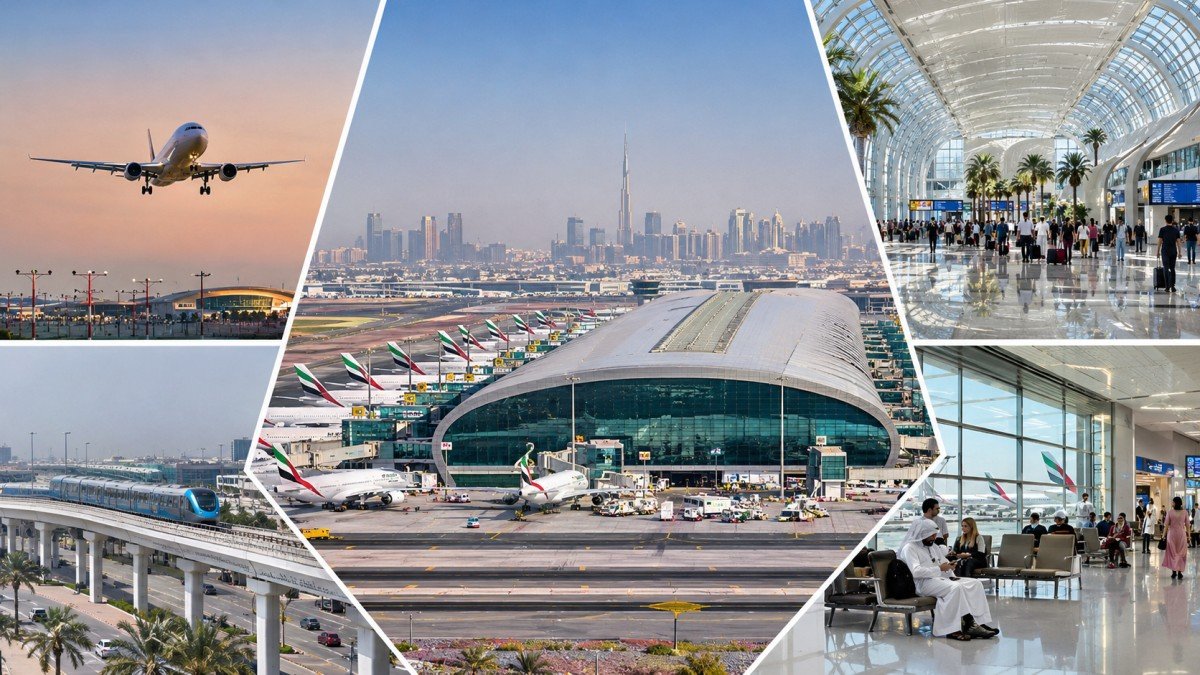

An official report states that Dubai International Airport is still the busiest international aviation center in November, 2026. As such, the United Arab Emirates is ahead of the United Kingdom, South Korea, Singapore, and the Netherlands according to planned international capacity. The recent ranking reveals Dubai’s numerous global flights, the fact that it is a key transit point for international passengers, and the upswing in aircraft operations after regional aviation disruptions. For travelers this news has made travel planning much easier since there is a variety of flights available, and they have to deal with connecting flights and arrangements for winter holiday trips. According to OAG, an aviation data company, there have been about 4.47 million seats booked at Dubai International Airport for international departures in November. This means the total number of seats available has come to about 8.94 million when both departure and arrival flights are included. However, the airport’s capacity for November is 16% less than 2025, which indicates that recovery of the international flight industry is still underway.
Dubai International Airport Secures Global Leadership Despite Lower Airline Capacity
Dubai International has maintained its international aviation lead even as airlines adjust flight schedules. OAG’s November 2026 figures place DXB ahead of every other airport for international departing seats. The achievement reinforces Dubai’s importance as a connecting point between Europe, Asia, Africa and the Americas. Nevertheless, the 16 per cent annual capacity decline shows that its leading position does not mean the airport has fully recovered.
Dubai Airports reported 31.5 million passengers during the first half of 2026, down 31.3 per cent from the corresponding period in 2025. Passenger volumes subsequently increased, reaching five million in June and 6.3 million in July. This improvement provides important context for November’s ranking. Dubai remains internationally competitive while airlines rebuild services and travellers reassess their connecting flight options.
UK, South Korea, Singapore and Netherlands Challenge Dubai in International Airport Rankings
London Heathrow ranks second worldwide with approximately 3.79 million international departing seats in November 2026. South Korea’s Incheon International Airport follows with 3.70 million, while Singapore Changi offers 3.58 million. Amsterdam Schiphol completes the leading five with 3.25 million. These airports represent major international gateways and offer travellers alternative connections across different regions, airline networks and holiday destinations.
South Korea stands out because Incheon’s international seat capacity has increased nine per cent compared with November 2025. Singapore records three per cent growth, while Amsterdam posts two per cent. Heathrow’s capacity declines three per cent. These differences demonstrate how international airline schedules are changing across markets. However, higher capacity does not automatically guarantee cheaper tickets or better availability on individual routes.
World’s Ten Busiest International Airports in November 2026
The November ranking illustrates how aviation hubs across the UAE, Europe and Asia compete for international connectivity.
| Rank | Airport and country | Departing international seats |
|---|---|---|
| 1 | Dubai International, UAE | 4.47 million |
| 2 | London Heathrow, UK | 3.79 million |
| 3 | Seoul Incheon, South Korea | 3.70 million |
| 4 | Singapore Changi, Singapore | 3.58 million |
| 5 | Amsterdam Schiphol, Netherlands | 3.25 million |
| 6 | Hong Kong International, China | 3.19 million |
| 7 | Istanbul Airport, Türkiye | 3.16 million |
| 8 | Paris Charles de Gaulle, France | 3.08 million |
| 9 | Bangkok Suvarnabhumi, Thailand | 2.82 million |
| 10 | Frankfurt Airport, Germany | 2.65 million |
Source: OAG, November 2026 scheduled international departing seat capacity. Figures rounded to two decimal places. OAG
What Dubai Airport’s Global Ranking Means for Tourists and International Travellers
Dubai’s international network offers passengers opportunities to plan journeys involving multiple countries through a single aviation hub. Travellers can compare direct and connecting services when arranging holidays, business trips or family visits. Its geographical position makes Dubai particularly relevant for itineraries linking Europe with Asia and Africa. However, the suitability of any connection depends on operating schedules, transfer times and ticket conditions.
For tourists, the most useful implication is the availability of a major international connection point rather than a promise of cheaper travel. Travellers should compare complete journey prices, baggage allowances and airport transfer requirements. They should also check whether flights operate under one booking. This matters when disruption affects a connection or passengers need assistance with rebooking.
Emirates and flydubai Strengthen Dubai’s Position as an International Connecting Hub
Emirates and flydubai play important roles in Dubai’s global aviation network. Emirates operates from Terminal 3, while flydubai uses Terminal 2 and selected Terminal 3 gates. Their partnership gives passengers access to more than 240 destinations across their combined networks. Travellers booking eligible connecting itineraries can benefit from coordinated baggage handling, onward boarding arrangements and access to destinations beyond either airline’s individual network.
For tourists planning multi-country holidays, this partnership can simplify complicated journeys. Eligible passengers travelling on connecting Emirates and flydubai tickets can have checked baggage transferred to their final destination. However, travellers must confirm their operating airline, terminal and connection time before departure. Separate bookings may involve different baggage arrangements and immigration requirements, making advance planning particularly important.
Dubai Airport Flight Tickets and Airfares Require Careful Comparison Before Booking
Dubai’s international aviation leadership gives travellers a substantial network of scheduled flights, but airport rankings do not measure ticket affordability. Airfares depend on travel dates, airline competition, seat availability, cabin class and booking conditions. Passengers travelling between the UK, India, Southeast Asia and Europe can compare itineraries through Dubai with services using other international hubs to identify suitable combinations of price and journey duration.
Travellers should examine the full cost of their flights rather than focusing only on advertised fares. Checked baggage, seat selection, changes and additional connections can affect the final price. Those planning Christmas holidays, New Year travel or winter escapes should also review cancellation policies. November’s capacity figures describe scheduled airline seats, not discounted fares or confirmed passenger bookings.
Dubai Airport Metro, Taxis and Transport Connections Make City Visits Easier
Dubai International offers several ground transport options for tourists arriving in the UAE. The Dubai Metro Red Line connects directly with Terminals 1 and 3, providing access to the city’s wider public transport network. Official tourism information lists airport taxi starting fares at approximately AED25, with additional distance-based charges. These services help visitors reach accommodation, shopping districts and major attractions without arranging private transport.
Tourists planning short visits can use the airport’s proximity to central Dubai. Visit Dubai estimates that Downtown Dubai, home to Burj Khalifa and Dubai Mall, is approximately 20 minutes away by taxi under suitable traffic conditions. Metro operating hours vary, so passengers arriving late at night should check transport availability. Travellers using Terminal 2 should also verify their onward transport arrangements.
UAE Tourist Visas and Dubai Stopovers Offer Additional Travel Planning Options
Dubai’s role as an international connecting hub creates opportunities for travellers to include a short city visit in a longer itinerary. However, entry requirements depend on nationality, passport status and visa eligibility. The UAE offers visa-free entry or visas on arrival to eligible visitors. Other travellers must arrange permission before entering the country, including when leaving the airport during an international stopover.
The UAE government provides 48-hour and 96-hour transit visas for eligible travellers who need advance entry permission. These visas require approval before arrival and are single-entry permits. Tourists planning a Dubai stopover should confirm eligibility through official UAE immigration channels or authorised airline partners. A connecting flight ticket alone does not guarantee permission to enter the country.
Dubai Airport Terminals, Baggage Transfers and Passenger Facilities Support International Journeys
Dubai International operates three passenger terminals with extensive facilities for international travellers. Passengers can access restaurants, retail outlets, lounges and baggage services. Dubai Airports also provides dedicated transfer desks and passenger assistance for connecting journeys. Travellers moving between concourses may use airport trains, buses or walking routes, depending on their terminals and departure gates.
Baggage arrangements deserve particular attention. Dubai Airports advises that passengers travelling on separate tickets may need to clear immigration, collect luggage and check in again. Short-term luggage storage is available across all three terminals, with published charges varying by location and bag size. Tourists should confirm their terminal and airline requirements before travelling to avoid unnecessary delays during connections.
Dubai Airport Expansion and Aviation Investment Prepare the UAE for Future Tourism Growth
Dubai continues investing in aviation infrastructure to support future international travel. Dubai Airports has outlined improvements involving passenger facilities, self-service technology, biometric processing and operational efficiency. These developments aim to simplify passenger movement and strengthen airport capacity. The investment programme also reflects Dubai’s ambition to maintain its position as a major destination and international transfer centre.
Long-term development extends beyond Dubai International. The UAE is advancing the expansion of Dubai World Central – Al Maktoum International Airport, with a planned investment of approximately US$35 billion. Dubai Airports identifies an initial future capacity target of 150 million annual passengers, eventually rising to 260 million. These are development ambitions rather than current operating figures, but they indicate the scale of Dubai’s aviation strategy.
What International Travellers Should Check Before Flying Through Dubai
Dubai’s busy international airport network makes advance preparation essential, particularly for passengers booking connecting journeys. Tourists should confirm whether their flights arrive and depart from the same terminal. They should also review immigration rules, baggage transfers and the minimum connecting time recommended by their airline. These checks become especially important when travellers combine tickets from different airlines.
Before departure, passengers should review the following practical details:
- Flight tickets: Compare total fares, baggage charges and connection durations.
- Airport terminals: Verify whether flights use Terminal 1, 2 or 3.
- Transit visas: Check UAE entry requirements before planning a stopover.
- Baggage transfers: Confirm whether luggage is checked through to the final destination.
- Ground transport: Review Dubai Metro schedules and official taxi arrangements.
- Flight updates: Monitor airline notifications and airport information before travelling.
Dubai’s November Aviation Leadership Highlights Opportunities and Challenges for Global Tourism
The ongoing rank of Dubai International serves to highlight the UAE’s strong position in global aviation. With 4.47 million scheduled departing international seats, it is well ahead of any major airport in the United Kingdom, Korea, Singapore and Netherlands. Yet the yearly dip in capacity reflects a patchy aviation recovery. As a result, travelers must separate airport rankings from the realities of passenger numbers, ticket pricing and confirmed flight availability. Dubai remains an important entry point for international leisure, business travel and connecting flights. Carrier alliances, airport services and city-linking ground transport options have provided helpful solutions for planning international trips. As winter schedules come to fruition, travelers must take their time in scrutinizing routes and fare conditions. Dubai positions itself as an astute confirmation of international routing strength through its active recovery, displaying the need for smart travel choices from its travelers.
The post Dubai Dominates Global Aviation Rankings, Outpacing Other Countries as Busiest International Airport Hub appeared first on Travel And Tour World.